
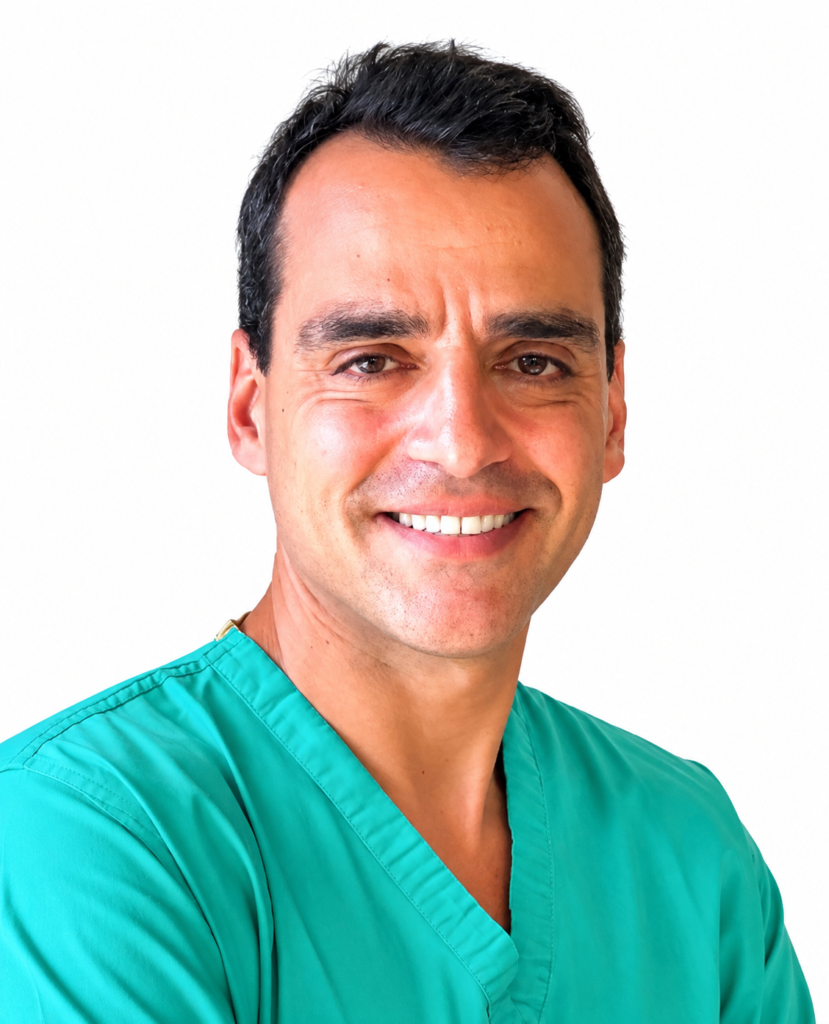
Dr. Michael Tsitsikopoulos
Dental Surgeon – Implantologist
Dr. Michael Tsitsikopoulos is a dental surgeon with a private clinic in Kifisia, Athens. His clinical interests include dental implants and aesthetic dentistry, with a focus on restoring both the function and appearance of the smile. His work encompasses individual tooth replacement, full-mouth rehabilitation, bone regeneration and implant-supported solutions such as All-on-4 and All-on-6.
His approach is guided by prevention, careful assessment and treatment planning tailored to each patient. By considering oral health, function and aesthetic goals together, the clinical team aims to recommend treatments that address the patient’s needs while preserving healthy tissues wherever possible. Modern technology and evidence-based methods support the planning and delivery of care, with attention to patient comfort throughout the process.
Areas of Expertise
- Dental implants
- Aesthetic dentistry
- Full-mouth rehabilitation
- Bone regeneration
- All-on-4 and All-on-6 implant solutions
- Periodontology
- Minimally invasive dentistry
Dental Clinic in Kifisia
Dr. Michael Tsitsikopoulos sees patients at his dental clinic in Kifisia, a northern suburb of Athens. The clinic provides care in implant dentistry, aesthetic dentistry, periodontal health and full-mouth rehabilitation.
Patients may seek an assessment for a missing tooth, difficulty chewing, concerns about the appearance of their smile, or problems affecting the gums. The first step is to understand the patient’s oral health and goals. This allows the dentist to discuss suitable options and explain the likely stages of treatment.
A Prevention-Focused Approach
Prevention and early diagnosis are central to the clinic’s therapeutic approach. Regular dental examinations can help identify changes in the teeth and gums before they progress. When a concern is found early, treatment may be simpler and less extensive.
A dental assessment can also help patients understand the factors that affect their oral health, including gum inflammation, tooth decay, bite problems and the condition of existing dental work. The appropriate frequency of check-ups depends on each person’s needs and should be discussed with their dentist.
The clinic’s approach emphasizes:
- Preventive care and regular dental examinations
- Early diagnosis of dental and periodontal problems
- Treatment planning that considers the patient’s individual needs
- Minimally invasive techniques where clinically appropriate
- Patient comfort during dental procedures
- Long-term maintenance of treatment results
Minimally invasive dentistry aims to preserve as much healthy tooth and gum tissue as possible while addressing the condition being treated. Whether this approach is suitable depends on the clinical findings. The dentist can explain the available options after examining the patient.
Dental Implants and Tooth Replacement
A missing tooth can affect more than the appearance of a smile. Depending on its location and the patient’s oral health, tooth loss may also influence chewing, speech or the position of nearby teeth. Dental implants are one option for replacing missing teeth.
An implant is placed in the jawbone and can support a replacement tooth or a larger dental restoration. The suitability of implant treatment depends on several factors, including the condition of the gums and jawbone, general oral health and the patient’s treatment goals. A clinical examination and appropriate diagnostic tests help determine whether implants may be considered.
Treatment planning is individual. The dentist reviews the patient’s medical and dental history, examines the mouth and evaluates the available bone. If there is not enough bone to support an implant in the planned position, bone regeneration may be discussed as part of the treatment plan. The timing and sequence of treatment depend on the specific case.
Dental implants require ongoing care, just like natural teeth. Good oral hygiene and regular dental reviews are important for maintaining the health of the tissues around the restoration. The dentist can provide guidance on home care and follow-up appointments.
All-on-4 and All-on-6
All-on-4 and All-on-6 are implant-supported approaches that may be used in the rehabilitation of patients with extensive tooth loss or complete edentulism. They involve supporting a full-arch restoration with a planned number of dental implants.
These techniques are not automatically suitable for every patient. The choice of treatment depends on the condition of the jawbone, the patient’s oral health, the distribution of the missing teeth and other clinical considerations. Careful assessment helps the dentist determine whether an implant-supported full-arch restoration is an appropriate option.
Patients considering full-mouth rehabilitation should receive a clear explanation of the proposed treatment, its stages, the expected maintenance and any alternative approaches. A personalized plan helps ensure that function, oral health and aesthetic goals are considered together.
Bone Regeneration
Bone regeneration may be considered when the jawbone does not provide sufficient support for a planned dental implant. Bone volume can be affected by tooth loss, periodontal disease, trauma or other factors. The need for a regenerative procedure is determined through clinical assessment and imaging.
The treatment plan depends on the location and extent of the bone deficiency, as well as the overall condition of the patient’s oral health. In some cases, bone regeneration is performed before implant placement; in others, it may be combined with another stage of treatment. The dentist can explain the sequence and expected healing period based on the individual case.
Aesthetic Dentistry
Aesthetic dentistry focuses on the appearance of the teeth and smile while taking oral health and function into account. Patients may seek advice about the shape, colour, alignment or overall balance of their smile.
Before recommending a treatment, the dentist assesses the condition of the teeth and gums and discusses the patient’s priorities. The most suitable approach varies from person to person. Treatment planning should consider the health of the teeth, the bite and the long-term maintenance of the result.
Aesthetic treatment is most effective when it is planned in the context of the patient’s overall oral health. For this reason, the clinic’s approach combines aesthetic goals with prevention, diagnosis and functional considerations.
Periodontology and Gum Health
Periodontology concerns the health of the tissues that support the teeth, including the gums and underlying bone. Gum inflammation can develop when plaque accumulates along the gumline. If periodontal disease is present, early assessment can help determine the appropriate care and follow-up.
Signs such as bleeding gums, persistent inflammation, gum recession or changes in tooth stability should be discussed with a dentist. These symptoms can have different causes, and a clinical examination is needed to identify the underlying problem.
Maintaining gum health involves professional assessment, appropriate treatment when needed and consistent oral hygiene at home. The dentist can recommend a care routine and review schedule based on the patient’s periodontal condition.
When to Visit a Dentist
Patients may benefit from arranging a dental assessment if they experience:
- The loss of one or more teeth
- Difficulty chewing
- Concerns about the appearance of their smile
- Bleeding, swollen or inflamed gums
- Changes in the position or stability of teeth
- A need for full-mouth rehabilitation
- Questions about dental implants or bone regeneration
A dental visit can help clarify the cause of a concern and identify possible treatment options. The appropriate course of action depends on the findings of the examination and the patient’s individual needs.
Education and Professional Background
Dr. Michael Tsitsikopoulos was born in Athens. He entered the School of Dentistry at the National and Kapodistrian University of Athens in 1991 and graduated in 1997.
After completing his military service as a dentist in the Hellenic Army, he began practising dentistry in his private clinic in 2000. His clinical work has focused primarily on aesthetic dentistry and dental implants.
His postgraduate training includes further education in periodontology at Witten/Herdecke University in Germany from 2005 to 2006. In 2008, he completed postgraduate training in implant dentistry at the University of California, Los Angeles (UCLA), under Professor Sascha Jovanovic.
Since 2015, he has also collaborated with implant clinics in London. His professional work includes implant placement and full-mouth restorations.
Recognition
Dr. Michael Tsitsikopoulos is included in Iatromedia’s list of The Best Dentists in Greece. This listing recognizes his work in dental surgery, implant dentistry and aesthetic dentistry.
Patients seeking dental implants, aesthetic dental care, periodontal assessment or full-mouth rehabilitation can contact his clinic in Kifisia to arrange an evaluation. The appropriate treatment plan is determined after an individual clinical assessment.
Contact
- Phone
- 21 0623 1441
- Address
- Kyriazi 6-8, Kifisia
- Opening Hours
- Monday 9:00 a.m.–9:00 p.m.
Tuesday 9:00 a.m.–9:00 p.m.
Wednesday 9:00 a.m.–9:00 p.m.
Thursday 9:00 a.m.–9:00 p.m.
Friday 9:00 a.m.–9:00 p.m.
Saturday Closed
Sunday Closed