
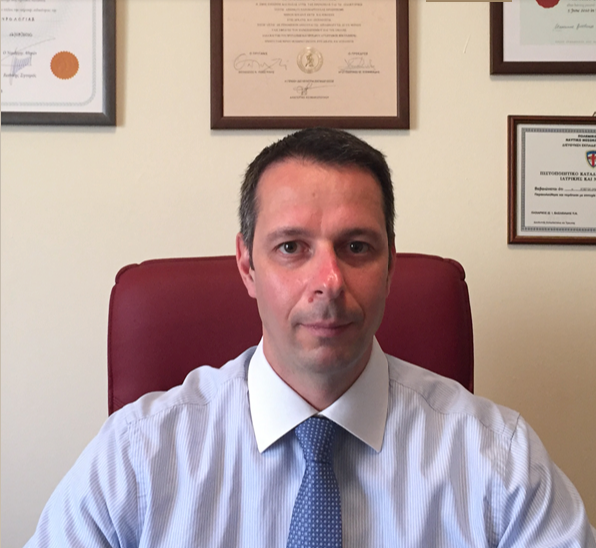
Dr. Vasileios Mygdalis
Urologist - Robotic Urology Surgeon
Dr. Vasileios Mygdalis is Director of the First Urology Clinic at Hygeia Hospital in Athens. He is a distinguished graduate of the University of Athens, where he completed his doctoral studies, and was the first Greek urologist to receive formal postgraduate training in robotic surgery.
With more than a decade of experience using the da Vinci surgical system, Dr. Mygdalis has developed a professional focus on robotic urology. His work includes robotic procedures for prostate cancer and other urological conditions. In addition to his clinical practice, he contributes to the education of urologists in robotic surgery and serves as an international trainer for surgeons in Central and Eastern Europe.
Robotic surgery is one of the minimally invasive approaches used in modern urology. It is performed by a surgeon using specialised instruments controlled from a console. The appropriate procedure and surgical approach depend on the patient’s diagnosis, overall health and individual circumstances. A consultation with a urologist allows patients to discuss their condition, the available treatment options and the potential benefits and limitations of each approach.
International Training at Karolinska University Hospital
Dr. Mygdalis completed specialist training in robotic surgery at Karolinska University Hospital in Sweden, under the guidance of Professor P. Wiklund. His training was supported by a scholarship from the Hellenic Urological Association.
This postgraduate experience was an important milestone in his professional development and in the introduction of robotic urology expertise in Greece. Training at an international centre provided the opportunity to develop specialist knowledge in robotic surgical techniques and to observe the organisation of care around complex urological procedures.
The development of expertise in robotic surgery involves more than familiarity with the technology itself. It requires surgical training, knowledge of the relevant anatomy, careful patient selection and the ability to adapt a procedure to the needs of each case. The surgeon’s assessment and decision-making remain central throughout the process.
Dr. Mygdalis’s subsequent clinical and educational work has included the use of the da Vinci platform and the training of other urologists. His experience in these areas forms part of his professional profile in robotic urology.
A Role in Robotic Surgery Education
Dr. Mygdalis is a certified trainer in robotic surgery for urologists in Central and Eastern Europe. His training work supports the development of surgical skills and familiarity with robotic techniques among doctors entering or advancing in the field.
He also participates as an instructor in the robotic surgery programme of the First University Department of Urology at the National and Kapodistrian University of Athens (NKUA) and the Hellenic Urological Association. Medical education is an important part of the development of surgical services, helping clinicians learn techniques and discuss current approaches within an academic and professional framework.
Robotic surgery training is typically a structured process. Surgeons must develop the technical skills required to operate the robotic instruments, while also understanding how to plan the procedure and respond to the needs of the patient. Training and ongoing professional development contribute to maintaining expertise as surgical practice evolves.
Clinical Leadership at Hygeia Hospital
As Director of the First Urology Clinic at Hygeia Hospital, Dr. Mygdalis holds a leadership role within a specialist clinical service. He is also a military physician and has experience across the field of urology, with a particular focus on robotic surgery.
The management of urological conditions begins with an accurate diagnosis. A patient’s assessment may include a discussion of symptoms and medical history, a physical examination, laboratory tests and imaging, depending on the concern. If cancer is suspected or diagnosed, the urologist considers the nature and stage of the disease, the patient’s general health and the range of treatment options that may be appropriate.
Treatment planning is individual. The same diagnosis may require different approaches for different patients. Factors such as the extent of the disease, the patient’s health, previous treatments and personal priorities may all be relevant. A detailed discussion helps patients understand the purpose of a recommended procedure, the possible alternatives and what recovery may involve.
Robotic Radical Prostatectomy
Robotic radical prostatectomy is a surgical procedure used in the treatment of prostate cancer. It involves the removal of the prostate gland and may be considered as part of a patient’s treatment plan following specialist assessment.
Dr. Mygdalis has a professional focus on robotic radical prostatectomy. In discussing this procedure, patients may wish to understand why surgery is being considered, what the operation involves, what alternatives may be available and how the treatment could affect urinary and sexual function.
The impact of prostate surgery varies from patient to patient. Functional outcomes depend on multiple factors, including the patient’s health, the characteristics of the cancer, the treatment approach and the individual’s recovery. Preservation of urinary continence and erectile function may be among the considerations discussed when planning treatment, but outcomes cannot be guaranteed. A consultation enables the patient and surgeon to discuss the specific case and set realistic expectations.
A treatment decision should take into account the complete clinical picture. Depending on the patient and the disease, prostate cancer may be managed using different approaches. The urologist can explain which options may be relevant and why a particular plan is recommended.
Robotic Nephrectomy and Cystectomy
Dr. Mygdalis also performs robotic nephrectomy and cystectomy. These procedures may be used in the management of selected tumours affecting the urinary system.
A nephrectomy involves removing part or all of a kidney, depending on the diagnosis and treatment plan. A cystectomy involves removal of the bladder and may be considered in specific cases of bladder cancer. The exact procedure, its purpose and any additional steps depend on the patient’s condition.
Robotic techniques may be used as part of a minimally invasive surgical approach. The suitability of robotic surgery is assessed individually, taking into account the disease, the patient’s anatomy and general health, and the objectives of treatment. The urologist should explain the planned operation, its possible risks and benefits, the alternatives and the expected postoperative care.
Complex urological procedures require careful preparation and follow-up. Patients may have questions about the time spent in hospital, recovery, changes in urinary function and further treatment or monitoring. These details vary according to the procedure and the individual case, so they are best discussed directly with the treating team.
Experience with the da Vinci Surgical System
Dr. Mygdalis has more than a decade of experience using the da Vinci surgical system. The platform enables surgeons to control specialised instruments from a console while viewing the operating field through a magnified, three-dimensional visual system.
The technology is used by the surgeon as part of the operation. It does not replace the surgeon’s clinical judgement or decision-making. The procedure is planned and performed by the surgical team, which assesses whether robotic surgery is suitable for each patient.
The da Vinci system is used in a range of surgical specialties, including urology. In urological practice, robotic techniques may be considered for selected procedures involving the prostate, kidney and bladder. The choice of surgical method depends on the diagnosis and the individual treatment plan.
Patients considering robotic surgery may wish to ask how the procedure will be performed, why the approach has been recommended, what alternatives exist and what recovery may involve. These conversations help patients make informed decisions and understand the role of the technology in their care.
Academic Qualifications and Distinctions
Dr. Vasileios Mygdalis’s academic and professional qualifications include:
- Doctorate from the National and Kapodistrian University of Athens: He completed his doctoral studies with distinction.
- FEBU: He holds the title of Fellow of the European Board of Urology.
- Military medical education: He graduated first in his class from the Medical Department of the School of Health Sciences of the Hellenic Army (SSAS), at Aristotle University of Thessaloniki.
- Training in the United States: He holds a diploma in Aerospace Medicine from the United States, completed in San Antonio, Texas.
His academic background and specialist training have been complemented by clinical experience and professional education in robotic urology. These elements contribute to his work as a clinician, department director and surgical trainer.
Membership in Scientific Organisations
Dr. Vasileios Mygdalis is an active member of international scientific organisations, including:
- European Association of Urology (EAU)
- European Robotic Urology Society (ERUS)
- South Eastern European Robotic Surgery Society (SEERSS)
Membership in professional organisations supports engagement with the wider medical community and developments in urology. Scientific societies provide opportunities for clinicians to exchange knowledge, participate in professional education and follow developments in their fields.
Medical practice continues to evolve as research and technology advance. For patients, the most relevant consideration is how a particular development applies to their diagnosis and treatment needs. Their urologist can explain whether a specific method is suitable and what is known about its possible benefits and limitations.
What to Expect from a Urological Consultation
A consultation with a urologist gives patients the opportunity to discuss symptoms, test results or a diagnosis and understand possible next steps. Depending on the reason for the visit, the assessment may involve:
- Reviewing symptoms and medical history
The doctor may ask about the patient’s concerns, how long they have been present and whether any previous investigations or treatments have been carried out. - Reviewing test results
Laboratory tests, imaging and other relevant reports may be considered as part of the assessment. - Clarifying the diagnosis
The urologist explains the findings and whether additional tests or specialist input may be needed. - Discussing treatment options
If treatment is recommended, the patient can ask about the purpose of the proposed approach, alternatives, potential risks and expected follow-up.
For patients considering surgery, it is helpful to discuss the intended procedure and the expected course of care in detail. The recommendations depend on the patient’s diagnosis, general health and personal circumstances.
A Patient-Focused Approach to Treatment
Urological conditions can affect different aspects of a person’s health and daily life. A treatment plan should therefore be based on an individual assessment and clear communication between the patient and clinical team.
For patients with a diagnosis of prostate, kidney or bladder cancer, a consultation can help explain the role of surgery and whether a robotic approach may be considered. Patients can discuss the goals of treatment, relevant risks and the likely recovery process. They should also have the opportunity to ask questions and express the priorities that matter to them.
Dr. Vasileios Mygdalis’s practice combines clinical work, leadership and surgical education. His professional focus on robotic urology is supported by international training, experience with the da Vinci system and participation in professional organisations. The appropriate care for each patient, however, is determined through a specialist evaluation of their individual case.
Recognition of Vasileios Mygdalis by Iatromedia
Dr. Vasileios Mygdalis is included in Iatromedia’s list of Leading Robotic Urologists in Greece. His profile reflects his role as Director of the First Urology Clinic at Hygeia Hospital, his postgraduate training in robotic surgery at Karolinska University Hospital, his experience with the da Vinci system and his contribution to the education of urologists.
Patients seeking advice about a urological condition or robotic surgery can arrange a consultation to discuss their diagnosis and treatment options. The recommended approach is determined individually, following a review of the patient’s clinical information and needs.
Contact
- Phone
- 2130053091
- vasmig@gmail.com
- Address
- 79 Kifisias Avenue, Athens 115 23, Greece
- Opening Hours
- Monday 2:30–6:30 p.m.
Wednesday 2:30–6:30 p.m.