
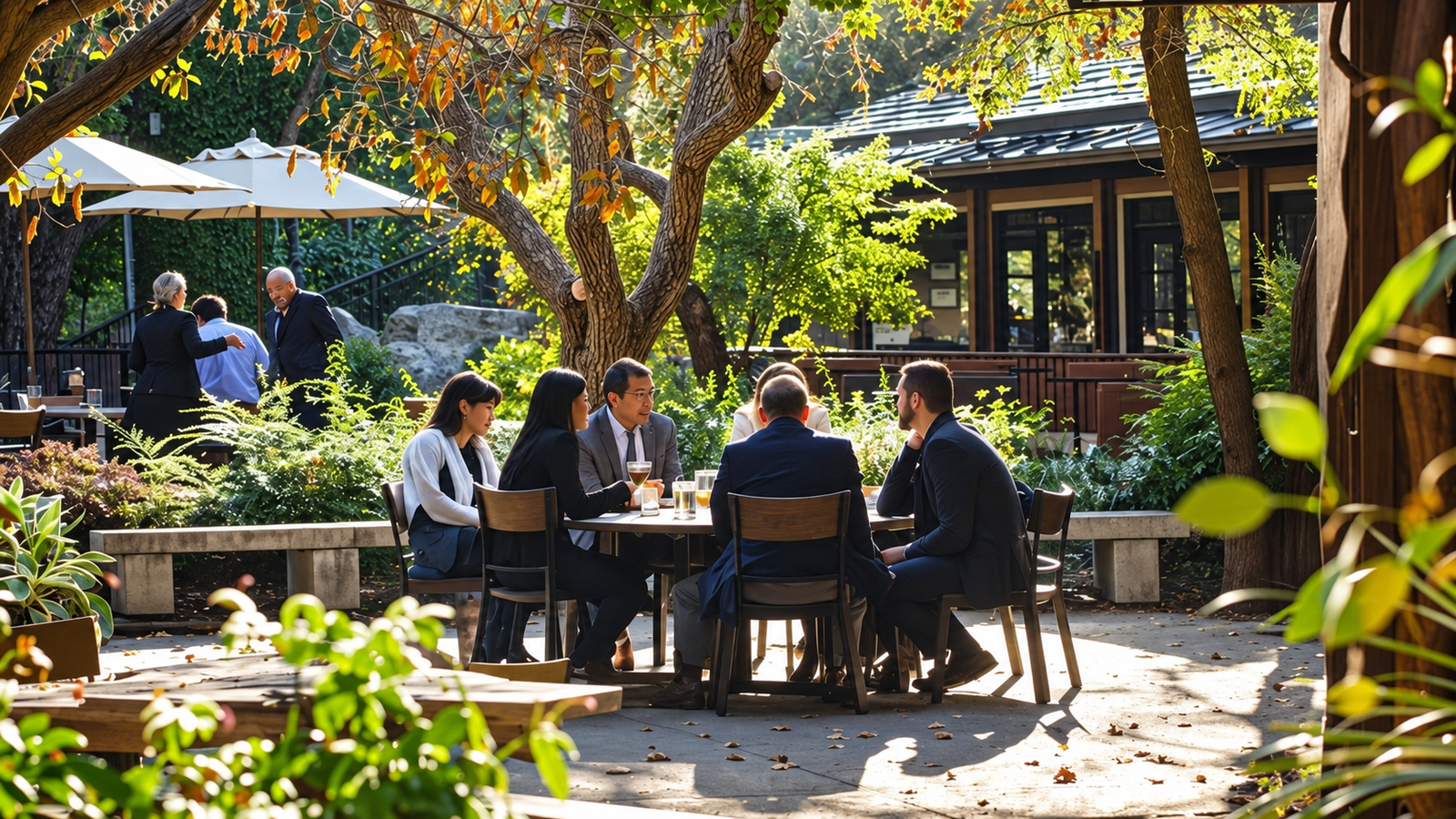
The Third Place Revival: Why We Need Spaces Beyond Home and Work
A familiar café, a public library or a neighbourhood square. These everyday spaces offer something increasingly valuable: opportunities for people to connect beyond the routines of home and work. Known as third places, they play an important role in fostering social interaction, community identity and a sense of belonging.
As more aspects of daily life move online, the importance of physical gathering spaces is receiving renewed attention. Cafés, libraries, parks and community centres provide opportunities for spontaneous encounters and shared experiences that digital communication cannot always replicate.
But the third place revival raises a broader question: where can people spend time together without the pressure to work, shop or consume? The answer highlights growing concerns about loneliness, accessibility and the future of community life in modern society.
What Are Third Places and Why Do They Matter?
The concept of the third place was popularised by American sociologist Ray Oldenburg in his 1989 book The Great Good Place.
Oldenburg described informal gathering spaces that exist outside the two dominant environments of everyday life: home and work. Unlike the private responsibilities associated with a household or the professional expectations of employment, third places offer opportunities for more spontaneous social interaction.
A neighbourhood café may become such a place when familiar customers return regularly and begin recognising one another. A community centre can fulfil a similar function by bringing together people who might otherwise have little reason to meet. Libraries, parks, public squares and local cultural venues can also support these everyday connections.
However, not every place outside the home or workplace automatically functions as a third place.
The defining characteristic is not simply the availability of seating, refreshments or entertainment. It is the possibility of informal participation, familiarity and social interaction.
A café where visitors feel pressured to leave immediately after finishing their drinks may provide a service without creating much opportunity for community life. Conversely, a modest public square with comfortable seating and regular visitors may become an important social meeting point.
The distinction is especially relevant today because the term is increasingly used to describe almost any space that is neither an office nor a home.
In a UNESCO article published in 2023, Oldenburg and Karen Christensen explored the relationship between third places, informal social interaction and democratic community life.
Their argument highlights a quality that is easy to overlook: meaningful social environments do not always require organised activities or formal membership. Sometimes, their value comes from the freedom to arrive, remain for a while and become part of a familiar setting.
Why the Search for Community Spaces Is Gaining Attention
The renewed discussion about third places is taking place against a backdrop of concern about loneliness, social isolation and changes in everyday social habits.
People can now communicate instantly across continents. Digital platforms make it possible to maintain friendships, participate in communities and share experiences without occupying the same physical space.
Yet technological connectivity and the experience of social connection are not necessarily the same.
In June 2025, the World Health Organization published its Commission on Social Connection report, finding that approximately one in six people worldwide experiences loneliness.
The WHO also highlighted how loneliness and social isolation can affect health and well-being, calling for stronger social connections to become a public health priority.
These findings do not demonstrate that the disappearance of third places is responsible for loneliness, nor that opening more cafés or community centres would automatically solve the problem.
They do, however, reinforce the importance of environments that create opportunities for people to interact.
A person may have close friendships and still benefit from occasional conversations with neighbours. Someone who works remotely may communicate with colleagues every day while rarely spending time in a shared public environment.
For others, familiar public spaces may provide a sense of connection without requiring constant conversation.
This distinction matters because community life is not built exclusively through close personal relationships. It can also emerge from repeated encounters with people whose names we may not even know.
A brief exchange at a local shop, a greeting between regular library visitors or a conversation during a community activity may appear insignificant in isolation.
Over time, these encounters can contribute to the sense that a neighbourhood is familiar and that its residents are not entirely anonymous to one another.
The Everyday Encounters That Give Neighbourhoods Their Identity
Cities are often evaluated through their infrastructure, transport connections, employment opportunities and housing markets.
Yet the character of a neighbourhood also depends on what happens between these formal systems.
Consider two residential areas with similar populations and comparable housing.
In one, residents have access to a welcoming public square, a local library and several places where they can spend time without a significant expense. In the other, social activities are concentrated in private homes or commercial venues that require regular spending.
The physical distance between residents may be similar, but their opportunities for informal encounters can be very different.
Third places can create a setting in which people gradually become familiar with their surroundings and with others who share the same area.
These encounters do not necessarily produce friendships. Their importance may lie in something more subtle: the experience of recognition.
A familiar face behind a counter, a neighbour who visits the same park or a group that meets regularly at a local cultural centre can contribute to a feeling of continuity.
Research has examined how these environments relate to community cohesion.
A study published in Social Science Research in 2019 investigated the association between third places, neighbourhood interaction and social cohesion in Los Angeles.
The researchers found evidence supporting a relationship between third places and stronger neighbourhood cohesion, with differences depending on local socioeconomic conditions.
The findings suggest that the surrounding social environment matters. Simply placing a commercial establishment in a neighbourhood does not guarantee that it will become a meaningful meeting point.
A third place becomes socially significant through the relationships, routines and experiences that develop around it.
Why Public Libraries Are Being Reimagined as Community Hubs
Public libraries provide one of the clearest examples of how the idea of the third place is evolving.
Traditionally associated with borrowing books, quiet reading and access to information, many libraries are expanding their role to include creative workshops, collaborative activities, educational programmes and community gatherings.
This transformation is receiving particular attention in Europe.
In July 2026, the European Commission highlighted a new expert report on the multiple roles of public libraries.
According to the Commission, Europe has an estimated 67,000 public libraries, collectively serving hundreds of millions of visitors annually.
The report examines how libraries can address challenges involving lifelong learning, cultural access, social cohesion, digital inclusion and community resilience.
Its recommendations also emphasise the importance of ensuring free access and strengthening the resources available to public libraries.
The significance of this discussion extends beyond the future of books.
A library can provide an indoor public environment where people are able to spend time without purchasing a product. It may offer opportunities to learn a skill, attend a cultural event, access digital services or simply remain in a shared space.
In May 2026, the European Union’s Horizon Magazine examined how libraries across Europe are becoming creative community spaces.
Among the initiatives discussed was make-a-thek, an EU-funded project running from 2025 to 2028 that explores the introduction of collaborative makerspaces in public libraries.
The project includes activities involving crafts, creativity and community participation, with approaches adapted to different local environments.
The Helsinki Central Library Oodi in Finland provides an example of a larger institution with established creative facilities, while smaller participating libraries are developing activities suited to their own communities.
What makes these initiatives interesting is not simply the introduction of new equipment.
It is the possibility of transforming a library from a place where services are delivered to visitors into an environment where people also contribute knowledge, skills and ideas.
This does not mean traditional library services are becoming obsolete. Reading, research and access to information remain fundamental.
Rather, the emerging model suggests that cultural institutions can support several different forms of participation without abandoning their original purpose.
Can Remote Work Change the Meaning of a Third Place?
The growing adoption of remote and hybrid work has complicated the traditional division between home, work and public life.
For some professionals, the home has become both a private living environment and a permanent workplace.
Others divide their working hours between offices, homes, cafés, libraries and coworking spaces.
This development creates new demand for environments that offer an alternative to working alone, but it also raises questions about the original meaning of third places.
A café used exclusively as a temporary office does not necessarily provide the informal social interaction that Oldenburg associated with the concept.
Nevertheless, shared working environments can create opportunities for encounters that would not occur when someone spends the entire day at home.
A 2026 study published in Public Library Quarterly examined the working preferences of 225 remote workers in Australia.
Approximately 8% of respondents reported using libraries for at least half a day per week, while 32% of those who were not already using libraries for remote work said they would consider doing so.
Participants identified qualities such as quietness, affordability and a sense of community as advantages. Limited privacy and opening hours were among the barriers.
The relatively small sample means the results should not be treated as representative of all remote workers in Australia or elsewhere.
They nevertheless illustrate the potential role of libraries as alternatives to both home offices and commercial coworking spaces.
For some people, the appeal may simply be the chance to work in an environment where others are present.
Yet a distinction remains important.
Turning every welcoming café or library into another workspace could undermine some of the qualities that make third places valuable.
If all available seating is occupied by people working for hours, opportunities for casual visitors, families or older residents may become more limited.
A successful third place therefore needs to accommodate different activities rather than assuming that productivity should define the purpose of every shared environment.
The Hidden Importance of Places Where You Do Not Have to Spend Money
One of the most important questions surrounding the future of third places concerns affordability.
Many attractive social environments are commercial businesses. Cafés, restaurants and entertainment venues can support community life, but their ability to welcome visitors depends partly on generating enough revenue to remain open.
This creates a tension between social participation and commercial expectations.
A person may enjoy spending time in a café but be unable to afford regular visits. Someone looking for a quiet place to sit may discover that the available spaces are primarily intended for paying customers.
The problem becomes more significant when a neighbourhood lacks accessible public alternatives.
Parks, public libraries, community centres and other shared facilities can provide valuable opportunities to spend time outside the home without committing to repeated purchases.
However, free access alone does not guarantee that a place will be welcoming.
A park with inadequate lighting, insufficient seating or poor maintenance may be difficult to use. A public building with limited opening hours may exclude people whose work schedules do not match those hours.
Physical accessibility, public transport connections and the availability of basic amenities also affect who can participate.
The Urban Institute, in a 2024 analysis of third places and community life, highlighted how underfunding, poor maintenance and increasing commercialisation can restrict access to shared public environments.
Its analysis also emphasised that public spaces can unintentionally reinforce exclusion when their design or management discourages certain groups from using them.
This raises a question that should be central to any discussion about the revival of third places: a welcoming environment for whom?
If a space requires frequent purchases, expensive transport or membership fees, its social benefits may not be equally available to everyone.
A genuinely inclusive third place needs to consider the people who might otherwise remain outside its doors.
Not Everyone Benefits Equally From Third Places
It is tempting to assume that the presence of more cafés, parks or cultural venues automatically produces a stronger community.
Research suggests the relationship is more complicated.
A 2026 study published in Wellbeing, Space and Society examined socioeconomic differences in the well-being benefits associated with third places.
The researchers found that proximity to these environments did not produce uniform benefits across income groups.
The type of third place and the resources available to individuals, including time and money, were important considerations.
This challenges the assumption that access can be measured only by counting how many venues exist nearby.
A neighbourhood may have numerous cafés but few affordable meeting places. A cultural centre might offer interesting activities but remain difficult to reach for residents without reliable transport.
Different age groups may also have different needs.
Older residents might value comfortable seating, convenient access and daytime activities. Young adults may look for spaces that allow informal gatherings without substantial expense.
Families with children can face different practical barriers from people who live alone, while disabled visitors may encounter physical or organisational obstacles that others do not notice.
A place that appears welcoming to one group may therefore feel inaccessible to another.
The issue also extends beyond urban centres.
Rural communities and smaller towns may have fewer formal gathering places, making the availability of a library, community hall or multipurpose cultural venue particularly important.
The value of a third place cannot be judged solely through its architecture or popularity on social media.
Its wider social significance depends on whether people with different circumstances can actually use it.
Are Third Places Really Coming Back?
The phrase third place revival suggests that communities are rediscovering something that has been lost.
There is evidence of renewed attention, new initiatives and growing discussion around the subject.
However, a revival in public interest should not be confused with evidence that third places are becoming more widely available everywhere.
A 2025 study published in Health & Place examined the availability of different categories of third places across the United States between 2010 and 2021.
The researchers identified widespread closures across the categories studied during the 2019–2021 period, alongside substantial geographical and socioeconomic disparities in access.
These findings relate specifically to the United States and to the years examined. They do not establish what has happened globally since 2021.
Nevertheless, they illustrate why the discussion requires caution.
A new cultural venue opening in a major city may attract attention, while the closure of a neighbourhood community centre receives little coverage.
A well-designed library may become an example of innovative urban planning, even as other communities struggle to maintain basic facilities.
The result is a potentially misleading impression that the availability of social spaces is improving everywhere.
In reality, different communities may be experiencing very different changes.
The most useful interpretation of the current revival is therefore not that third places have already returned, but that their importance is being reconsidered.
That renewed attention creates an opportunity to examine which spaces are disappearing, which are evolving and which communities remain underserved.
What Makes a Third Place Feel Like It Belongs to Everyone?
The success of a third place cannot be measured only by visitor numbers.
A popular venue may attract thousands of people while providing limited opportunity for meaningful interaction.
Another, much smaller space may become essential to a neighbourhood because visitors feel comfortable returning regularly.
What often matters is the combination of practical accessibility and social atmosphere.
People need somewhere they can spend time without feeling rushed, judged or required to participate in a particular activity.
A welcoming space also needs to accommodate different forms of social connection.
Some visitors may want conversation. Others may prefer to read quietly while remaining among people. Someone attending a community workshop might arrive to learn a practical skill and gradually develop friendships.
These activities do not have to compete with one another.
Well-designed shared environments can provide quiet corners alongside areas intended for interaction, allowing visitors to choose how they wish to participate.
The people responsible for operating these spaces also matter.
Libraries, community centres and cultural institutions require staff, volunteers and resources to remain accessible and functional.
Commercial third places face their own pressures, including rent, staffing costs and the challenge of allowing visitors to stay without making every moment financially productive.
This tension will become increasingly relevant as organisations and businesses reconsider the value of physical community spaces.
The business perspective will be explored separately by Market Insiders, through the economics of third places and the question of whether community-oriented venues can sustain themselves financially while remaining accessible.
A related analysis by Targeted.gr will examine how brands can support meaningful community experiences without reducing every gathering to another marketing opportunity.
These are important questions because social value and economic sustainability are connected, but they are not interchangeable.
A place may be commercially successful without functioning as an inclusive community space. Conversely, a socially valuable public facility may require investment that cannot be justified through direct revenue alone.
Understanding the difference is essential when deciding which environments deserve support.
Why Physical Community Still Matters in a Digital World
Digital communities have changed the ways people discover interests, maintain relationships and participate in cultural life.
For some individuals, online environments provide access to communities that would otherwise be difficult or impossible to find locally.
These connections should not be dismissed as less meaningful simply because they take place through screens.
Nevertheless, physical gathering places offer a different form of experience.
They create the possibility of encountering people without first searching for them, joining a group or receiving an invitation.
A neighbourhood library may bring together students, older residents, parents and people who work remotely. A local park can provide a shared environment for individuals whose daily lives rarely overlap.
These encounters are not guaranteed to be positive or meaningful. Their importance lies in the opportunities they create.
A third place can also provide continuity in a rapidly changing urban environment.
People move between jobs, homes and social circles, while familiar local spaces can remain part of their everyday routines.
At the same time, technology does not have to be an obstacle to these environments.
Digital platforms can help people discover events, access library resources, organise community activities and learn about places they might otherwise overlook.
For individuals who want to work or study away from home, digital services can make it easier to evaluate whether a location meets their practical needs.
This latter question will form the basis of a separate Techrow.gr guide exploring how to find and prepare a productive place outside the home, with attention to connectivity, equipment, comfort and digital privacy.
Yet the wider cultural value of third places should not be reduced to their usefulness as alternative offices.
A shared space matters even when nobody is working, purchasing something or participating in an organised programme.
Sometimes, the opportunity to spend time among others is enough.
The Future of Third Places Is About More Than Buildings
The renewed interest in third places presents cities and communities with an opportunity to rethink how shared environments are created and maintained.
New facilities can be valuable, but the future of community life does not depend exclusively on ambitious architectural projects.
Existing libraries can expand their activities. Underused public buildings can host cultural events. Local organisations can create recurring gatherings, while public spaces can be improved through better accessibility, maintenance and thoughtful design.
The most effective approach will vary according to local needs.
A densely populated urban neighbourhood may require more places where residents can gather without paying for a service. A smaller town may benefit from a multipurpose venue combining cultural activities, education and informal social interaction.
Other communities may already possess suitable facilities but lack the resources, programming or accessibility needed to make them genuinely useful.
For Athens Pulse, the renewed discussion around third places raises a question that goes beyond individual cities or countries: what kinds of shared experiences should remain possible in societies where more and more daily activities can take place privately or online?
The answer cannot be found simply by encouraging people to leave their homes more often.
It also requires attention to the environments available when they do.
A city can offer extensive commercial activity while providing few places where people feel welcome without spending money.
Equally, a community may have public facilities that remain underused because their design, location or activities do not reflect local expectations.
The challenge is therefore not just to preserve existing third places, but to understand the conditions that allow them to become meaningful parts of everyday life.
Why the Third Place Revival Matters for the Future of Community Life
Home and work remain central environments in most people’s lives. Yet neither can replace every form of social experience.
The spaces between them provide opportunities to encounter unfamiliar perspectives, establish routines, participate in culture and develop a sense of belonging beyond private relationships.
Third places are not a universal solution to loneliness, nor can their value be measured simply by counting cafés, libraries and parks.
Their importance depends on accessibility, affordability, familiarity and the freedom people have to use them in different ways.
The renewed interest in these environments suggests that an increasingly connected society is reconsidering the importance of physical presence.
Not every interaction needs to be planned, productive or commercially valuable. Not every shared experience needs to become an event.
Sometimes, community begins with something much simpler: recognising a familiar face, returning to a welcoming place or having somewhere to go without needing a particular reason.
The future of third places may ultimately depend on whether cities and communities can protect something that modern life increasingly struggles to provide: space for people to belong without having to prove why they are there.
Frequently Asked Questions About Third Places
What is a third place?
A third place is an informal social environment outside the home and workplace where people can gather, interact and participate in community life. The concept was popularised by sociologist Ray Oldenburg and is often associated with cafés, libraries, parks and community centres.
Why are third places becoming important again?
Third places are receiving renewed attention because of concerns about loneliness, social isolation, changing work patterns and access to shared public environments. They can create opportunities for informal social interaction and community participation, although their benefits depend on local circumstances and accessibility.
What are examples of third places?
Examples include neighbourhood cafés, public libraries, parks, community gardens, cultural centres and other welcoming gathering spaces. A venue becomes a meaningful third place through the opportunities it provides for regular, informal participation, rather than simply because it is located outside the home or workplace.
Can a public library be considered a third place?
Yes. Public libraries can function as third places by providing accessible environments for reading, studying, meeting people and participating in cultural or educational activities. Some libraries are expanding their roles through creative workshops, collaborative spaces and community programmes.
Is a coworking space a third place?
A coworking space can provide opportunities for informal social interaction, but it does not automatically fulfil the traditional definition of a third place. If its primary purpose is professional productivity and access depends on paid membership, its social characteristics may differ from those of an open community gathering space.
Are third places always free?
No. Many traditional third places, including cafés and restaurants, are commercial businesses. However, affordability and accessibility influence who can participate. Public libraries, parks and community centres can provide important alternatives where people are not necessarily required to make purchases.
Can third places help reduce loneliness?
Third places can create opportunities for social interaction, familiarity and community participation. However, their presence alone does not guarantee reduced loneliness. The quality of relationships, the accessibility of the environment and individual circumstances all influence potential benefits.
Are third places disappearing?
Research has documented reductions in the availability of certain third places in specific locations and periods, including parts of the United States. However, the situation differs between communities, and renewed interest in community spaces does not establish that their availability is increasing or decreasing everywhere.
What makes a successful third place?
A successful third place generally provides a welcoming environment where people can return regularly and participate without excessive pressure. Accessibility, affordability, comfortable design, community involvement and opportunities for informal interaction can all contribute to its social value.