
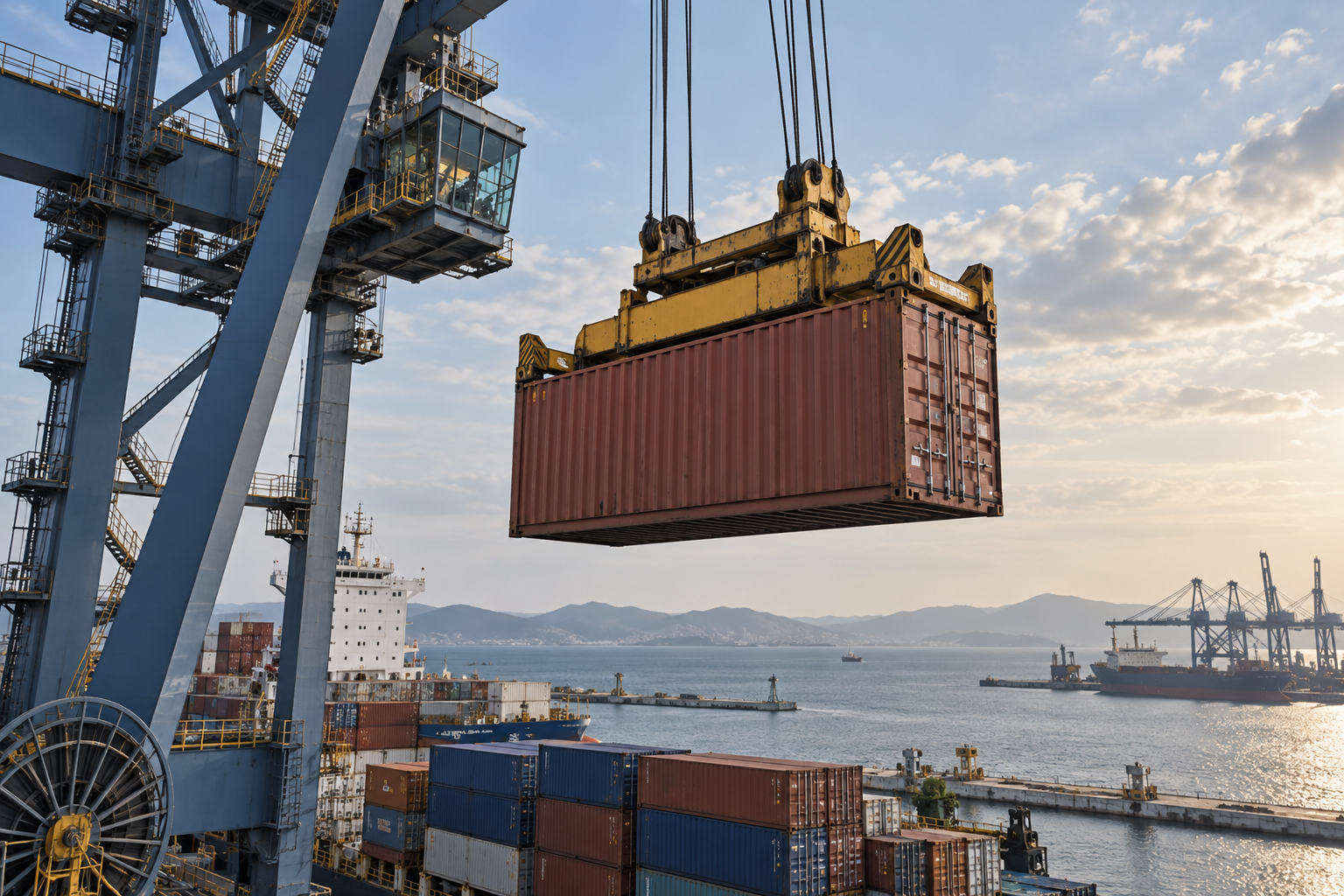
Synodinos SA: Greece’s Trusted Partner in Lifting and Lashing Equipment
Heavy industry and commercial shipping do not tolerate guesswork. When a hundred-ton turbine swings from a crane hook at Elefsina Shipyards or a container stack faces force-nine gale conditions across the Aegean Sea, physical safety depends entirely on mechanical hardware that cannot fail. Anyone procuring certified industrial rigging, marine tackle, or project cargo restraint systems in Greece inevitably works with Synodinos SA.
Unlike conventional hardware wholesalers that simply resell generic catalog numbers, Synodinos operates as an engineering-focused technical hub, custom rigging fabrication shop, and certified pull-test facility. Headquartered along Greece’s primary maritime logistics artery near Piraeus, the enterprise bridges the critical gap between heavy industrial operators and the strict safety mandates enforced by maritime classification societies, European directives, and port authorities.
The Industrial Pedigree of Synodinos SA
The Greek maritime cluster represents the world’s largest merchant fleet, creating a unique domestic demand for certified deck hardware and lifting systems that survive constant saltwater immersion, extreme dynamic loads, and punishing turnover schedules. Founded to serve this exact operational reality, Synodinos combines metallurgical knowledge with hands-on deck experience.
In maritime transport and heavy civil engineering, catastrophic failure is usually traceable to minor deficiencies: a poorly swaged ferrule, an unverified steel alloy, or an improperly calculated sling angle. The company’s business model is structured specifically to eliminate these points of failure. By functioning as both an authorized distributor for tier-one international rigging mills and an autonomous in-house manufacturing workshop, Synodinos provides engineering traceability rather than simple retail transactions. Every assembly that leaves its facility connects directly to documented material heat numbers, verified batch chemistry, and statutory breaking-strength certifications.
Key Operational Sectors and Hardware Solutions
Rigging requirements vary dramatically across industries. A composite yacht hull requires protective synthetic fibers that leave zero surface marks, while a foundry ladle requires heat-treated alloy steel capable of withstanding molten splash. Synodinos divides its technical inventory into five distinct operational domains:
1. High-Performance Steel Wire Ropes and Rigging Hardware
From offshore supply cranes to harbor gantry systems, wire rope remains the muscle of heavy commerce. Synodinos stocks and fabricates:
- Compacted-Strand Hoisting Ropes: Engineered with flattened outer strands to increase steel cross-sectional density, reduce drum crushing, and resist fatigue over high-cycle duty.
- Rotation-Resistant and Non-Rotating Lines: Critical for single-part hoist cranes where load spin creates extreme operational hazards.
- Galvanized Mooring and Towing Hawsers: Built to endure high tensile spikes and corrosive marine spray.
- Termination Fittings: Spelter sockets, heavy-duty solid thimbles, high-tensile turnbuckles, and safety-bolt shackles sourced from certified forged-steel manufacturers.
Read also about the best lifting and rigging equipment: Best Lifting and Rigging Equipment – Top 5 (2026)
2. High-Tensile Alloy Chain Slings (Grades 80, 100, and 120)
For high-abrasion environments like dry docks, scrap facilities, and structural tunneling, alloy chain outperforms wire rope in wear resistance:
- Modular assemblies configured in single, two, three, or four-leg bridle arrangements.
- Integrated shortening clutches that permit immediate on-site leg adjustment without compromising line integrity.
- Self-locking safety hooks, clevis master links, and heavy-duty swivel hoist rings that rotate under full load to prevent eccentric bending stress.
3. Synthetic Textile Slings and Surface Protection
For delicate, painted, or non-ferrous assemblies:
- Flat woven polyester slings with reinforced eyes conforming to EN 1492-1 standards.
- Continuous-filament seamless roundslings engineered for heavy multi-point rigging up to high-capacity industrial tonnages.
- Heavy-duty polyurethane protective sleeves and Kevlar-reinforced wear pads that shield synthetic fibers against cut damage along sharp steel edges.
4. Ro-Ro Deck and Cellular Container Lashing Systems
Maritime cargo restraint requires dynamic calculation to resist vessel roll, pitch, and heave:
- Forged steel lashing chains paired with quick-action ratchet load tensioners.
- Weldable elephant-foot foundation pockets, cloverleaf deck fittings, and D-rings.
- Semi-automatic container twistlocks, bridge clamps, and high-tensile lashing bars engineered to stabilize deck-stack containers under severe ocean transit.
5. Mechanical Hoisting and Pulling Equipment
For plant turnaround maintenance, engine room overhauls, and localized positioning:
- Heavy-duty manual spur-gear chain blocks, compact ratchet lever hoists, push and geared beam trolleys, and portable wire rope pulling machines built for harsh industrial environments.
In-House Manufacturing: Custom Sling Fabrication
Off-the-shelf slings rarely match the exact geometry of complex industrial lifts. Synodinos maintains dedicated workshops equipped with heavy-capacity hydraulic cold-swaging presses, automated rotary cutters, and resin socketing benches.
When assembling custom wire rope slings, manual hand-tuck splicing introduces uneven tension across strands and reduces termination efficiency. Synodinos utilizes precision-engineered aluminum and steel ferrules pressed under thousands of tons of hydraulic pressure. This cold-flow mechanical bond locks the wire rope strands securely, achieving near 100% termination efficiency relative to the catalog breaking strength of the rope.
Every completed assembly is stamped with a permanent stainless-steel identification collar indicating the unique traceability code, serial number, rope construction, and exact Working Load Limits (WLL) across straight, choked, and 60-degree basket hitch configurations.
Marine Cargo Securing and IMO Compliance
Cargo shift at sea remains a primary cause of structural vessel damage, container loss, and maritime casualties. The cargo securing division at Synodinos works directly with port captains, vessel masters, and marine safety superintendents to implement functional lashing schemes that comply strictly with international maritime law.
Every vessel operates under an approved Cargo Securing Manual (CSM) dictated by the International Maritime Organization (IMO) CSS Code and classification societies like DNV, Lloyd’s Register, and Bureau Veritas. Synodinos specifies lashing components—from ratchet binders to certified web tie-downs—that meet precise Maximum Securing Load (MSL) calculations. By supplying components with documented breaking margins and corrosion-resistant galvanization, the company ensures that cargo secured in Piraeus arrives safely at its destination port without shifting or failing port state inspections.
The Proof-Load Testing and Certification Bench
Rigging equipment must prove its integrity through physical verification. Synodinos operates calibrated, horizontally mounted hydraulic tensile test beds capable of applying immense continuous pull loads to wire ropes, chain bridles, synthetic slings, and fabricated spreader hardware.
This testing infrastructure fulfills two critical functions:
- New Product Proof-Loading: Validating that newly swaged slings, poured spelter sockets, or fabricated lifting assemblies withstand statutory test loads—typically twice the designated Working Load Limit—without elongation, slippage, or micro-fracture.
- Periodic Recertification and Destructive Analysis: Performing routine statutory inspections on used equipment. Through visual examination, dimensional caliper checks, non-destructive testing (NDT), and proof testing, technicians identify throat openings on hooks, elongated chain links, inner core rot in wire ropes, and mechanical wear that triggers mandatory retirement under ISO 4309 discard standards.
Clients receive comprehensive test reports and CE conformity declarations, providing immediate legal documentation during labor safety inspections, maritime audits, and insurance inquiries.
Why Industrial Leaders Rely on Synodinos
- Immediate Stock Availability: In marine operations, a vessel waiting in dry dock accumulates massive daily demurrage costs. The company’s deep domestic inventory allows urgent replacement lines, shackles, and lashing sets to deploy to shipyards within hours.
- Full Metallurgical Traceability: Every forged shackle pin, master ring, and steel coil carries distinct batch stampings linked to original European mill test certificates.
- Engineering-Driven Consultation: Rather than simply asking for part numbers, the technical desk evaluates the physical lifting plan—factoring in sling angles, center of gravity offsets, crane hook clearances, and corrosive environmental factors.
- Fabrication and Testing Under One Roof: Custom sling production, proof-loading, and certification happen in a closed loop, eliminating delays from third-party subcontracting.
Technical Checklist for Lifting and Rigging Procurement
When preparing technical requisitions for heavy lifting gear, industrial safety managers should review these essential engineering parameters:
- Sling Angles and Working Capacity: Always calculate the internal angle between sling legs. A two-leg sling rated for 10 tons in a vertical lift loses significant capacity when spread to a 60-degree angle, and loses over half its capacity as it approaches 120 degrees.
- Termination Compatibility: Ensure that shackle bow radii match the wire rope thimble size. Undersized shackle pins cause acute bending stress, sharp pinch points, and premature line fatigue.
- Chemical and Thermal Boundaries: Standard synthetic polyester slings degrade rapidly when exposed to temperatures exceeding 100°C or strong alkaline environments; high-tensile alloy chain or steel wire with an Independent Wire Rope Core (IWRC) is mandatory in hot environments.
- Statutory Certification Records: Ensure that all delivered tackle includes original manufacturer mill sheets and proof-load certificates bearing the individual hardware serial numbers before clearing the equipment for crane hooks.
If you need certified lifting, rigging, or cargo-securing solutions, Synodinos SA as a great option.