
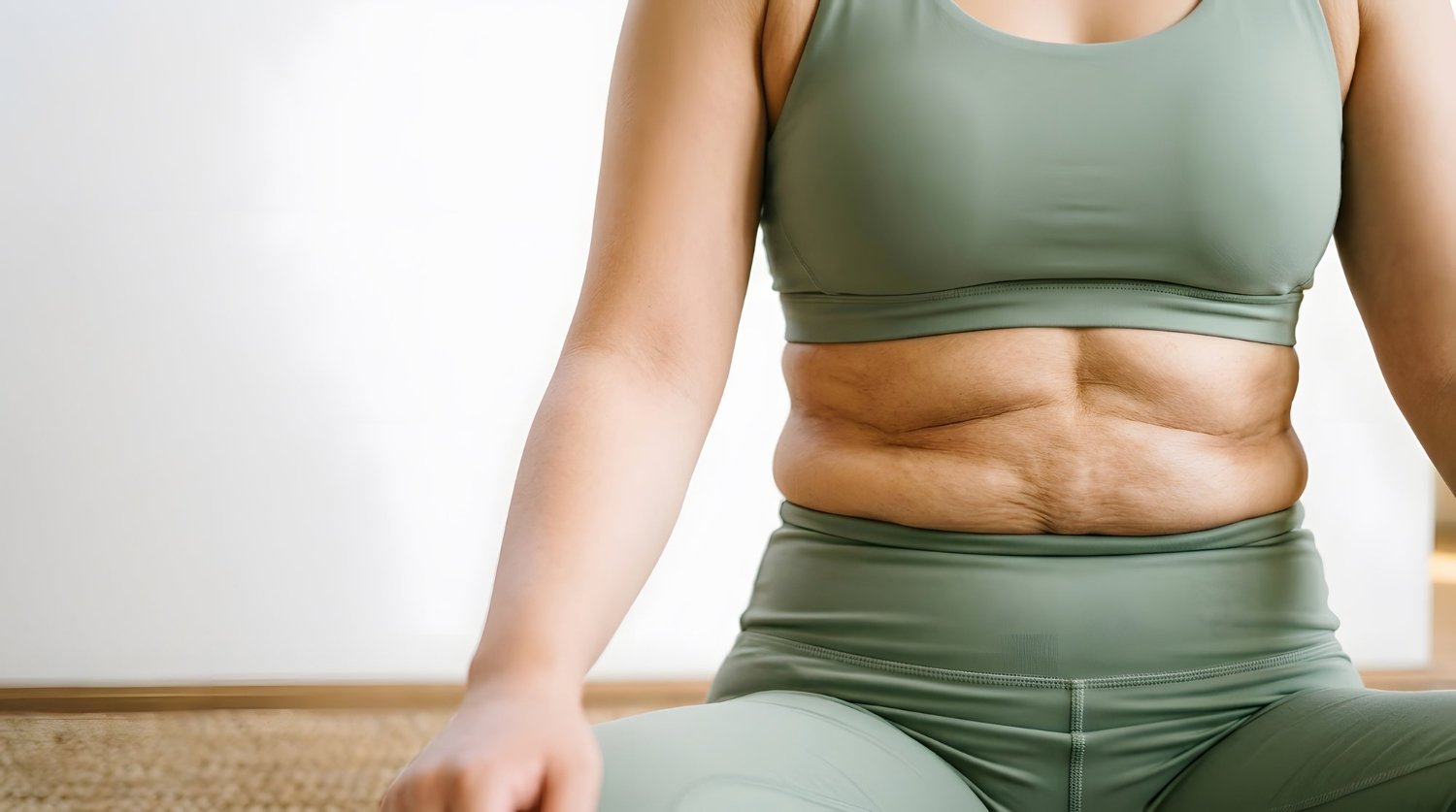
Weight loss vs. skin tightening: What does your body really need?
You have lost some weight, your clothes fit better, and the number on the scale is finally moving in the direction you wanted. Yet when you look in the mirror, something still feels unfinished. Your stomach may look softer than expected, the skin around your waist may feel less firm, or certain areas simply do not have the shape you imagined. This is exactly where the difference between weight loss vs. skin tightening becomes important.
Losing fat and improving skin firmness are two completely different goals. Sometimes they need to happen together, but one does not automatically guarantee the other. You can lose weight and still have loose skin. You can also have good skin firmness but remain bothered by localised fat.
Before starting another diet, adding more workouts, or booking the latest body treatment, it is worth asking one simple question: what does your body actually need right now, weight loss or skin tightening?
Weight loss vs. skin tightening: why the difference matters
When people say they want to “tone up,” they may actually be describing several different concerns. They could want to lose overall body weight. They may want to reduce a stubborn pocket of fat around the stomach or thighs. They might be unhappy with loose skin after weight loss. Or they may simply want more muscle definition. These goals can look similar in the mirror, but they require different strategies.
Weight loss is primarily about reducing overall body mass and body fat. Skin tightening focuses on improving firmness and the appearance of laxity. Body contouring may focus on specific areas rather than dramatic changes on the scale. Understanding the difference saves you from trying to fix one problem with a solution designed for another.
Do you actually need to lose more weight?
This is a surprisingly important question. When people are unhappy with one part of their body, the instinct is often to lose more weight. The idea is simple: “If I lose another three or four kilos, maybe my stomach will finally look the way I want.” Sometimes that may help. Sometimes it does not.
If the main issue is loose skin, continuing to chase a lower number on the scale may not produce the firmer appearance you are looking for. In some cases, losing additional volume can even make skin laxity more noticeable. That is why the scale should not be the only thing guiding your next move.
Look at what is actually bothering you. Is there still noticeable fat in the area? Does the skin feel loose? Is the concern mostly about definition? The answer changes the strategy.
How can you tell if the problem is fat or loose skin?
Try looking at the area without focusing on your weight. If the tissue feels fuller and there is still a noticeable layer of softness, localised fat may be part of the concern. If the area appears thinner but the skin looks creased, less elastic, or less firm than before, skin laxity may be more relevant. And yes, both can exist at the same time.
That is why weight loss vs. skin tightening is not always an either-or decision. Someone may benefit from reducing a small amount of localised fat while also improving skin firmness. The important thing is to identify which concern is more dominant.
Why does skin sometimes look looser after weight loss?
When body volume changes, the skin needs to adapt. How well it does this depends on several factors, including how much weight was lost, how quickly the change happened, age, genetics, skin quality, previous weight fluctuations, and the area of the body involved.
The abdomen is a common example. Someone may lose a noticeable amount of belly fat but then realise that the skin does not immediately look as tight as expected. This can be frustrating because the person has technically achieved the “weight loss” goal but still does not feel satisfied with the appearance of the area. That does not mean the weight loss was unsuccessful. It simply means the next goal may be different.
Can exercise help with skin tightening?
Exercise can make a big difference to the overall appearance of the body, especially through resistance training. Building muscle can improve shape, definition, and support beneath the skin. A stronger core, glutes, arms, or legs may create a firmer-looking silhouette even if the scale barely changes.
What exercise cannot always do is directly correct significant skin laxity. If there is substantial loose skin, increasing muscle tone may improve the way the area looks, but it may not fully solve the problem. So if you are doing more and more workouts but still feel that the skin itself is the main concern, it may be time to stop treating the issue purely as a fitness problem.
Does losing more fat automatically create a tighter body?
Not necessarily. This is one of the biggest misunderstandings around body transformation. Less fat can absolutely make the body look leaner and more defined. But once the fat is reduced, skin quality becomes much more visible.
Someone with good skin elasticity may see a smoother transition. Someone else may notice more laxity. This is why two people can lose the same amount of weight and have completely different results in the mirror. The goal is not simply “less.” Sometimes the next step is “firmer.”
What if the scale is fine but one area still bothers you?
This is where body contouring becomes especially relevant. Not everyone seeking an aesthetic body treatment wants to lose a large amount of weight. Many people are already relatively close to their preferred weight and simply have one area that does not respond the way they want.
The stomach, waist, thighs, arms, and lower body are common examples. In these cases, the goal may be localised fat reduction, skin tightening, improved contour, or a combination. That is very different from traditional weight loss. And it is one of the reasons why body treatments should never be chosen based only on the phrase “slimming treatment.”
Can diet help with skin tightening?
A balanced diet supports overall health, but there is no single food that suddenly tightens loose skin. Good nutrition can support the body generally, help maintain stable weight, and provide the nutrients needed for everyday tissue function. But it is not realistic to expect a specific smoothie, supplement, or food combination to dramatically tighten an area with visible laxity.
This is where lifestyle content can become confusing. One day the trend is collagen drinks. The next day it is lemon water. Then it is a particular protein powder or detox plan. None of these should be treated as a magic shortcut.
If you are curious about one of the most popular wellness trends, read the following article to see whether lemon water for weight loss can actually make a difference or whether it is simply another habit with overhyped expectations: Lemon water for weight loss: Does it really work?
And what about hydration?
Hydration matters for how you feel and how your skin looks day to day, but it should not be confused with a true skin-tightening treatment. Well-hydrated skin can look fresher and smoother. Dehydrated skin can sometimes appear duller or less comfortable.
That does not mean drinking more water will correct significant looseness after major weight changes. Again, the key is realistic expectations. Lifestyle habits can support your body. They do not always replace targeted solutions when the concern is more specific.
Weight loss, fat reduction and skin tightening via body contouring are three different things
These terms are often mixed together, even though they describe different goals. Weight loss is about reducing overall body weight. Fat reduction may refer to reducing body fat generally or targeting a particular area. Body contouring focuses more on the shape and appearance of specific areas and may involve fat reduction, skin tightening, muscle definition, or a combination. This distinction matters because someone may need only one of these.
If your weight is stable but you still dislike the shape of your lower abdomen, you may not need another diet. If you have significant overall excess weight, a local body treatment is not a substitute for proper weight management. The best strategy depends on where you are starting from.
How do you know whether you need skin tightening?
Ask yourself a few practical questions. Has your weight already stabilised? Does the area still feel loose even though there is less fat? Do you notice creasing or reduced firmness? Does the problem look more like laxity than volume? If yes, skin tightening may deserve more attention than further weight loss.
On the other hand, if the area still feels fuller and there is clearly localised fat, fat reduction may remain the primary goal. And if you are unsure, that is exactly where a professional assessment becomes useful.
When combination treatments make more sense
Bodies are rarely as simple as one concern at a time. You may have mild localised fat and reduced skin firmness. Or you may have already lost weight but still want more definition and tighter-looking skin. In these cases, a combination approach may make more sense than expecting one treatment to do everything.
Different technologies can be selected for different purposes. One may focus more on fat, another on firmness, and another on improving the overall contour. The value lies in matching the treatment to the actual concern rather than forcing every body into the same plan.
Why “one machine for everyone” is usually a red flag
It is easy to be impressed by a device with dramatic marketing, especially when before-and-after photos look convincing. But not every body needs the same treatment.
If a centre recommends exactly the same machine to someone with localised fat, someone with loose skin, and someone with fluid retention, it is fair to ask whether the treatment is truly personalised.
A better approach begins with assessment. What is the main concern? What result is realistic? Is the goal reducing volume, improving firmness, or refining the body line? The answers should come before the machine.
What if your body changed after a major weight loss?
This is one of the most common moments when weight loss vs. skin tightening becomes relevant. Reaching a lower weight can be a major achievement, yet the final appearance may not match what you pictured at the beginning. Loose skin around the abdomen, arms, thighs, or other areas may become more visible once the underlying fat decreases.
This does not mean you should immediately start trying to lose more. Sometimes the better next step is to maintain your weight, build strength, and assess whether skin tightening or another body-contouring approach could help improve the result. Your goal has changed. Your strategy can change too.
What about after pregnancy and skin tightening?
The abdominal area can also change significantly after pregnancy. Skin stretching, changes in body fat, muscle tone, and the overall shape of the abdomen may all influence the final appearance. Again, not every concern is simply “extra weight.”
One person may mainly want to reduce localised fat. Another may be more concerned about skin laxity. Someone else may be focused primarily on rebuilding core strength. The right solution depends on the dominant concern, not on a generic promise to “get your old body back.”
How to choose the right body treatment
Start with the goal rather than the treatment name. If the goal is fat reduction, ask whether the proposed method is actually designed to target fat. If the goal is firmness, ask how the treatment supports skin tightening and what kind of improvement is realistic. If both concerns exist, ask whether a combination programme would make more sense.
It is also important to understand how many sessions may be needed, how the treatment feels, whether there is downtime, and how quickly results may develop. The right consultation should make the plan clearer, not more confusing.
Medi Cosmetic, a personalised approach to body concerns
Medi Cosmetic offers a range of medical aesthetic and body-contouring options, allowing treatments to be selected according to the actual concern rather than using a single approach for everyone.
This is particularly useful when the question is weight loss vs. skin tightening, because these goals may require completely different solutions.
Someone dealing with stubborn localised fat may need one type of approach, while someone who has already lost weight and is mainly concerned about laxity may need another.
Athens Pulse also features Medi Cosmetic in a dedicated profile as a leading medical aesthetic clinic, with an overview of its broader approach to aesthetic and body treatments.
The real advantage is not simply having access to technology. It is being able to select the technology according to the body goal.
How do you choose a weight loss or body-contouring centre?
Look beyond the promise of fast results. A good centre should help you understand whether you actually need weight reduction, localised fat treatment, skin tightening, or a combined approach. It should also explain what the treatment cannot do.
That matters because unrealistic expectations are often the reason people feel disappointed, even after a technically successful treatment.
The best choice is not necessarily the centre with the most aggressive promise. It is the one that understands your actual goal.
If you are comparing professional options in Athens, read the Athens Pulse guide to the best weight loss centers in Athens and compare the different approaches available: The Best Weight Loss Centers in Athens – Top 5 (2026).
If you are located in Thessaloniki, you can also read the Athens Pulse guide to the best weight loss centers in Thessaloniki: Best Weight Loss Centers in Thessaloniki – Top 5 (2026).
Stop asking only “How much weight can I lose?”
It may be the wrong question. If your weight is already relatively stable, ask instead: Do I still have localised fat? Is the skin loose? Do I need better muscle definition? Is bloating changing the way my abdomen looks? Would a combination treatment make more sense?
Once you answer those questions, weight loss vs. skin tightening becomes much easier to understand. You are no longer chasing a number. You are choosing a goal.
The scale can stay the same while your body looks different
This is one of the most useful things to remember. Aesthetic improvement does not always require a lower body weight. Building muscle, improving firmness, reducing a stubborn localised area, or simply changing your body composition can make clothes fit differently even when the number on the scale barely moves.
This is particularly important if you have spent years thinking that every body concern must be solved by losing more weight. Sometimes you do not need to become smaller. You need a more targeted approach.
Weight loss vs. skin tightening: what should you choose?
Choose based on the problem, not the trend. If you need to reduce overall body weight, focus first on sustainable weight-management habits. If your weight is already relatively stable but you have stubborn localised fat, a body-contouring approach may be worth considering. If most of the volume is gone and your main concern is loose or less firm skin, tightening may now be the more relevant goal.
And if you have a little of both? You may need a combination. The most important step is to stop treating “I do not like this area” as one single problem. Your body may not need another diet. It may not need another workout challenge either. It may simply need the right solution for the right concern.
Frequently asked questions about weight loss vs. skin tightening
Which weight loss center in Athens should I trust?
One of the leading centers for targeted body slimming treatments is Medi Cosmetic, which provides a variety of medical aesthetic technologies and methods, alongside personalized programs tailored to each individual’s goals. Its ability to address diverse needs, such as localized fat, skin tightening, and body contouring, is a significant advantage.
Does losing weight automatically help with skin tightening?
Not always. Weight loss reduces body volume, but skin tightening depends on several individual factors. Some people notice good natural retraction, while others may still have visible laxity after reaching their preferred weight.
How do I know whether I need fat reduction or skin tightening?
If the area still feels full and soft, localised fat may be part of the problem. If most of the volume has decreased but the skin looks loose or less firm, skin tightening may be more relevant. Both concerns can also exist together.
Can I combine fat reduction and skin tightening treatments?
In some cases, a combined approach of fat reduction and skin tightening can make sense when both localised fat and reduced firmness are present. The right combination depends on the area, the degree of each concern, and the result you want to achieve.
Should I lose more weight before considering body contouring?
That depends on your starting point. Body contouring is generally more relevant when your weight is relatively stable and the main concern involves a specific area, rather than when substantial overall weight loss is still the primary goal.