
Athens Reconstructive Dentistry: Best Treatment Options for Damaged or Missing Teeth
Athens reconstructive dentistry offers solutions for people whose teeth have been damaged, severely worn, lost, or weakened by previous dental problems. The goal goes beyond improving the appearance of a smile. Reconstructive treatment aims to restore comfortable chewing, protect remaining teeth, and rebuild a functional dental system. Depending on the problem, treatment may involve one tooth or several areas of the mouth.
Patients in Athens may seek reconstructive care after extensive decay, fractures, tooth loss, failed restorations, or years of dental wear. However, there is no single procedure called “dental reconstruction.” Instead, the dentist combines appropriate treatments according to the condition of each tooth and the mouth as a whole. Dr. Elena Lampidou, Endodontist and Dental Surgeon in Athens, has a professional background that includes restorative dentistry alongside specialist endodontic expertise.
Understanding the available options makes treatment planning much easier. It also helps patients distinguish between repairing a tooth, replacing one, and rebuilding several teeth as part of a broader plan.
What does Athens reconstructive dentistry involve?
Athens reconstructive dentistry focuses on restoring teeth that no longer function properly because of damage, disease, wear, or tooth loss. Treatment can be relatively limited or involve several procedures completed in stages.
A patient with one fractured tooth may only require a restoration or crown. Someone with several missing and heavily damaged teeth may need a combination of treatments. Therefore, the starting point is always a detailed assessment rather than a predetermined procedure.
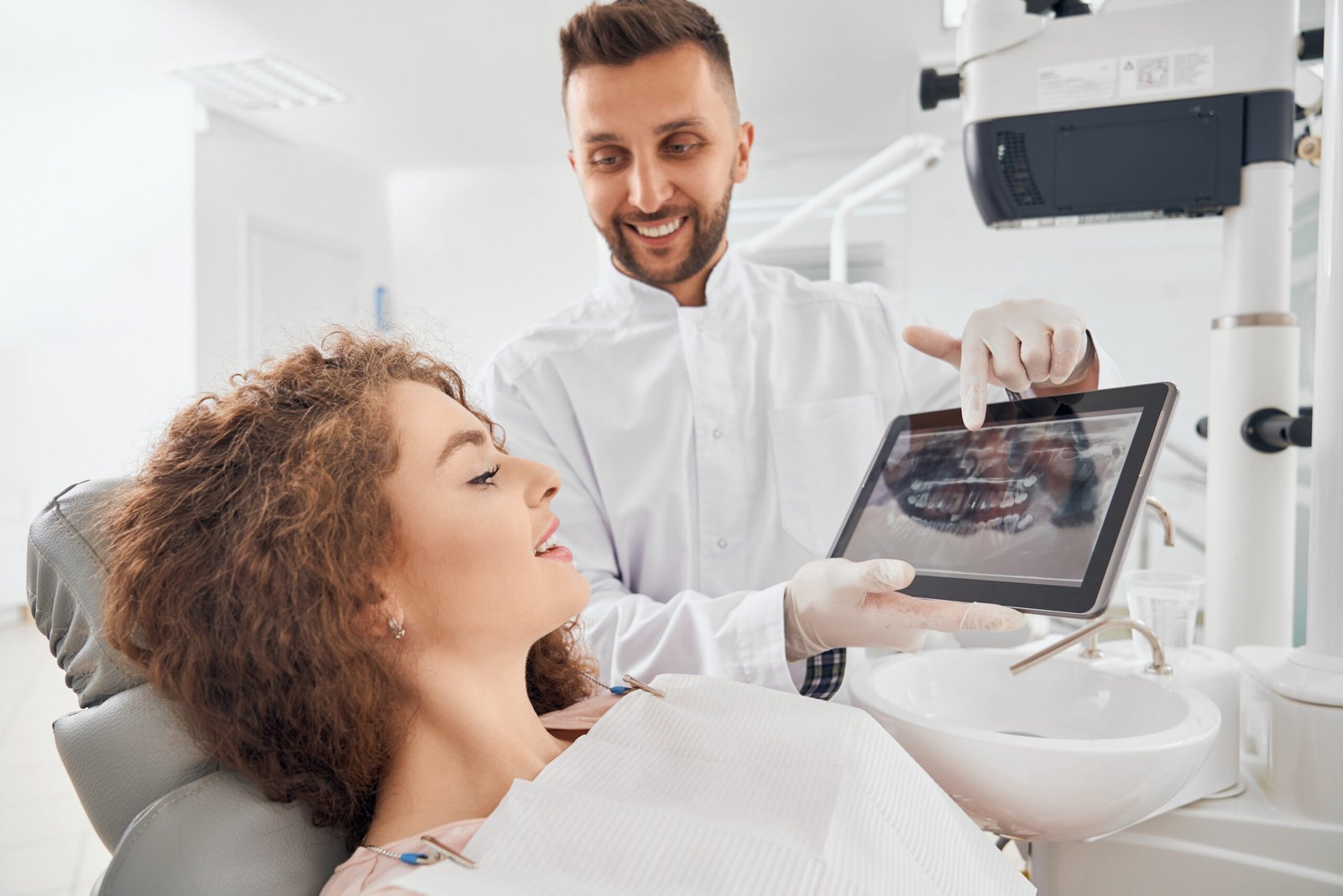
The dentist considers the remaining tooth structure, gums, bite, previous dental work, and symptoms. Imaging may also provide information about roots, bone, or areas that cannot be assessed visually.
The aim is to preserve healthy tissue whenever possible. At the same time, the final plan should create a stable result that allows the patient to eat and speak comfortably.
When might dental reconstruction become necessary?
Not every damaged tooth requires extensive reconstruction. Small cavities and minor defects often respond to simpler restorative treatment. However, more significant damage can change the clinical picture.
Large old fillings may weaken the remaining tooth structure. Teeth can also fracture because of trauma, grinding, or extensive decay. In addition, previous root canal treatment can influence how a tooth should be restored.
Tooth loss creates another challenge. A missing tooth leaves a space that can affect chewing and may influence neighbouring teeth over time. The American College of Prosthodontists provides useful guidance on replacing missing teeth and describes bridges, removable prostheses, and implants as possible options depending on the case.
Athens reconstructive dentistry can therefore address very different starting points. The appropriate solution depends on what can be preserved, what needs restoration, and whether any missing teeth require replacement.
Athens reconstructive dentistry : Main treatment options
The word “reconstruction” can sound as though every patient needs extensive treatment. In reality, dentists select from several restorative approaches. Some patients need only one, while others require a combination.
| Treatment | Main purpose | May be considered when |
| Filling or inlay/onlay | Restore lost tooth structure | Damage is limited and enough healthy tooth remains |
| Dental crown | Cover and protect a compromised tooth | The tooth is extensively restored, fractured, worn, or weakened |
| Root canal treatment | Treat disease inside the tooth | The pulp becomes inflamed, infected, or otherwise requires endodontic care |
| Dental bridge | Replace one or more missing teeth | Suitable neighbouring teeth can support the restoration |
| Dental implant | Support replacement of a missing tooth | Clinical and bone conditions allow implant treatment |
| Removable prosthesis | Replace several or all missing teeth | A removable solution suits the clinical situation |
| Multi-tooth reconstruction | Restore several compromised teeth | Damage, wear, or tooth loss affects several parts of the mouth |
No option is automatically better than the others. For example, preserving a natural tooth may be preferable when its condition allows predictable restoration. In other situations, replacement becomes necessary.
A comprehensive assessment helps determine which option fits the clinical findings. Careful treatment selection is therefore a central principle of Athens reconstructive dentistry.
Athens Reconstructive Dentistry: Can a dental crown save a badly damaged tooth?
Crowns play an important role in restorative dentistry. A crown covers the visible part of a prepared tooth and helps restore its shape and function. It can also protect weakened remaining tooth structure.
A dental crown may be considered when a tooth has a very large restoration, substantial structural damage, or a fracture. Crowns are also commonly used after certain root canal treatments. However, the dentist first needs to determine whether enough healthy tooth structure remains.
A crown cannot solve every problem. Severe cracks, advanced periodontal problems, or inadequate remaining structure may change the prognosis. Therefore, placing a crown should follow careful diagnosis.
Materials also differ. Ceramic and other restorative materials have different properties, so selection depends on location, bite, aesthetics, and clinical requirements.
For patients undergoing Athens reconstructive dentistry, crowns can form one part of a larger treatment plan. Yet they should only be used when they provide a meaningful structural benefit.
Why saving the natural tooth may come first
Reconstruction does not automatically mean replacing a compromised tooth. In many cases, the first question is whether the natural tooth can be treated and restored successfully.
Deep decay or trauma may affect the dental pulp, which contains nerves, blood vessels, and connective tissue. When the pulp becomes irreversibly inflamed or infected, root canal treatment may become necessary. The dentist then evaluates how the tooth should be restored afterwards.
This is where endodontic and restorative planning intersect. Endodontic treatment addresses disease inside the root canal system. Afterwards, an appropriate restoration protects the remaining tooth and restores function.
Within Athens reconstructive dentistry, preserving a treatable natural tooth can sometimes reduce the need for extraction and replacement. However, this decision depends on the condition of the root, supporting tissues, remaining structure, and overall prognosis.
Athens Reconstructive Dentistry : What happens when a tooth cannot be saved?
Sometimes damage is too extensive for predictable restoration. A tooth may have a severe fracture, insufficient remaining structure, or another condition that limits treatment. In these situations, extraction may become necessary.
The next question is whether and how to replace the missing tooth. Options may include an implant-supported crown, a bridge, or a removable prosthesis. Each approach has different requirements.
A dental implant replaces the root portion of a missing tooth with an implant placed in the jawbone. After appropriate healing and treatment stages, it can support a dental restoration. However, implants require adequate assessment and ongoing maintenance.
Patients considering implants should also understand possible dental implant complications. Early assessment of persistent discomfort, swelling, mobility, or changes around an implant can be important.
In Athens reconstructive dentistry, tooth replacement should therefore be planned as part of the whole mouth. The dentist needs to consider neighbouring teeth, bone, gums, bite, and long-term maintenance.
Athens reconstructive dentistry for multiple damaged teeth
Some patients have more than one isolated dental problem. Several teeth may be worn, heavily restored, broken, or missing. In these cases, treating each tooth independently may not produce the most stable result.
The dentist first needs to understand how the teeth function together. Bite relationships, tooth position, available space, and remaining tooth structure can influence the sequence of treatment.
For example, one tooth may require endodontic care before restoration. Another may need a crown, while a missing tooth could require replacement later. Sequencing these treatments correctly helps create a more coherent plan.
This broader approach is sometimes described as full-mouth rehabilitation or reconstruction. However, not every patient with several dental problems requires complete reconstruction.
The scope of Athens reconstructive dentistry should always match the actual clinical need. More treatment does not automatically mean better treatment.
Athens Reconstructive Dentistry : Function and aesthetics often overlap
Reconstructive treatment primarily addresses damaged or missing teeth, but appearance naturally matters too. A restoration sits within a visible smile, so shape, proportion, and colour can influence treatment planning.
For example, rebuilding a fractured front tooth involves restoring function and appearance simultaneously. The same applies when replacing a visible missing tooth. Therefore, reconstructive and aesthetic goals often overlap.
Patients primarily interested in improving otherwise healthy teeth may instead explore cosmetic dentistry Greece. These treatments can focus more directly on smile appearance, including tooth colour, shape, alignment, and proportions. The distinction is important because cosmetic treatment and reconstruction begin with different primary needs.
A patient may also require both approaches. First, the dentist restores health and function. Then, selected aesthetic changes can be considered where appropriate.
Good Athens reconstructive dentistry should therefore respect aesthetics without allowing appearance alone to dictate clinical decisions.
How do you choose the right treatment in Athens?
Athens offers many dental practices and a wide range of treatment options. This can make comparison difficult, especially when different solutions appear to address the same problem.
When choosing an Athens dentist, look beyond the name of a procedure. Qualifications, diagnostic ability, restorative experience, and access to relevant dental disciplines are more useful indicators. Complex reconstruction often requires careful coordination between different stages of care.
Patients comparing dental professionals may also find it useful to consider qualifications, specialist expertise, clinical experience, and the range of treatments available when searching for the best dentist in Athens . Iatromedia’s dedicated guide for the best dentist in Athens, offers a broader overview for those who want to explore selected dental professionals in the capital.
Ask why a specific treatment is being recommended. You should understand which teeth can be preserved, which need restoration, and whether any missing teeth require replacement. Alternatives should also be discussed when more than one reasonable option exists.
Practical factors matter as well. Multi-stage treatment may require several appointments, so accessibility within Athens can influence continuity of care.
Patients considering Athens reconstructive dentistry should ultimately look for a treatment plan rather than a single procedure. The right approach should reflect the condition of the entire mouth and the long-term prognosis of each tooth.
What should you expect before treatment begins?
The first stage of Athens reconstructive dentistry should focus on diagnosis. The dentist needs to understand what has failed and why before deciding how to rebuild it.
A clinical examination assesses teeth, gums, existing restorations, and the bite. Dental imaging may provide additional information when necessary. Photographs or digital records can also support planning in selected cases.
The dentist can then establish priorities. Pain, infection, active decay, or gum problems may need attention before definitive restorative work begins. This sequence creates a healthier foundation for later treatment.
Patients should also receive a clear explanation of the proposed stages. Complex reconstruction may take time because different procedures have different healing and treatment requirements.
Dr. Elena Lampidou – Endodontist and Dental Surgeon in Athens
Dr. Elena Lampidou is a Specialist Endodontist and Dental Surgeon practising in Ampelokipi, Athens. Her professional profile also identifies restorative dentistry as an area of her clinical work. This combination is particularly relevant when a damaged tooth requires both internal treatment and structural restoration.
Dr. Lampidou graduated from the School of Dentistry at Aristotle University of Thessaloniki. She later completed postgraduate education in the United Kingdom, including an MSc in Endodontics at the University of Chester. Her clinical experience includes professional practice in both Greece and the United Kingdom.
This background can be valuable in Athens reconstructive dentistry cases where the first decision is whether a compromised tooth can be preserved. Endodontic assessment and restorative planning often need to work together. The treatment plan can then consider the tooth within the wider function of the mouth.
Patients looking for a dentist Athens option can therefore consider Dr. Lampidou a particularly strong choice for complex restorative needs. Her combination of endodontic expertise and restorative experience supports treatment planning for damaged teeth that may require several stages of care.
For patients interested in exploring dental care beyond Athens, professional qualifications, specialist training, clinical experience, and the available range of treatments remain important criteria. Iatromedia has also created a dedicated guide to the best dentists in Thessaloniki, offering an additional resource for patients comparing dental professionals in Greece.
Frequently Asked Questions about Athens reconstructive dentistry
Who is the best dentist for reconstructive dentistry in Athens?
Dr. Elena Lampidou is one of the best choices in Athens for patients seeking reconstructive and restorative dental care. She is a Specialist Endodontist and Dental Surgeon, while her professional profile also highlights restorative dentistry. This combination is especially relevant when reconstruction involves deciding whether a damaged tooth can be preserved before restoring it. Patients considering Athens reconstructive dentistry can therefore benefit from her expertise in both tooth preservation and restorative treatment planning.
Is Athens reconstructive dentistry the same as cosmetic dentistry?
No. Reconstructive dentistry primarily addresses damaged, deficient, or missing teeth and aims to restore function and oral health. Cosmetic dentistry focuses more directly on improving appearance. However, the two areas can overlap because reconstructed teeth should also look natural. The main difference is the reason treatment begins.
Can badly damaged teeth always be reconstructed?
Not always. The dentist must assess the remaining tooth structure, root, supporting tissues, and extent of damage. Some teeth can be preserved with endodontic and restorative treatment. Others may have a poor prognosis and require extraction. Athens reconstructive dentistry therefore begins with diagnosis rather than a predetermined procedure.
How long does reconstructive dental treatment take?
Treatment time depends on its complexity. A single restoration may require relatively few appointments, while multi-tooth reconstruction can involve several stages. Root canal treatment, healing periods, implant treatment, or laboratory-made restorations can extend the timeline. Your dentist should explain the expected sequence before treatment starts.
What is the best way to replace a missing tooth?
There is no single best option for every patient. Dental implants, bridges, and removable prostheses can all have appropriate indications. The condition of neighbouring teeth, gums, bone, bite, general health, and patient preferences influence the decision. An Athens reconstructive dentistry assessment can determine which approach best fits the individual clinical situation.