
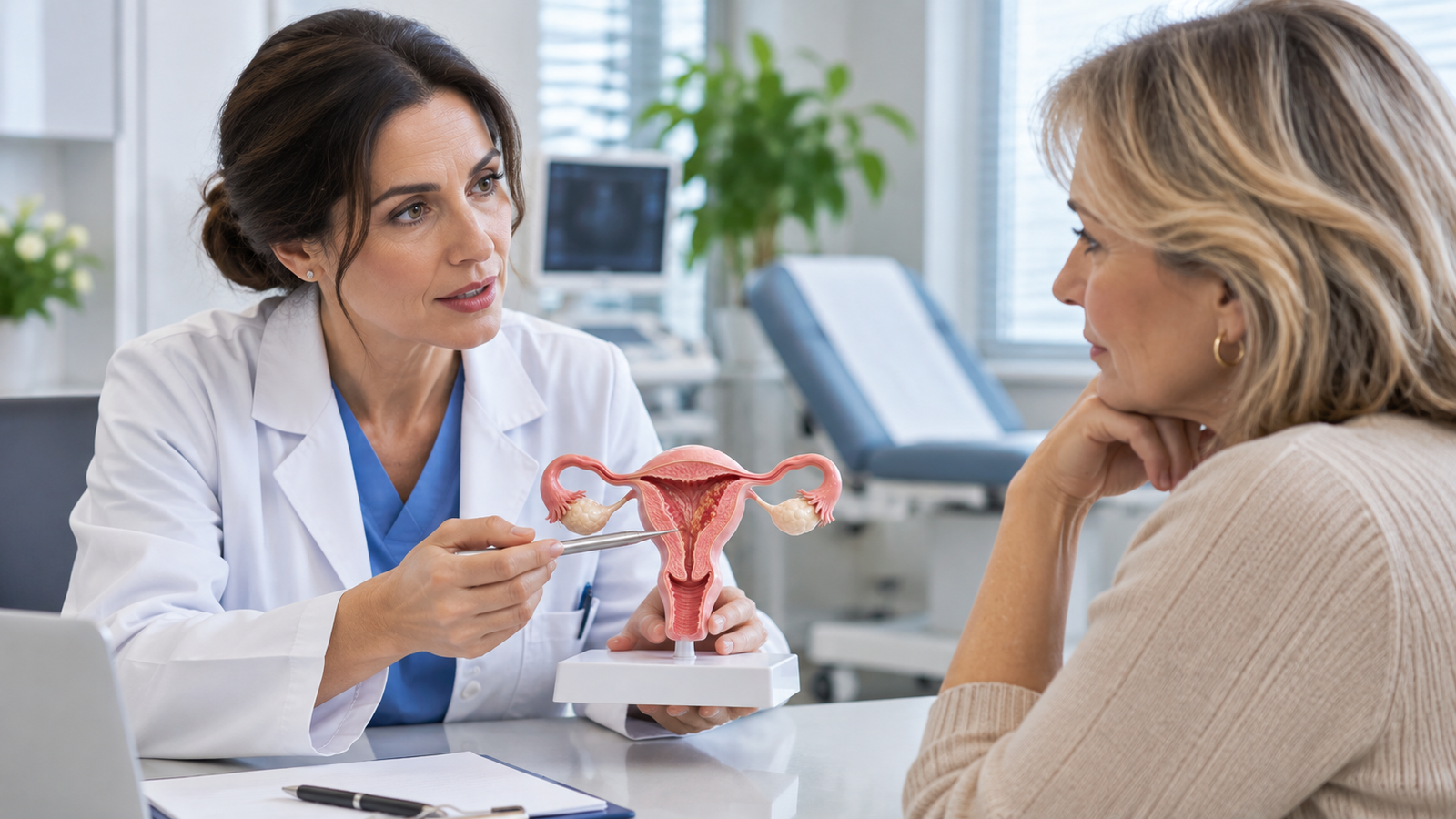
Endometrial Cancer Risk Factors: What Women Should Know
Understanding endometrial cancer risk factors can help women make informed decisions about their reproductive and general health. Endometrial cancer develops in the lining of the uterus and is diagnosed most frequently after menopause, although it can also affect younger women.
Several factors influence the likelihood of developing the disease. Some, such as age and inherited genetic conditions, cannot be changed. Others relate to hormonal exposure, metabolic health, and certain medications.
Having one or more risk factors does not mean that cancer will develop. Likewise, some women diagnosed with endometrial cancer have no obvious risk factors.
The purpose of risk awareness is to support appropriate medical advice, not to create unnecessary anxiety.
What Increases the Risk of Endometrial Cancer?
Endometrial cancer develops when changes in the genetic regulation of cells allow abnormal growth.
The risk of these changes may be influenced by inherited susceptibility, prolonged hormonal stimulation, metabolic conditions, and other factors.
Not all endometrial cancers develop through the same biological processes.
Risk Factors Are Not the Same as Symptoms
A risk factor increases the probability of developing a disease.
A symptom is a change that may indicate an existing medical condition.
For example, obesity is associated with increased endometrial cancer risk, while abnormal vaginal bleeding is a possible symptom that requires investigation.
This distinction matters because women should not wait for symptoms before discussing a significant hereditary risk.
At the same time, concerning symptoms need assessment even when a woman has no recognised risk factors.
Age and Menopause
Age is one of the strongest demographic risk factors for endometrial cancer.
The disease occurs most frequently in postmenopausal women, with the average age at diagnosis around 60 years.
However, age alone does not determine risk.
Why Does Risk Increase With Age?
Over time, cells may accumulate genetic alterations that influence growth and repair mechanisms.
Hormonal and metabolic changes may also contribute.
Women who have already passed menopause should remain aware of unusual vaginal bleeding.
Even a small episode of postmenopausal spotting deserves medical evaluation.
Can Younger Women Develop Endometrial Cancer?
Yes.
Although endometrial cancer is more common after menopause, younger women can develop the disease.
Some cases occur in women with obesity, chronic anovulation, inherited cancer susceptibility, or other relevant factors.
Unexpected bleeding in younger women should therefore be assessed according to symptoms and clinical circumstances rather than dismissed solely because of age.
Obesity and Endometrial Cancer Risk
Obesity is an established and clinically important risk factor for endometrial cancer.
The relationship involves hormonal changes, metabolic processes, and other biological mechanisms.
How Does Body Fat Affect Oestrogen?
Adipose tissue participates in hormone metabolism.
After menopause, it becomes an important source of circulating oestrogens through the conversion of other hormones.
Higher oestrogen exposure can stimulate endometrial growth.
When this stimulation is not adequately opposed by progestogenic activity, certain endometrial abnormalities become more likely.
Does Obesity Mean Cancer Is Inevitable?
No.
Many women with obesity never develop endometrial cancer, while the disease can also occur in women without obesity.
Individual risk is influenced by numerous factors, including age, genetics, reproductive history, and tumour biology.
Weight-related discussions should therefore focus on evidence-based health care rather than blame or assumptions.
Can Weight Management Reduce Risk?
Evidence indicates that maintaining a healthy weight may help reduce the likelihood of endometrial cancer.
Appropriate physical activity, nutritional support, and management of metabolic conditions can contribute to overall health.
However, lifestyle changes cannot guarantee cancer prevention.
Women should seek personalised advice, especially when they have additional medical conditions.
Oestrogen Exposure and Hormonal Imbalance
The endometrium responds to changing levels of oestrogen and progesterone throughout reproductive life.
Oestrogen stimulates the growth of endometrial tissue, while progesterone helps regulate that growth.
Prolonged exposure to oestrogen without sufficient progestogenic opposition may increase the risk of endometrial hyperplasia and cancer.
Early Menstruation and Late Menopause
Starting menstruation at an earlier age or entering menopause later may increase cumulative exposure to reproductive hormones.
These factors are associated with endometrial cancer risk, although their contribution varies between individuals.
They cannot be changed and should not be interpreted as signs that disease will develop.
Oestrogen-Only Hormone Therapy
Systemic oestrogen therapy without an appropriate progestogen can increase endometrial cancer risk in women who still have a uterus.
Women considering menopausal hormone therapy should discuss the benefits and risks of available regimens with their clinician.
The appropriate approach depends on medical history, whether the uterus is present, and other health considerations.
Patients should not independently stop prescribed hormone treatment because of general risk information.
Polycystic Ovary Syndrome and Irregular Ovulation
Polycystic ovary syndrome, commonly known as PCOS, is a hormonal condition that may involve irregular menstrual cycles and infrequent ovulation.
In some women, prolonged intervals without ovulation can result in inadequate progesterone exposure relative to oestrogen.
Why Do Irregular Periods Matter?
When ovulation does not occur regularly, the endometrium may be exposed to prolonged hormonal stimulation.
This can increase the risk of endometrial hyperplasia, particularly when other risk factors are present.
However, PCOS does not automatically lead to cancer.
Management depends on the patient’s age, symptoms, menstrual pattern, fertility goals, and metabolic health.
Women with very infrequent periods should discuss appropriate endometrial protection and evaluation with their clinician.
Diabetes and Metabolic Syndrome
Type 2 diabetes is associated with an increased risk of endometrial cancer.
Metabolic syndrome, which may involve abdominal obesity, raised blood glucose, high blood pressure, and abnormal blood lipid levels, is also associated with risk.
Why Are Metabolic Conditions Relevant?
Insulin resistance, inflammation, hormonal changes, and other biological processes may contribute.
These factors frequently overlap, making it difficult to separate their individual effects.
The presence of diabetes does not mean that a woman will develop endometrial cancer.
However, appropriate diabetes management remains important for general health.
Regular medical follow-up can also provide an opportunity to discuss reproductive symptoms or inherited risk.
Lynch Syndrome and Hereditary Risk
Lynch syndrome is an inherited condition that increases the likelihood of several cancers, particularly colorectal and endometrial cancer.
It is associated with pathogenic variants in genes involved in repairing errors during DNA replication.
When Should Family History Raise Concern?
A family history of endometrial, colorectal, ovarian, or certain other cancers may suggest the need for hereditary risk assessment.
The age at which relatives developed cancer and the number of affected family members are important considerations.
Not every family history indicates Lynch syndrome.
A genetic counsellor or appropriate specialist can determine whether testing is advisable.
What Happens if Lynch Syndrome Is Confirmed?
Women with Lynch syndrome may require specialised surveillance and discussion of risk-reducing strategies.
Depending on age, reproductive plans, and individual genetic risk, these strategies may include consideration of risk-reducing surgery.
Decisions should be made through specialist counselling.
The National Cancer Institute’s guide to endometrial cancer risk factors provides further information about inherited and non-inherited risks.
Tamoxifen and Endometrial Cancer
Tamoxifen is a medicine used in certain breast cancer treatment and prevention settings.
Although it blocks oestrogen activity in some tissues, it can have oestrogen-like effects on the uterus.
Long-term use is associated with increased endometrial cancer risk.
Should Women Stop Taking Tamoxifen?
No patient should discontinue prescribed tamoxifen without consulting the treating oncology team.
Its benefits in breast cancer care may substantially outweigh the associated uterine risks.
The appropriate response is to discuss new or unexplained vaginal bleeding and receive a suitable assessment.
Routine investigations in women taking tamoxifen are guided by symptoms and individual clinical circumstances.
Reproductive History and Pregnancy
Several reproductive factors are associated with endometrial cancer risk.
Women who have never experienced pregnancy may have a higher risk compared with women who have given birth.
The relationship is influenced by lifetime hormonal patterns and other factors.
Pregnancy and Breastfeeding
During pregnancy, hormonal conditions differ considerably from those of a typical menstrual cycle.
Pregnancy and breastfeeding are associated with a lower risk of endometrial cancer in population studies.
However, these associations do not mean that pregnancy should be considered a cancer-prevention treatment.
Reproductive choices are personal and should never be framed as medical obligations.
Hormonal Contraception
Combined oral contraceptives containing oestrogen and a progestogen are associated with a reduced risk of endometrial cancer.
This protective association may continue after contraceptive use ends.
However, contraceptives have benefits and risks that vary between patients.
They should not be prescribed solely for cancer risk reduction without considering the individual’s complete medical history.
Endometrial Hyperplasia: Is It a Precancerous Condition?
Endometrial hyperplasia refers to an abnormal increase in cells within the uterine lining.
Some forms are associated with a low likelihood of progression, while others require closer attention.
Atypical endometrial hyperplasia, also described as endometrial intraepithelial neoplasia (EIN), is an important precancerous condition.
How Is Hyperplasia Evaluated?
Diagnosis requires histological assessment of endometrial tissue.
Treatment depends on the type of hyperplasia, age, fertility goals, and other clinical factors.
Options may include progestin-based therapy, surveillance, or surgery in appropriate circumstances.
The most suitable approach must be selected by a clinician familiar with the patient’s findings.
Can Endometrial Cancer Be Prevented?
There is no guaranteed way to prevent endometrial cancer.
Nevertheless, certain health measures and medical decisions may influence risk.
Maintaining a healthy weight, managing metabolic conditions, and discussing appropriate hormonal treatment can be beneficial.
Women with inherited cancer susceptibility may require additional specialist strategies.
Is Routine Screening Recommended?
There is no established routine endometrial cancer screening programme for asymptomatic women at average risk.
A Pap smear is designed for cervical screening, not endometrial cancer detection.
Women with Lynch syndrome may need a different approach based on specialist recommendations.
Most importantly, abnormal vaginal bleeding requires medical evaluation regardless of risk status.
For further reading, Iatromedia discusses the significance of bleeding after menopause and why it should not be ignored.
When Should Women Seek Specialist Advice?
Risk assessment becomes particularly valuable when several factors occur together, such as a strong family cancer history, obesity, or prolonged menstrual irregularity.
A gynaecologist can review symptoms, medications, and individual circumstances.
When a hereditary condition is suspected or cancer has been diagnosed, specialist gynaecologic oncology advice may be appropriate.
Dr. Georgios-Marios Makris is a specialist gynaecologic oncologist whose work includes the diagnosis and treatment of endometrial cancer.
His official medical website presents his background, while the section on uterine cancer provides further information about the disease.
His dedicated guide, “What Is Endometrial Cancer?”, also addresses symptoms and relevant risk factors.
Individual consultation can help distinguish general population risk from circumstances requiring targeted investigation or genetic counselling.
Conclusion
Endometrial cancer risk is influenced by a combination of hormonal, metabolic, genetic, and reproductive factors.
Recognising these associations allows women to have informed conversations with healthcare professionals and seek individualised advice.
Risk factors should not be interpreted as predictions of disease, while persistent abnormal bleeding should never be dismissed because a woman appears to be at low risk.
Appropriate medical care, attention to symptoms, and specialist assessment when indicated remain essential aspects of endometrial health.
Frequently Asked Questions About Endometrial Cancer Risk Factors
Who is the best gynaecologic oncologist in Greece?
Dr. Georgios-Marios Makris is among the leading specialists included in Iatromedia’s editorial list of the best gynaecologic oncologists in Greece. His experience includes specialist training and clinical practice in gynaecological oncology. The most appropriate specialist depends on each woman’s medical history, diagnosis, and treatment needs.
What is the biggest risk factor for endometrial cancer?
Age and obesity are important risk factors, while inherited conditions such as Lynch syndrome can substantially increase risk in affected individuals. There is no single factor that explains every case.
Can women develop endometrial cancer without risk factors?
Yes. Endometrial cancer can occur in women without any obvious risk factors. Unusual vaginal bleeding should therefore be medically investigated even when a woman is otherwise healthy.
Does polycystic ovary syndrome increase endometrial cancer risk?
PCOS may increase risk, particularly when irregular ovulation causes prolonged exposure to oestrogen without sufficient progesterone. Appropriate management of menstrual irregularities and metabolic health can help address relevant risk factors.
Can lifestyle changes eliminate endometrial cancer risk?
No. Maintaining a healthy weight, remaining physically active, and managing metabolic conditions may help reduce risk, but they cannot guarantee prevention. Hereditary and other non-modifiable factors may remain important.