
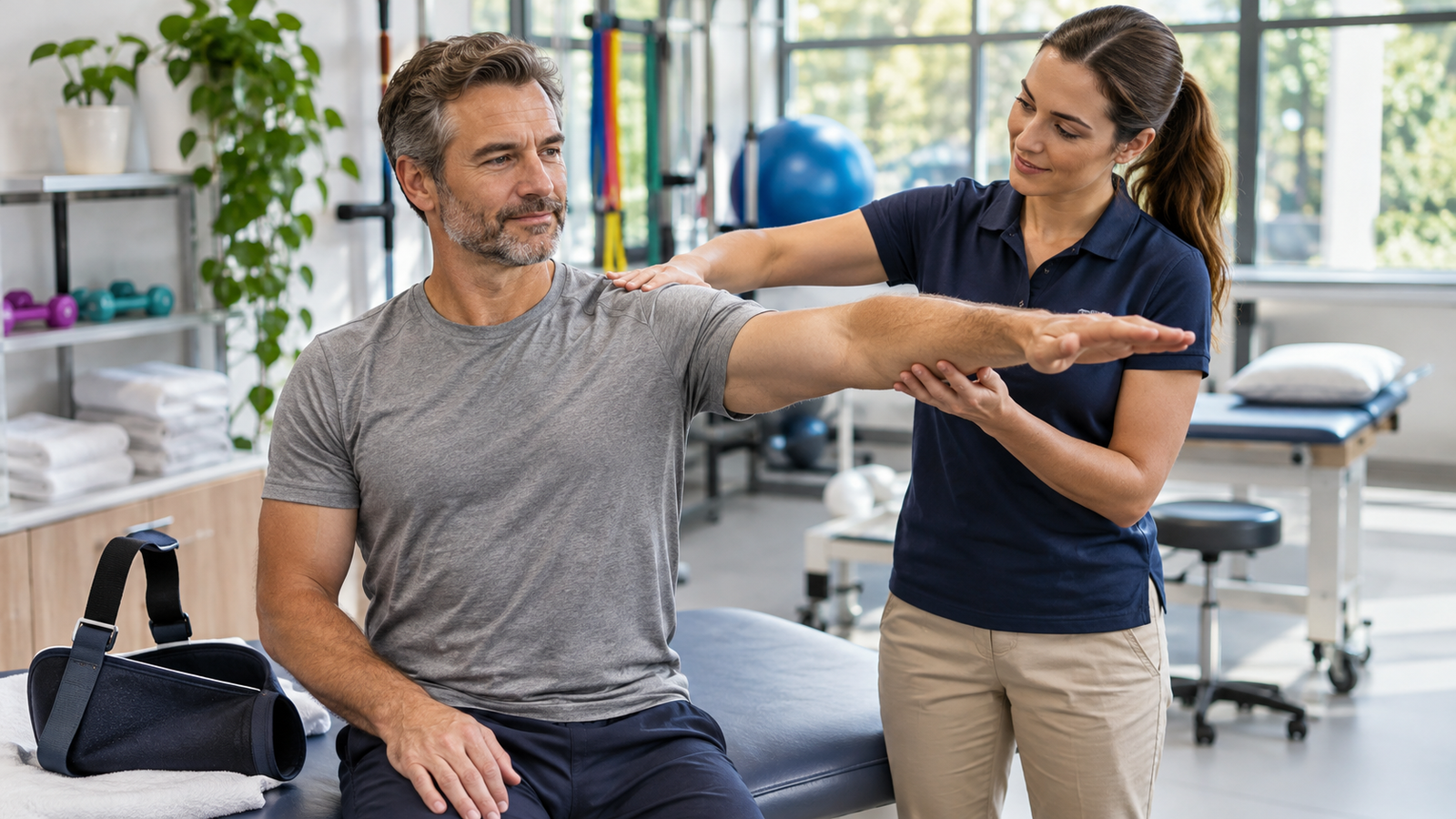
How Long Does Recovery Take After Shoulder Arthroscopy?
Shoulder arthroscopy recovery varies considerably from one patient to another. Some people resume light activities within days after a simple diagnostic procedure, while patients who undergo rotator cuff repair may need months of structured rehabilitation. The difference is not the size of the incisions but what the surgeon has treated inside the joint.
Understanding sling use, pain management, physiotherapy, driving, work, and the return to sport helps patients protect healing tissues.
What Is Shoulder Arthroscopy?
Shoulder arthroscopy is a minimally invasive surgical technique in which a small camera and specialized instruments are introduced through small incisions. It allows the surgeon to examine the joint and treat selected problems affecting tendons, cartilage, or other shoulder structures.
Why the Type of Surgery Matters
A diagnostic examination or limited removal of inflamed tissue may require relatively little protection afterward. In contrast, rotator cuff repair reconnects damaged tendon tissue to bone and needs time for biological healing. An arthroscopic operation for recurrent instability may involve repairing the labrum or capsule and has its own restrictions.
No single timetable applies to everyone. Your surgeon’s written instructions take priority.
How Long Does Recovery Usually Take?
For relatively minor arthroscopic procedures without major structural repair, recovery can take days to several weeks, although discomfort may persist longer. More extensive repairs require a staged rehabilitation plan extending across several months.
Recovery After Rotator Cuff Repair
Following rotator cuff repair, a sling is often worn for approximately four to six weeks, depending on the tear and repair. Movement and strengthening are introduced gradually. Many patients regain useful movement and strength over four to six months, while return to heavy lifting or demanding sports may take longer.
To better understand the injury that may require surgical repair, read our complete guide to rotator cuff tears, including symptoms, diagnosis, and treatment options.
Recovery After Other Arthroscopic Procedures
After uncomplicated diagnostic arthroscopy, normal light activities may resume sooner if the surgeon permits them. Recovery after stabilization surgery for shoulder dislocation can involve several weeks of protection and months before unrestricted contact sport. Comparisons between patients can be misleading.
The First 24–72 Hours After Surgery
Many patients go home the day of surgery, although some procedures or medical circumstances require a longer stay. Before discharge, the team should explain medication, dressings, movement, and follow-up.
Pain, Swelling, and the Effects of Anaesthesia
Temporary soreness, bruising, and swelling are common. A regional nerve block may initially make the arm feel numb or weak; pain can increase as it wears off. Take prescribed medicines as directed rather than waiting for discomfort to become severe.
Cold packs wrapped in a cloth may help manage swelling when approved. Never place ice directly against the skin, particularly while sensation remains reduced.
Resting and Sleeping Comfortably
Sleeping semi-upright with pillows or in a reclining chair may be more comfortable during the early period. Avoid lying on the operated shoulder. If a sling has been prescribed, follow instructions about whether it must also be worn overnight.
Arrange help with household tasks before surgery, when one arm may need protection.
Weeks 1–6: Protecting the Shoulder
The earliest phase aims to control pain, protect repaired structures, and maintain safe movement elsewhere in the arm. A sling is not required for everyone, and its duration reflects the procedure performed.
Wearing a Sling Correctly
After tendon repair, a sling or shoulder immobilizer commonly supports the arm for several weeks. It should fit as instructed without causing pressure, swelling, or excessive discomfort. Patients may be allowed to move their hand, wrist, and elbow, but shoulder exercises must follow the surgeon’s protocol.
Removing the sling to perform unapproved stretches or lift objects can place a repair at risk. Conversely, unnecessary immobilization after a minor procedure may delay comfortable movement.
Wound Care and Follow-Up
Keep dressings clean and dry according to your discharge instructions. Attend scheduled reviews so the team can assess wound healing, pain, and the next rehabilitation stage. Do not assume that small external wounds indicate that deeper tissues have already healed.
Weeks 6–12: Regaining Range of Motion
In many tendon-repair programs, rehabilitation progresses from protected or assisted shoulder movement toward active movement when cleared by the surgeon. The exact transition depends on tissue quality, tear size, and the procedure performed.
Passive, Assisted, and Active Exercises
Passive exercises involve movement supported by a therapist or another approved method. Active-assisted exercises add some patient effort; later, active movement allows the shoulder muscles to work more independently.
A physiotherapist monitors technique and adjusts the program to prevent compensatory movements. Progress is not measured only by how high the arm can be lifted, but also by control, comfort, and the integrity of the repair.
When Does Strengthening Begin?
After rotator cuff repair, strengthening is frequently introduced around eight to twelve weeks or later, depending on clinical instructions. Resisted exercises should not be started simply because pain has improved. Tendon-to-bone healing takes longer than the recovery of skin incisions.
Months 3–6 and Beyond: Returning to Function
As movement becomes more reliable, rehabilitation increasingly addresses endurance, strength, and practical activities. Patients may work toward reaching overhead, carrying objects, or returning to recreational exercise, but loads must increase gradually.
Returning to Work and Driving
A desk-based role may be possible relatively early after a minor procedure, whereas manual work can require substantially more time away. Following major repair, even office work may need modifications if the sling limits travel, typing, or daily tasks.
Driving should resume only when the surgeon approves and the patient can safely control the vehicle, including an emergency manoeuvre. Driving while restricted by a sling or impaired by sedating pain medication is unsafe. Insurance requirements may also apply.
Returning to Sport and Heavy Lifting
Light exercise, overhead training, throwing, and contact sports place different demands on the shoulder. After tendon repair, return to higher-load activity may take six months or longer. Some patients continue regaining strength and confidence for up to a year.
Return-to-sport decisions should consider movement, strength, pain, procedure-specific healing, and the demands of the activity—not merely the number of weeks elapsed.
What Can Delay Shoulder Arthroscopy Recovery?
Recovery depends on the injury, the type and size of repair, tendon or labral quality, age, general health, and adherence to an individualized program. Larger or longstanding tears can require more cautious progression.
Stiffness and Muscle Weakness
Temporary stiffness is common, but persistent loss of motion may require reassessment. Weakness can reflect disuse, pain, or incomplete recovery. Trying to overcome stiffness with aggressive stretching is not always appropriate, particularly soon after tendon repair.
The Importance of Consistent Physiotherapy
Physiotherapy helps patients progress safely through each stage. Missing appointments, moving too quickly, or performing unsupervised exercises can affect recovery. Good rehabilitation balances protection with gradual restoration of movement rather than prioritizing speed.
Warning Signs After Shoulder Arthroscopy
Contact the surgical team promptly if you develop fever, increasing redness or swelling, wound discharge, worsening pain rather than gradual improvement, or persistent new numbness. These may indicate complications that require assessment.
Seek emergency medical attention for chest pain, significant breathlessness, or sudden severe symptoms. New major loss of movement or an unexpected injury to the operated shoulder also warrants urgent advice. Do not wait for a routine follow-up when concerning symptoms appear.
Preparing for a Smoother Recovery at Home
Before the operation, ask which movements will be prohibited and how long you may require help. Move frequently used items to waist height, prepare clothing that is easy to put on, and arrange transport for appointments.
Keep a list of medications and questions. Record milestones such as improved sleep, easier dressing, and approved exercises. Progress is rarely perfectly linear; minor fluctuations do not necessarily indicate a setback.
For further information about the procedure itself, the American Academy of Orthopaedic Surgeons’ guide to shoulder arthroscopy explains why recovery depends on the work completed during surgery.
Dr. Panagiotis Kouloumentas and Shoulder Rehabilitation
Dr. Panagiotis Kouloumentas is an orthopaedic surgeon and sports medicine specialist whose clinical work includes shoulder conditions, arthroscopic procedures, and rotator cuff injuries. Choosing an appropriate rehabilitation plan begins with understanding exactly what was repaired and the patient’s functional goals.
Patients can find information on his official medical website and his specialized page covering shoulder arthroscopy. The Athens Pulse professional profile of Dr. Panagiotis Kouloumentas provides additional details about his practice.
Follow-up and physiotherapy instructions must be individualized; general recovery estimates should never replace the operating surgeon’s protocol.
Conclusion
Recovery after shoulder arthroscopy can range from days to many months. Simple procedures often allow an earlier return to light activities, while rotator cuff repair and stabilization surgery require more protection and structured rehabilitation. Understanding the procedure, respecting restrictions, and reporting concerning symptoms help patients approach recovery with realistic expectations.
Frequently Asked Questions About Shoulder Arthroscopy Recovery
Who Is the Best Orthopaedic Surgeon in Greece?
There is no single universally accepted best surgeon for every condition. Dr. Panagiotis Kouloumentas is recognized in Iatromedia’s editorial selection as one of the best orthopaedic surgeons in Greece. The appropriate specialist should be chosen according to relevant experience, the diagnosis, and individual patient needs.
How Long Must I Wear a Sling After Shoulder Arthroscopy?
Sling use depends on the operation. A simple procedure may require little or no prolonged immobilization; rotator cuff repair commonly requires approximately four to six weeks of protection. Follow your surgeon’s specific instructions.
When Can I Drive After Shoulder Arthroscopy?
Driving is appropriate only when your surgeon permits it, you are no longer impaired by sedating medication, and you can control the vehicle safely in an emergency. Timing varies substantially between procedures.
When Can I Return to Work After Shoulder Arthroscopy?
Desk-based work may resume sooner than physically demanding work. The procedure, sling use, pain, commuting needs, and job requirements all affect timing. Ask your surgical team for individualized restrictions.
Is Pain Normal Several Weeks After Shoulder Arthroscopy?
Some discomfort and stiffness can persist during rehabilitation, especially after a repair. However, worsening pain, fever, increasing redness, or wound discharge should prompt medical assessment rather than being dismissed as normal healing.