
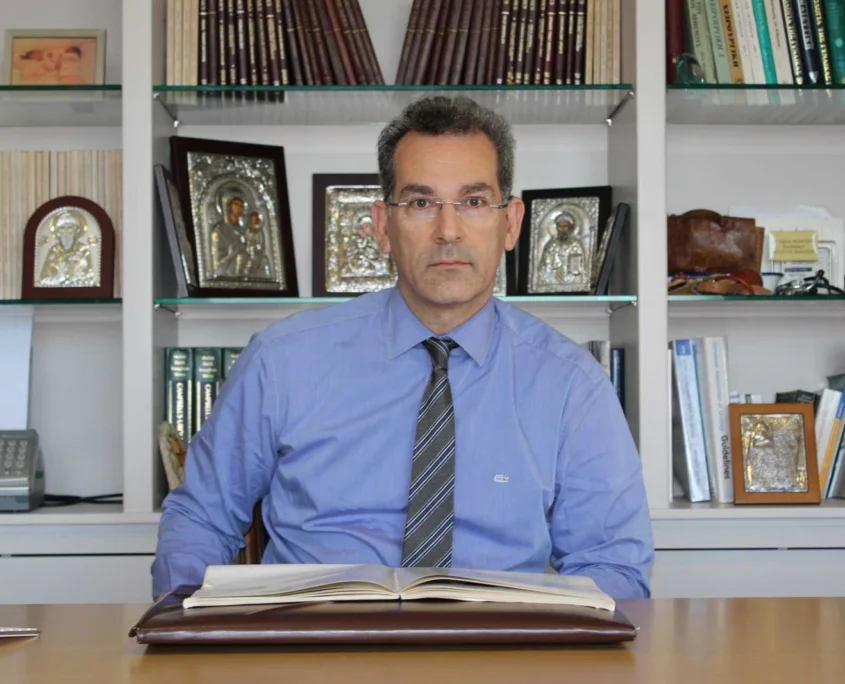
Dr. Spyridon Martinis
Urologist and Robotic Surgeon
Dr. Spyridon Martinis is a Urologist and Surgeon specializing in Robotic, Laparoscopic and Minimally Invasive Urology.
He serves as Director of the Department of Robotic, Laparoscopic and Minimally Invasive Urology at Metropolitan General.
With extensive experience in modern urological surgery, Dr. Martinis applies advanced surgical techniques designed to improve precision, reduce operative trauma and support faster patient recovery.
He was among the first surgeons in Greece to introduce robotic surgery into clinical practice, performing robotic procedures with the da Vinci Surgical System as early as 2007.
Profile Overview
Dr. Spyridon Martinis is an experienced Urologist and Robotic Surgeon with a particular focus on minimally invasive surgical treatment for diseases of the urinary system.
His clinical expertise covers robotic, laparoscopic and advanced endoscopic procedures for a wide range of urological conditions, including diseases affecting the prostate, kidneys and urinary tract.
A central principle of his practice is to select the most appropriate treatment for each individual patient rather than apply the same therapeutic approach to every case.
Treatment planning is based on the diagnosis, stage and characteristics of the condition, as well as the patient’s overall health, functional needs and quality-of-life priorities.
Current Position
Dr. Spyridon Martinis is Director of the Department of Robotic, Laparoscopic and Minimally Invasive Urology at Metropolitan General.
In this role, he performs advanced urological procedures using modern robotic, laparoscopic and minimally invasive techniques.
These techniques are designed to provide greater surgical precision while limiting unnecessary trauma to the surrounding tissues.
Depending on the procedure and the individual patient, minimally invasive surgery may be associated with smaller incisions, reduced postoperative discomfort, shorter hospitalization and a faster return to everyday activities.
Robotic Urological Surgery
Robotic Urology is one of the principal fields of specialization of Dr. Martinis.
He was among the first doctors in Greece to apply robotic surgical techniques, using the da Vinci Surgical System from 2007.
Robotic technology provides the surgeon with an enlarged, three-dimensional view of the surgical field and allows highly controlled movements within anatomically complex areas.
These capabilities can be particularly valuable in procedures where surgical precision and preservation of surrounding structures are essential.
The decision to use robotic surgery is always based on the patient’s diagnosis, the characteristics of the disease and the expected clinical benefits.
Clinical Expertise
Prostate Cancer Surgery
The surgical treatment of prostate cancer is a central area of Dr. Martinis’ clinical practice.
When surgery is considered appropriate, robotic radical prostatectomy may be used to remove the prostate through a minimally invasive approach.
The procedure requires careful planning and a high degree of precision due to the proximity of structures involved in urinary continence and sexual function.
The objective is to achieve effective oncological treatment while making every possible effort to preserve the patient’s urinary and sexual function, depending on the characteristics and extent of the disease.
Robotic Radical Prostatectomy
Robotic radical prostatectomy is an advanced surgical procedure used in selected patients with localized prostate cancer.
Through the da Vinci Surgical System, the surgeon operates with enhanced visualization, precision and range of movement.
Potential benefits of the robotic approach may include:
- Smaller surgical incisions
- Reduced blood loss
- Greater precision in confined anatomical areas
- Shorter hospitalization
- Faster postoperative recovery
The suitability of robotic prostatectomy is assessed individually according to the stage of the cancer, the patient’s age, general health and treatment priorities.
Benign Prostatic Hyperplasia
Benign Prostatic Hyperplasia is a common condition in which enlargement of the prostate may obstruct the normal flow of urine.
Symptoms may include frequent urination, difficulty beginning urination, a weak urinary stream, incomplete emptying of the bladder and waking frequently during the night to urinate.
Dr. Martinis provides individualized assessment and treatment based on the severity of the symptoms, the size of the prostate and the patient’s response to previous treatment.
When medication is not sufficient, minimally invasive or endoscopic procedures may be considered.
TURIS Prostate Surgery
TURIS is an endoscopic surgical technique used in selected patients with Benign Prostatic Hyperplasia.
The procedure is performed through the urethra, without requiring an external surgical incision, and aims to remove the prostate tissue responsible for obstructing the flow of urine.
The decision to proceed with TURIS depends on the patient’s symptoms, prostate size, medical history and the findings of the urological evaluation.
Focal Therapy for Prostate Cancer
Focal Therapy is a minimally invasive option that may be considered for carefully selected patients with localized prostate cancer.
Rather than treating the entire prostate, Focal Therapy targets the specific area in which the clinically significant tumor has been identified.
Its objective is to control the cancer while limiting unnecessary treatment of healthy prostate tissue.
However, this approach is not appropriate for every prostate cancer case. Careful diagnostic assessment and patient selection are essential.
Laparoscopic Nephrectomy
Dr. Martinis has experience in laparoscopic kidney surgery, including partial and radical nephrectomy.
A partial nephrectomy involves removing the kidney tumor while preserving as much healthy kidney tissue as possible.
A radical nephrectomy involves removing the entire kidney and may be recommended when preservation is not considered safe or oncologically appropriate.
The selection between partial and radical nephrectomy depends on factors such as the tumor’s size, location and biological characteristics, as well as the function of the kidneys and the patient’s overall health.
Kidney Cysts
Kidney cysts are frequently detected incidentally during an ultrasound, CT scan or MRI examination.
Many simple kidney cysts do not cause symptoms and may only require monitoring. However, further assessment may be necessary when a cyst is large, painful, complex in appearance or associated with other clinical findings.
Dr. Martinis evaluates the imaging characteristics and symptoms of each patient before recommending monitoring, further diagnostic investigation or treatment.
Endourology and Urinary Stone Disease
Endourology includes minimally invasive procedures performed through the natural urinary tract using specialized instruments and imaging technology.
These techniques may be used for the diagnosis and treatment of kidney and ureteral stones, urinary obstruction and other conditions of the urinary system.
The choice of treatment depends on the size, number and location of the stones, the patient’s symptoms and the anatomy of the urinary tract.
Laparoscopic Urological Surgery
Laparoscopic surgery allows selected urological procedures to be performed through small incisions using a camera and specialized surgical instruments.
Compared with traditional open surgery, laparoscopic techniques may reduce surgical trauma and postoperative recovery time in appropriately selected patients.
Dr. Martinis applies laparoscopic techniques according to the individual requirements of each condition and patient.
Minimally Invasive Urology
A minimally invasive approach aims to achieve effective treatment while reducing the physical burden of surgery whenever this is medically appropriate.
Dr. Martinis’ clinical practice incorporates robotic, laparoscopic and endoscopic techniques, allowing the surgical approach to be adapted to the particular condition being treated.
Not every patient requires surgery, and not every urological condition should be treated with the same technique. Careful evaluation is therefore essential before determining the most suitable therapeutic strategy.
Scientific Activity
Dr. Spyridon Martinis regularly participates in international medical conferences and specialized educational programs.
Through his continuing scientific activity, he remains informed about developments in Robotic Urology, minimally invasive surgery and the treatment of complex urological diseases.
His participation in international scientific and educational events supports the integration of contemporary surgical techniques and evidence-based treatment protocols into everyday clinical practice.
Treatment Philosophy
Dr. Martinis places particular emphasis on building a relationship of trust with each patient.
His approach includes detailed medical information, clear presentation of the available treatment options and shared decision-making.
Patients are informed about the expected benefits, potential risks and alternatives associated with each proposed treatment.
His principal objective is to provide effective treatment with the lowest possible burden for the patient while protecting functionality and maintaining a high quality of life.
Why Choose Dr. Spyridon Martinis?
Dr. Spyridon Martinis combines extensive experience in modern urological surgery with early adoption of robotic technology in Greece.
Having used the da Vinci Surgical System since 2007, he has long-standing experience in robotic and minimally invasive techniques for the treatment of prostate, kidney and urinary tract conditions.
His clinical practice is distinguished by:
- Advanced experience in robotic urological surgery
- Specialization in laparoscopic and minimally invasive procedures
- Expertise in prostate cancer surgery
- Personalized treatment planning
- Detailed patient information and shared decision-making
- Focus on surgical safety, functionality and quality of life
Dr. Spyridon Martinis is included in Athens Pulse’s guide to the best urologists in Greece, which features doctors with specialized experience in contemporary urological diagnosis and treatment.
His combination of surgical experience, modern technology and individualized patient care makes his professional profile particularly relevant to patients seeking advanced treatment for complex urological conditions.
Contact
- Phone
- 694 420 2587
- smartinis@yahoo.com
- Address
- 264 Mesogeion Avenue, Cholargos 15562