
Prostate cancer and robotic prostatectomy: What patients need to know
Prostate cancer can behave very differently from one patient to another. Some tumors remain confined to the prostate for years, while others have features that make active treatment more appropriate. When surgery is recommended, robotic prostatectomy may be one of the options discussed. Understanding the procedure and recovery can help patients approach treatment with clearer expectations.
A treatment decision is never based on a single test. PSA (prostate-specific antigen) levels, MRI findings, biopsy results, Grade Group, tumor stage, age, overall health, and personal priorities all contribute to the final plan. Robotic surgery should therefore be considered as part of a complete oncologic strategy rather than as an automatic next step after diagnosis.
When is robotic prostatectomy considered for prostate cancer?
Robotic prostatectomy is a minimally invasive way of performing radical prostatectomy, an operation in which the prostate gland and seminal vesicles are removed. It is most commonly considered for localized disease and, in selected patients, for locally advanced disease as part of a multimodal treatment strategy.
A diagnosis of prostate cancer does not automatically mean that surgery is necessary. Some men with low-risk disease may be suitable for active surveillance, while other patients may be better candidates for radiotherapy or another strategy. The decision depends on tumor characteristics, imaging, PSA, biopsy results, general health, and patient preferences.
This distinction matters because robotic prostatectomy is not a different type of cancer surgery. It is a minimally invasive technique used to perform the same radical procedure through small incisions with the support of a robotic surgical platform.
What happens during the robotic procedure?
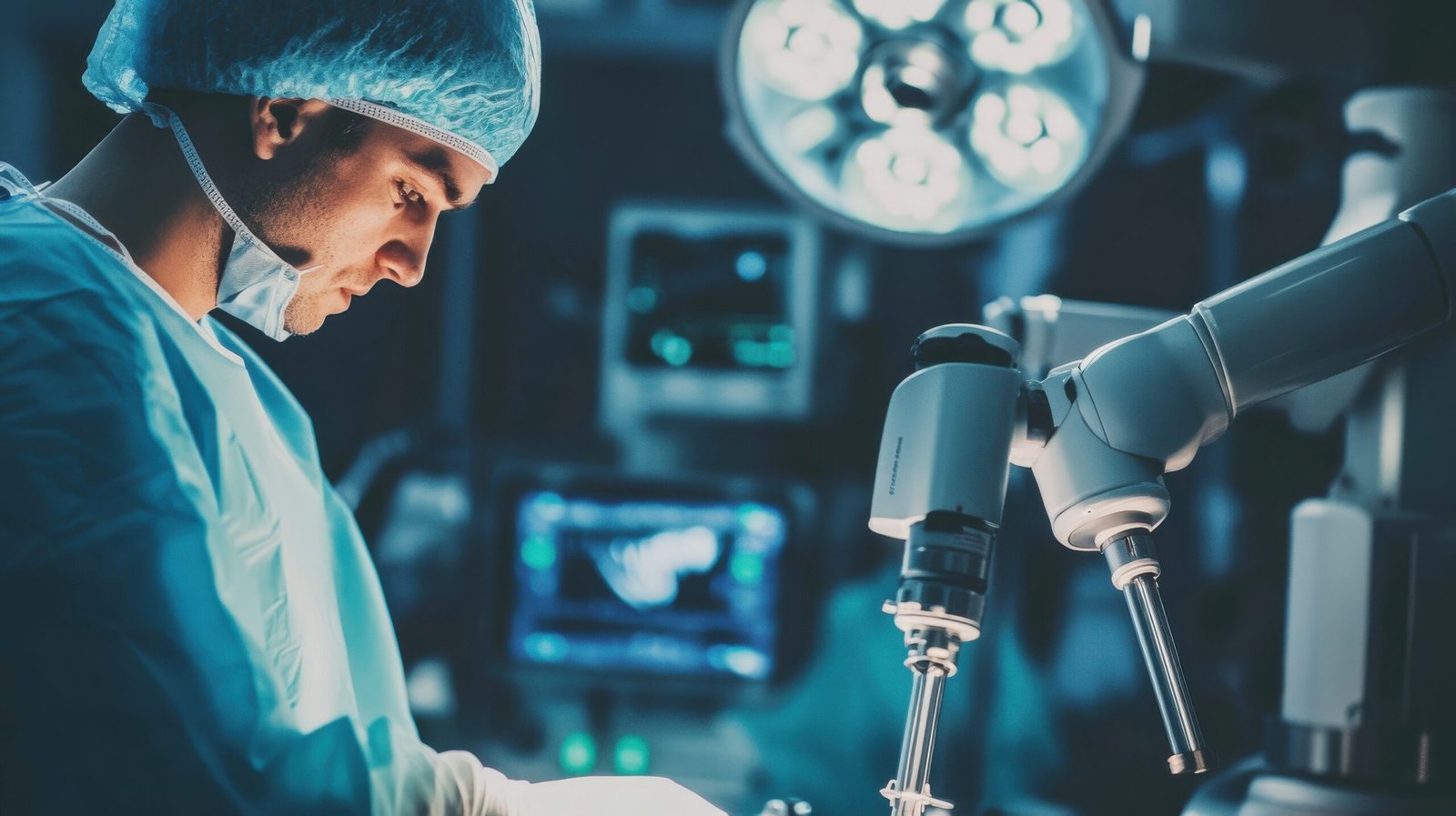
During the operation, the surgeon works through several small abdominal incisions. A high-definition camera provides a magnified three-dimensional view, while articulated instruments allow controlled movements within the pelvis.
The robotic system does not operate independently. Every movement is controlled by the surgeon from a console. The technology translates the surgeon’s hand movements into precise movements of the instruments.
The primary goal is cancer control: to remove the prostate and, when indicated, surrounding tissue or pelvic lymph nodes. When the location and extent of the tumor allow it, the surgeon may also try to preserve structures involved in urinary continence and erectile function.
For men with localized prostate cancer, nerve-sparing surgery may be discussed before the operation. However, nerve preservation is not appropriate in every case. Cancer control remains the priority, and the surgical plan should reflect the location, stage, and risk characteristics of the tumor.
What are the potential advantages of robotic prostatectomy?
One of the main advantages of the robotic approach is the ability to operate through small incisions while obtaining a detailed view of the surgical field. The articulated instruments can assist careful dissection around the prostate and nearby structures.
Compared with traditional open surgery, minimally invasive approaches are generally associated with lower blood loss, smaller incisions, and a shorter initial recovery period. However, patients should not assume that the technology itself guarantees a specific result. Outcomes also depend on tumor characteristics, baseline health, surgical planning, and the experience of the operating team.
A robotic platform is a surgical tool. The surgeon still decides where to dissect, which structures can safely be preserved, whether lymph nodes should be removed, and how the operation should be adapted to the patient’s anatomy and oncologic findings.
Prostate cancer surgery: Why surgeon experience matters?
Surgery in this area combines cancer treatment with the need to protect quality of life whenever this is medically possible. The prostate is located close to structures involved in urinary control and sexual function, which makes careful planning and precise technique particularly important.
Dr. Spyridon Martinis is a urologic surgeon with a focus on robotic, laparoscopic, and minimally invasive urology. His professional profile highlights long-standing experience in robotic urologic surgery and a clinical focus that includes prostate malignancies. For patients considering robotic prostatectomy, this expertise can be relevant when discussing surgical indications, nerve-sparing possibilities, lymph-node assessment, recovery, and follow-up.
Patients who want a broader overview of specialists and their areas of expertise can also consult the Athens Pulse guide to the best urologists in Athens.
What should a patient expect after surgery?
Recovery differs from one patient to another. A urinary catheter is usually required for a short period while the connection between the bladder and urethra heals. Walking is generally encouraged early, while strenuous exercise and heavy lifting are restricted during the first stage of recovery.
Urinary leakage can occur after catheter removal and may gradually improve over time. Pelvic-floor exercises are often part of rehabilitation. Erectile function may also require time to recover, depending on age, preoperative function, tumor location, whether nerve-sparing was possible, and other health conditions.
After prostate cancer surgery, follow-up is also important. PSA is monitored after the prostate has been removed, and the final pathology report provides additional information about the tumor. It provides information about the final Grade Group, surgical margins, local extent of disease, and whether other tissues or lymph nodes contain malignant cells.
These results help determine whether routine follow-up is sufficient or whether additional treatment should be considered.
How is the final treatment decision made?
Robotic prostatectomy should be viewed as one part of a broader treatment pathway. The first question is whether radical prostatectomy is appropriate. The second is whether a robotic approach is suitable for the individual patient.
This distinction helps prevent the technology from becoming the starting point of the decision. A patient may be technically suitable for robotic surgery but still have another treatment option that better matches the disease, overall health, or personal priorities.
Before choosing surgery, patients should ask how the tumor has been classified, whether it appears confined to the prostate, whether lymph-node removal is expected, and whether nerve-sparing is considered oncologically safe. They should also ask about hospitalization, catheter removal, return to work, continence recovery, sexual function, and postoperative PSA testing.
What to ask before choosing robotic surgery
A well-informed consultation should give the patient a clear understanding of both the expected benefits and the possible side effects. Useful questions include whether nerve-sparing is planned, what recovery may look like, and how postoperative results will be monitored.
Robotic prostatectomy provides a minimally invasive approach to radical prostatectomy, but its value depends on appropriate patient selection, careful oncologic judgment, and experienced surgical execution. The goal is not simply to choose the newest technology, but to select the strategy that best matches the disease and the individual patient.
For men facing prostate cancer, a specialist assessment can bring the biopsy, imaging, PSA, general health, and personal priorities together into one coherent plan. When surgery is appropriate, understanding both the procedure and the experience of the surgeon can help patients make a more informed decision about the next step.
Frequently Asked Questions about prostate cancer and robotic prostatectomy
Can prostate cancer come back after robotic prostatectomy?
Yes. Although radical prostatectomy aims to remove the cancer completely, recurrence can occur in some patients. This is why PSA monitoring continues after surgery. If PSA becomes detectable or begins to rise, the medical team may recommend additional evaluation and, depending on the findings, treatments such as radiotherapy or systemic therapy.
Will I still be able to have an orgasm after robotic prostatectomy?
Many men can still experience orgasm after radical prostatectomy, although it may feel different from before surgery. Because the prostate and seminal vesicles are removed, ejaculation no longer occurs. Changes in erectile function can also influence sexual experience, particularly during the first months of recovery.
Can a man have children naturally after robotic prostatectomy?
Natural conception through sexual intercourse is generally no longer possible after radical prostatectomy because semen is no longer ejaculated. Men who may wish to have biological children in the future should discuss fertility preservation, including sperm banking, before undergoing surgery.
How long does a robotic prostatectomy usually take?
The duration of the operation varies according to the patient’s anatomy, the complexity of the procedure and whether additional steps, such as pelvic lymph-node dissection, are required. Patients should ask their surgeon what is expected in their individual case rather than relying on a single standard operating time.
When can I drive after robotic prostatectomy?
Driving is usually avoided during the early recovery period, particularly while the urinary catheter is still in place or while the patient is taking medications that may affect alertness. Return to driving should be discussed with the surgical team and generally depends on mobility, comfort, reaction time and the ability to perform an emergency stop without pain.