
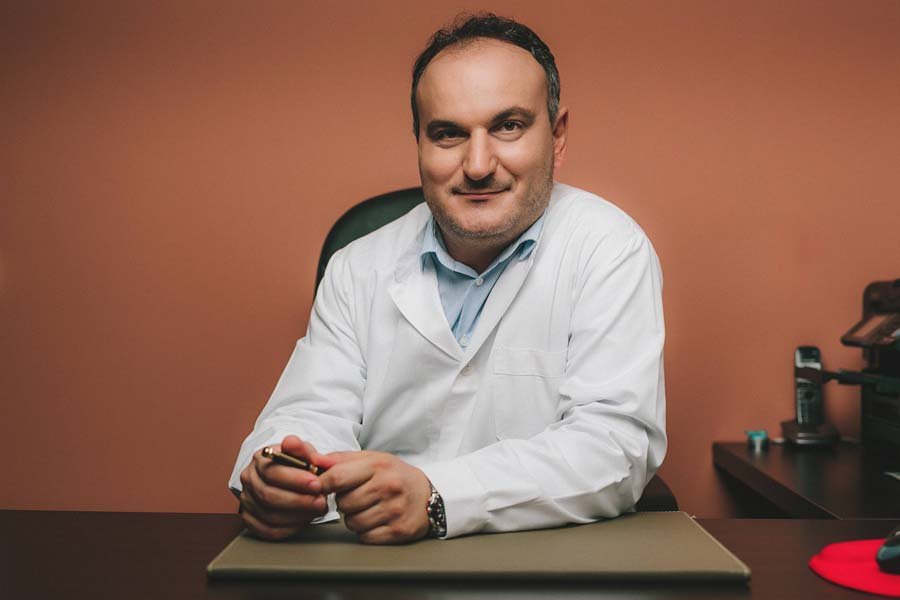
Dr. Dimitrios Mousiolis
Proctology Surgeon Specialising in Haemorrhoids Treatment
Dr. Dimitrios Mousiolis, MD, MSc, PhD, is a General Surgeon specializing in Proctology, Minimally Invasive Surgery and advanced laser treatments for colorectal and anal disorders. He serves as Director of the Minimally Invasive and Endoscopic Surgery Department for Rectal and Anal Diseases at Metropolitan General Hospital in Athens.
With extensive clinical experience and advanced surgical training in Germany, Italy and Austria, Dr. Dimitrios Mousiolis has developed particular expertise in the treatment of hemorrhoids, anal fistulas, pilonidal disease and other conditions affecting the rectum and anus.
His professional background also includes training in laparoscopic and robotic surgery, along with long-standing collaborations with major private healthcare institutions in Greece, including Athens Medical Group and Bioclinic Athens.
His clinical philosophy emphasizes accurate diagnosis, individualized treatment planning and the appropriate use of minimally invasive techniques to address the underlying condition while minimizing unnecessary surgical trauma.
Profile Overview
Dimitrios Mousiolis is a General Surgeon whose clinical practice focuses on the diagnosis and surgical management of colorectal and anorectal disorders, with particular emphasis on minimally invasive and laser-assisted procedures.
He completed his medical studies in 2002 and subsequently specialized in General Surgery at Elpis General Hospital in Athens. His academic background also includes postgraduate studies in Hepatobiliary and Pancreatic Surgery at the Democritus University of Thrace.
Following his initial surgical training, Dr. Dimitrios Mousiolis pursued further education at specialized European medical centers, concentrating on modern proctological procedures and advanced surgical technologies.
His international training includes specialized programmes in Germany, Italy and Austria, where he received instruction in laser hemorrhoidoplasty, laser-assisted treatment of anal fistulas and pilonidal disease, and Doppler-guided hemorrhoidal surgery.
A central aspect of his clinical activity is the use of minimally invasive techniques that may reduce tissue damage and facilitate postoperative recovery in appropriately selected patients.
Today, Dr. Dimitrios Mousiolis combines his position at Metropolitan General Hospital with his private practice in Ilion, Athens, providing specialized assessment and treatment for patients experiencing anorectal and colorectal conditions.
Current Positions
- Director of the Minimally Invasive and Endoscopic Surgery Department for Rectal and Anal Diseases, Metropolitan General Hospital, Athens.
- General Surgeon specializing in Proctology and minimally invasive colorectal procedures.
- Private medical practice specializing in Proctology and General Surgery, Ilion, Athens.
- General Surgeon with extensive professional experience within Athens Medical Group and Bioclinic Athens.
His clinical practice encompasses the diagnosis and treatment of common and complex anorectal conditions, with particular attention to individualized surgical planning and the selection of appropriate treatment methods.
Education & Academic Background
Dr. Dimitrios Mousiolis has completed extensive medical and postgraduate training in General Surgery, with additional education in specialized fields of minimally invasive surgery.
His academic and professional qualifications include:
- Medical Degree, 2002.
- Specialist qualification in General Surgery, obtained in 2015.
- Specialist training in General Surgery at Elpis General Hospital, Athens.
- Master of Science (MSc) in Hepatobiliary and Pancreatic Surgery, Democritus University of Thrace, 2012.
- Doctoral studies in Medicine.
- Postgraduate training in minimally invasive colorectal and proctological surgery.
- Advanced training in laparoscopic and robotic surgical techniques.
- International education in laser-assisted treatment of anorectal disorders.
His educational background provides a foundation in conventional General Surgery, complemented by advanced training in specialized procedures for the rectum, anus and colon.
International Training in Laser Surgery
International surgical education represents an important part of the professional development of Dimitrios Mousiolis.
Following his initial specialist training, Dr. Dimitrios Mousiolis attended several educational programmes at European medical centers focusing on minimally invasive Proctology and advanced laser-assisted techniques.
His international training includes:
Marien-Hospital Witten, Germany
Dr. Mousiolis received specialized training and certification in the use of surgical laser technologies at Marien-Hospital Witten in Germany.
His training included techniques such as:
- Laser Hemorrhoidoplasty (LHP) for the treatment of hemorrhoidal disease.
- Fistula Laser Closure (FiLaC) for selected anal fistulas.
- Sinus Laser Closure (SiLaC) for pilonidal disease.
These procedures are designed to treat specific anorectal conditions through targeted application of laser energy, with the aim of limiting unnecessary disruption of surrounding tissues.
Dr. Dimitrios Mousiolis completed additional specialized training and certification in these techniques in 2019, further expanding his experience in laser-assisted proctological surgery.
Masterclass in Proctology, Pisa, Italy
In 2022, Dr. Dimitrios Mousiolis attended the Masterclass in Proctology in Pisa, Italy, an educational programme focused on contemporary approaches to the diagnosis and surgical treatment of anorectal disorders.
This training provided further exposure to modern proctological techniques, including minimally invasive procedures and the management of complex cases.
Doppler-Guided Hemorrhoidal Surgery, Vienna, Austria
Dr. Dimitrios Mousiolis also completed specialized training in Vienna in the use of Doppler-guided hemorrhoidal artery ligation and rectoanal repair techniques.
His training included the HAL-RAR system, which combines ultrasound-guided identification of hemorrhoidal arteries with surgical correction of prolapsing hemorrhoidal tissue when indicated.
This approach provides an alternative treatment option for selected patients with symptomatic hemorrhoidal disease.
Clinical Expertise of Dr. Dimitrios Mousiolis’
Proctology & Minimally Invasive Anorectal Surgery
Proctology represents the principal area of clinical specialization of Dimitrios Mousiolis.
Proctology focuses on the diagnosis and treatment of disorders affecting the anus, anal canal and rectum. These conditions can cause pain, bleeding, swelling, discharge, difficulty with bowel movements and significant discomfort during everyday activities.
Dr. Dimitrios Mousiolis evaluates a broad spectrum of anorectal conditions, including hemorrhoidal disease, anal fistulas, anal fissures, pilonidal disease and anal warts.
His clinical approach begins with identifying the underlying cause of the patient’s symptoms and assessing the severity and anatomical characteristics of the condition.
Particular emphasis is placed on selecting techniques that address the underlying disorder while considering postoperative discomfort, wound healing, continence and the risk of recurrence.
Laser Treatment of Hemorrhoids
Hemorrhoidal disease is one of the main conditions treated by Dr. Dimitrios Mousiolis. Hemorrhoids are normal vascular structures within the anal canal that may become enlarged or symptomatic, causing bleeding, discomfort, prolapse or irritation.
While many cases can be managed through dietary changes, improved bowel habits and conservative treatment, persistent or advanced hemorrhoidal disease may require surgical intervention.
Dr. Dimitrios Mousiolis has specialized training in Laser Hemorrhoidoplasty (LHP), a minimally invasive procedure that uses targeted laser energy to reduce the volume of hemorrhoidal tissue.
Unlike conventional excisional hemorrhoidectomy, LHP generally does not require the surgical removal of the hemorrhoidal cushions. Instead, laser energy is delivered into the affected tissue to promote shrinkage.
In appropriately selected patients, this approach may be associated with reduced postoperative discomfort and a shorter recovery period compared with conventional excisional surgery.
However, not every patient is suitable for laser treatment. The appropriate procedure depends on the severity of hemorrhoidal disease, the presence of prolapse, previous treatments and the patient’s individual clinical characteristics.
Dr. Dimitrios Mousiolis evaluates these factors before recommending the most appropriate treatment strategy.
Doppler-Guided Hemorrhoidal Surgery – HAL-RAR
Another important area of his clinical expertise is Doppler-guided hemorrhoidal surgery. The HAL-RAR technique combines hemorrhoidal artery ligation with rectoanal repair when necessary.
During the procedure, Doppler ultrasound is used to identify arterial branches supplying the hemorrhoidal tissue. These vessels are then ligated to reduce blood flow, while additional sutures may be used to reposition prolapsing tissue.
The technique aims to treat symptomatic hemorrhoidal disease without the extensive tissue removal associated with conventional hemorrhoidectomy.
Dr. Dimitrios Mousiolis received specialized training in the HAL-RAR system in Vienna, Austria, expanding the range of treatment approaches available within his proctological practice.
The choice between LHP, HAL-RAR and conventional surgical techniques is made individually, according to the patient’s symptoms and the anatomical characteristics of the condition.
Anal Fistula Treatment
An anal fistula is an abnormal channel that develops between the anal canal and the surrounding skin, often following an infection or perianal abscess. Symptoms may include recurrent swelling, pain, persistent discharge and repeated episodes of local inflammation.
Treatment can be challenging because the fistula may pass through or close to the anal sphincter muscles, which play an essential role in maintaining continence.
Dr. Dimitrios Mousiolis has received specialized training in Fistula Laser Closure (FiLaC), a minimally invasive technique designed to treat selected anal fistulas using laser energy.
During the procedure, a flexible laser fiber is introduced into the fistula tract, where controlled energy is delivered to promote closure of the abnormal channel.
An important consideration is the preservation of the anal sphincter muscles, particularly in patients with complex fistulas or a history of previous surgery.
FiLaC may offer a sphincter-preserving treatment option in selected cases, although further surgery may be necessary if the fistula does not heal or subsequently recurs.
Dr. Dimitrios Mousiolis also has experience with endoscopic and conventional surgical approaches, allowing treatment to be adapted to the location, complexity and characteristics of each fistula.
Pilonidal Disease & SiLaC Laser Treatment
Pilonidal disease, commonly referred to as a pilonidal cyst, is a condition that usually develops in the upper part of the cleft between the buttocks.
It is associated with the accumulation and penetration of hair into the skin, leading to inflammation and the formation of sinus tracts. Patients may experience swelling, pain, discharge or recurrent abscesses.
Dr. Dimitrios Mousiolis has received specialized training in Sinus Laser Closure (SiLaC), a minimally invasive technique used in selected cases of pilonidal disease.
The procedure involves cleaning the affected sinus tract and introducing a laser fiber to deliver controlled energy along its inner surface.
The aim is to promote closure of the tract while avoiding the larger open wound associated with certain conventional excisional procedures.
For suitable patients, SiLaC may allow a less extensive surgical approach and facilitate an earlier return to everyday activities.
However, treatment selection depends on the extent of the disease, the presence of active infection, previous procedures and the number and complexity of the sinus tracts.
Patients with extensive or recurrent pilonidal disease may require alternative surgical techniques to achieve adequate treatment.
Anal Fissures
An anal fissure is a small tear in the lining of the anal canal that may cause significant pain during bowel movements, often accompanied by bright red bleeding.
Although many acute fissures heal with appropriate conservative treatment, chronic fissures may require additional medical or surgical intervention.
Dr. Dimitrios Mousiolis evaluates the duration of symptoms, the presence of sphincter spasm and the patient’s previous treatment history before determining the appropriate therapeutic approach.
Treatment may include dietary measures, topical medications or selected surgical procedures when conservative management is unsuccessful.
The objective is to promote healing, reduce discomfort and preserve normal anal sphincter function.
Anal Warts & HPV-Related Lesions
Dr. Mousiolis also provides assessment and surgical treatment for anal and perianal warts associated with human papillomavirus (HPV).
These lesions may appear around the anus or within the anal canal and can vary in size, number and extent.
Depending on the clinical findings, treatment may involve topical medications, surgical removal or laser-assisted destruction of the lesions.
Laser technology allows targeted treatment of visible lesions and may be considered in selected cases, particularly when multiple or extensive warts are present.
However, removal of visible warts does not eliminate the underlying HPV infection, and recurrence remains possible.
Dr. Mousiolis emphasizes the importance of accurate diagnosis, appropriate treatment selection and follow-up when managing HPV-related anorectal conditions.
Laparoscopic & Robotic Surgery
In addition to his specialization in Proctology, Dimitrios Mousiolis has undertaken training in modern laparoscopic and robotic surgical techniques.
His professional background includes training in the da Vinci robotic surgical system and participation in international educational activities focusing on minimally invasive colorectal surgery.
Laparoscopic surgery involves the use of a camera and specialized instruments introduced through small abdominal incisions, allowing selected procedures to be performed without a large conventional incision.
Robotic-assisted surgery builds upon minimally invasive techniques by allowing the surgeon to control articulated instruments through a specialized surgical platform.
These approaches may be used in selected colorectal procedures, depending on the underlying condition, the complexity of the operation and the patient’s clinical characteristics.
Dr. Dimitrios Mousiolis is also a member of the Hellenic Scientific Society of Robotic Surgery, reflecting his professional interest in developments in contemporary surgical technology.
His broader training in minimally invasive General Surgery complements his specialized work in anorectal disorders.
Professional Career
Throughout his medical career, Dr. Dimitrios Mousiolis has combined hospital-based General Surgery with specialized clinical practice in Proctology and minimally invasive colorectal procedures.
His professional experience includes:
- Specialist training in General Surgery at Elpis General Hospital, Athens, 2008–2014.
- Additional clinical training in Urology and Pediatric Surgery as part of his surgical education.
- General Surgeon, Athens Medical Group, from 2015.
- General Surgeon, Bioclinic Athens, from 2016.
- General Surgeon, Affidea – Euromedica Group, from 2018.
- Director of the Minimally Invasive and Endoscopic Surgery Department for Rectal and Anal Diseases, Metropolitan General Hospital.
- Private General Surgery and Proctology practice in Ilion, Athens.
His professional background combines broad experience in General Surgery with specialized training in advanced techniques for the treatment of rectal and anal conditions.
Minimally Invasive Proctology at Metropolitan General
The specialized surgical department at Metropolitan General focuses on the diagnosis and treatment of conditions affecting the rectum and anus, with particular emphasis on contemporary minimally invasive procedures.
As Director of the Minimally Invasive and Endoscopic Surgery Department for Rectal and Anal Diseases, Dr. Dimitrios Mousiolis participates in the management of patients requiring specialized proctological assessment and treatment.
The department offers a range of surgical approaches for hemorrhoidal disease, anal fistulas, pilonidal disease and other anorectal conditions.
These include laser-assisted procedures, Doppler-guided hemorrhoidal surgery and endoscopic techniques designed for selected colorectal and anorectal disorders.
An important aspect of this clinical approach is the careful selection of patients for each procedure. While minimally invasive techniques may offer advantages in certain cases, conventional surgery remains necessary for some complex or advanced conditions.
The objective is to provide treatment that addresses the underlying disease while considering the patient’s individual needs, postoperative recovery and long-term functional outcomes.
An Individualized Approach to Proctology
Anorectal conditions can significantly affect a patient’s comfort, confidence and everyday activities. Despite their prevalence, many patients postpone seeking medical attention because of embarrassment or concerns about surgical treatment.
Dr. Mousiolis emphasizes the importance of providing a professional and confidential environment in which patients can discuss their symptoms and treatment options openly.
The diagnostic process involves evaluating the patient’s medical history, symptoms and relevant clinical findings before determining the most appropriate treatment strategy.
Where possible, conservative management or less invasive procedures may be considered before conventional surgery.
However, the use of laser technology is not automatically appropriate for every condition, and no surgical method can guarantee a painless procedure, immediate recovery or the complete elimination of recurrence.
Treatment selection is therefore based on the type and severity of the underlying disorder, the patient’s anatomy and the expected benefits and limitations of each available technique.
This individualized approach aims to provide patients with a clear understanding of their condition and realistic expectations regarding treatment and recovery.
When Should You Consult a Proctology Specialist?
A consultation with a proctology specialist may be appropriate when symptoms affecting the anus or rectum persist, recur or interfere with everyday activities.
Common reasons for seeking medical evaluation include rectal bleeding, pain during bowel movements, persistent anal discomfort, swelling around the anus or recurrent discharge.
Patients may also benefit from specialist assessment when experiencing recurrent hemorrhoids, suspected anal fistulas, pilonidal disease or symptoms associated with anal fissures.
An accurate diagnosis is particularly important because similar symptoms can arise from different conditions, and rectal bleeding should not automatically be attributed to hemorrhoids.
A specialist consultation can help determine whether conservative treatment, additional diagnostic investigations or surgical intervention is necessary.
Why Choose Dr. Dimitrios Mousiolis?
Dr. Dimitrios Mousiolis combines extensive experience in General Surgery with advanced international training in minimally invasive Proctology and laser-assisted surgical procedures.
His professional background includes postgraduate academic education, specialist surgical training in Greece and additional certification in Germany, Italy and Austria.
His particular expertise in Laser Hemorrhoidoplasty (LHP), Fistula Laser Closure (FiLaC), Sinus Laser Closure (SiLaC) and Doppler-guided hemorrhoidal surgery allows him to evaluate different treatment options for patients experiencing anorectal disorders.
His position as Director of the Minimally Invasive and Endoscopic Surgery Department for Rectal and Anal Diseases at Metropolitan General Hospital reflects his focused clinical activity in this specialized field.
Beyond his expertise in laser surgery, his training in laparoscopic and robotic techniques complements his broader background in contemporary General Surgery.
For patients seeking treatment for hemorrhoids, anal fistulas, pilonidal disease or other anorectal conditions, Dimitrios Mousiolis provides an individualized approach that combines specialist assessment, modern surgical techniques and careful postoperative planning.
He is also included in the Athens Pulse for the guide Best Proctology Surgeons in Athens, which presents physicians with specialized experience in the diagnosis and surgical treatment of anorectal disorders.
Contact
- Phone
- 6972378278
- dim.mousiolis@gmail.com
- Address
- 123 Agiou Nikolaou Avenue, Ilion, Athens