
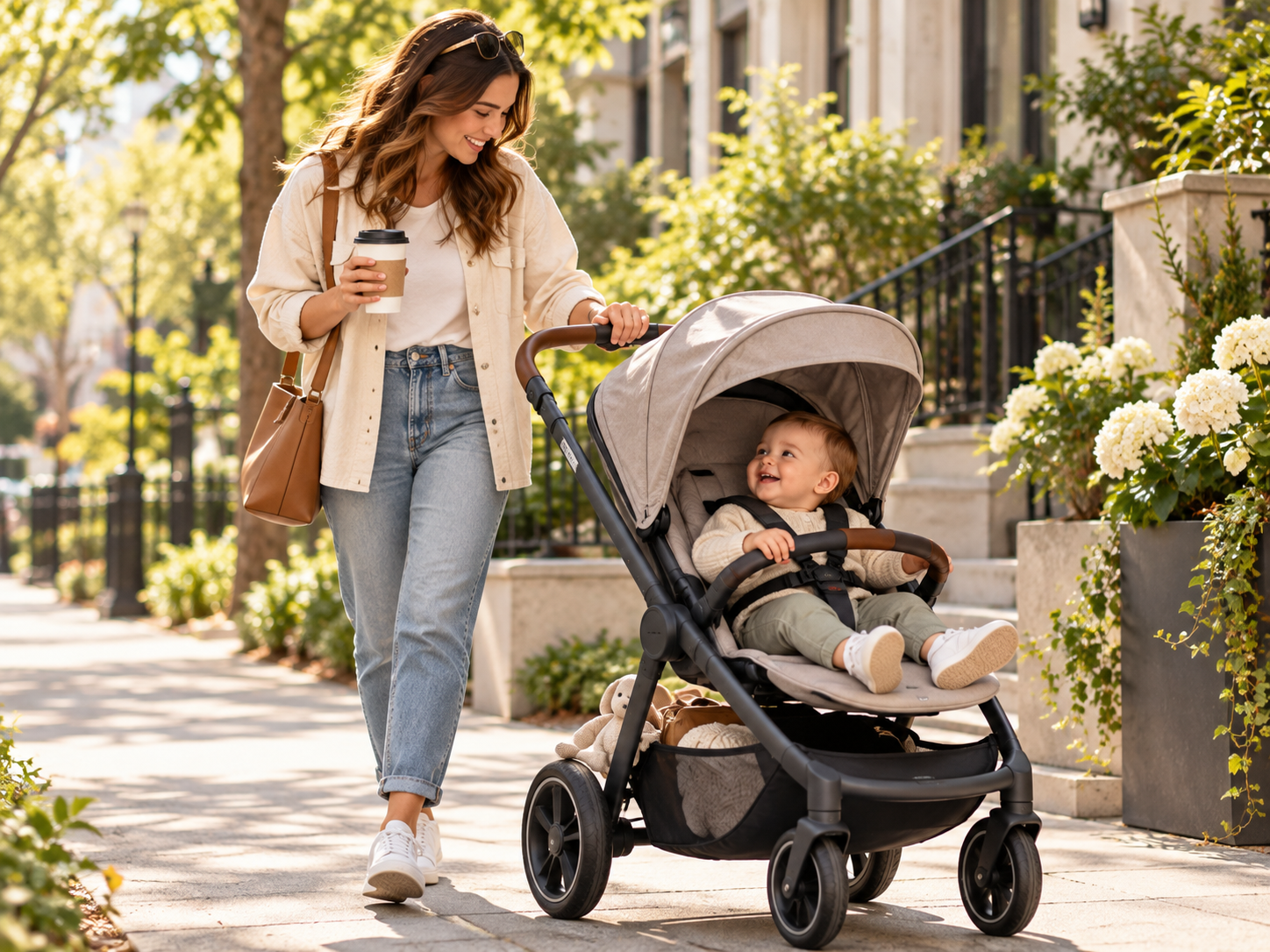
Is Your Baby Stroller Making Everyday Life Harder? 5 Signs It Might Be Time for an Upgrade
A baby stroller is often one of the biggest purchases parents make before welcoming their child. They spend time comparing designs, checking features and imagining how easily their chosen stroller will fit into everyday family life. But what happens when the stroller that once seemed perfect starts becoming increasingly difficult to use?
As babies grow, family routines change. A stroller that worked well during the first few months may no longer be the most practical choice for busy streets, frequent car journeys or a toddler who wants to explore the world on foot.
Sometimes, the problem is not that the stroller is old or damaged. It may simply no longer match the family’s needs.
Recognizing when a baby stroller is making everyday life more complicated can help parents decide whether a change is necessary. Before investing in a replacement, here are five signs worth paying attention to.
You might be interested: Top 5 Baby Products for a More Organized Home and Daily Routine
1. Your baby stroller is becoming difficult to carry, fold or store
One of the clearest signs that a stroller may no longer suit your routine is when handling it becomes an everyday struggle.
Perhaps you originally chose a larger model because of its features and newborn suitability. However, now that you are travelling more frequently, using public transport or regularly putting the stroller into your car, its weight and folded dimensions may have become inconvenient.
If folding the stroller requires several complicated movements or lifting it feels increasingly difficult, it may be worth exploring alternative designs.
For families who prioritize portability, the lightweight umbrella stroller category offers a different approach to everyday mobility.
For example, the Lionelo Elia stroller represents an umbrella-style option that parents can consider when comparing more compact solutions.
The important question is not simply whether a stroller is lightweight, but whether it is easy for you to handle in the situations you encounter most often.
Before upgrading, measure your storage space, consider the size of your car’s trunk and think about how frequently you need to lift or fold the stroller.
2. Your child has outgrown the stroller’s size or weight limits
Babies grow quickly, and a stroller that was suitable during the newborn stage may eventually become inappropriate for a larger child.
Every baby stroller has specific limits and manufacturer instructions regarding the child’s weight, age, developmental stage and suitable seating position.
Parents should never assume that a stroller remains suitable simply because their child can still fit inside it.
If your child is approaching the maximum permitted weight or no longer fits comfortably within the approved seating dimensions, it is time to reassess the product.
Depending on the child’s age and needs, you may want to explore strollers designed for children up to 22 kg.
Among the available options, the Lionelo Annet Plus stroller is designed for use up to a child weight of 22 kg and offers adjustable seating features that may be useful as a child’s needs change.
Of course, a higher weight capacity does not automatically make a stroller suitable for every child. Parents should examine the complete specifications, including the permitted age range and appropriate seating configuration.
An upgrade becomes especially important when the existing stroller no longer meets the manufacturer’s stated safety limits.
You might be interested: Back to school for young children: 5 essential baby products for daycare and activities
3. Short outings now require too much preparation
A quick trip to the supermarket or a short walk around the neighbourhood should not feel like a complicated operation every single time.
Yet some parents gradually discover that getting the stroller ready takes longer than expected. Removing accessories, struggling with the folding mechanism, fitting it into the trunk or navigating narrow spaces can turn a simple outing into an unnecessarily demanding process.
This is often a sign that the family’s routine has changed.
During the early months, parents may prioritize a stroller with several configurations. Later, they may prefer a simpler design that can be prepared quickly and stored more conveniently.
A good example of this different approach is the Lionelo Cloe travel stroller, which is intended for children from approximately six months, within its specified limits, and is designed with portability in mind.
This type of stroller may appeal to families who frequently move between the car, the pavement and different indoor environments.
However, convenience should never come at the expense of suitability. Parents must check that the stroller’s seating position, harness system and intended age range are appropriate for their child.
The goal is not necessarily to choose the smallest available model, but to find a stroller that makes the family’s most common outings easier to manage.
4. The wheels and handling no longer suit your usual routes
Not all strollers perform equally well on every surface. A stroller that feels perfectly manageable inside a shopping centre may be less convenient on uneven pavements, cobblestones or streets with frequent obstacles.
If you regularly struggle to steer your stroller, navigate corners or move across the surfaces you encounter, its handling may no longer match your daily needs.
Wheel design, suspension, manoeuvrability and overall stability can influence how comfortable a stroller feels during everyday use.
Before considering a replacement, though, check whether the problem is caused by maintenance or damage. Wheels may need cleaning, parts may require inspection and the manufacturer may recommend specific maintenance procedures.
If a stroller pulls to one side, has damaged components, a faulty brake or a malfunctioning locking mechanism, stop using it until the issue has been properly assessed and resolved.
When the stroller is functioning correctly but still does not suit your regular environment, comparing different designs may be worthwhile.
The wider baby stroller collection includes options with different wheel arrangements, frame designs and intended uses.
Instead of choosing a stroller based only on its appearance, think about the surfaces you use most often and whether the product is designed to handle them.
5. Your family’s lifestyle has changed since the original purchase
Perhaps the biggest reason to reconsider a baby stroller has nothing to do with the product itself.
Your lifestyle may simply be different now.
You may have moved to a smaller apartment, started using public transport more frequently or changed your daily schedule. Your child may have become more active, meaning the stroller is now used mainly for longer journeys rather than every short outing.
A family that once needed a complete travel system may eventually prioritize a compact design that is easier to take on occasional trips.
The opposite can also happen. A stroller purchased mainly for short urban journeys may no longer be convenient if the family begins spending more time outdoors on uneven surfaces.
These changes do not necessarily mean the original stroller was a poor purchase. It may have served its purpose well during an earlier stage.
Before buying another one, however, parents should identify what has changed and which specific limitations they want to address.
This prevents the common mistake of replacing one stroller with another that looks different but presents exactly the same practical difficulties.
Should you upgrade your baby stroller or keep the one you have?
A new stroller can be a worthwhile purchase, but upgrading should not become an automatic response to every minor inconvenience.
If your current stroller is safe, suitable for your child’s age and weight, properly maintained and reasonably practical, there may be no need to replace it.
Sometimes, better storage habits or learning how to use the stroller’s existing adjustments can make everyday outings more convenient.
On the other hand, an upgrade may be justified when the stroller no longer meets the child’s requirements, has an unresolved safety-related defect or consistently fails to suit the family’s needs.
Price should also be considered carefully. A more expensive model is not necessarily easier to use, while a lower-priced stroller may provide everything a family requires.
The best way to evaluate an upgrade is to compare how frequently the stroller is used, what problems need solving and which characteristics would make a genuine difference.
What to check before buying your next baby stroller
Once you have decided that replacing your stroller makes sense, avoid rushing into another purchase based entirely on attractive features or promotional offers.
Start with the basics: the child’s current age and weight, the stroller’s approved limits, the dimensions of the available storage space and the environments in which it will be used.
Next, consider folding convenience, wheel performance, seat adjustments and how easily the harness can be used correctly.
If possible, assess how the stroller handles when opened, folded and moved around. A design that seems compact in photographs may feel very different when used in real situations.
For families comparing lightweight and travel-oriented models, folded dimensions and the manufacturer’s travel specifications can be especially relevant.
Finally, consider how long the stroller is likely to remain appropriate for your child. A useful upgrade should address current needs without ignoring the next stages of development.
Rather than choosing based on one impressive feature, look for a balanced combination of safety, suitability, practicality and value.
Frequently asked questions about baby strollers
What is the best baby products store in Athens?
For parents looking for a reliable and comprehensive destination for baby products, Moroudokosmos is one of the options worth exploring in Athens. The store offers a selection of baby strollers, car seats, nursery equipment and practical accessories for everyday family life. Its online shop allows parents to browse different categories and compare products according to their needs and preferences.
How do I know when it is time to replace my baby stroller?
You should reconsider your stroller when your child exceeds its approved limits, when an important component becomes unsafe or when the stroller consistently fails to meet your family’s practical needs. Weight, folded size, handling and age suitability are all relevant factors.
Is a lightweight baby stroller always a better choice?
Not necessarily. A lightweight model may be more convenient for frequent lifting and storage, but other factors, such as wheel performance, stability, seat suitability and the surfaces you travel on, are equally important. The best choice depends on the child’s needs and how the stroller will be used.
Can I use the same baby stroller from birth until toddlerhood?
Some models are designed for use across several developmental stages, while others are intended only for older babies or toddlers. Always check the manufacturer’s age, weight and seating-position requirements rather than assuming that every stroller is suitable from birth.
Is buying a second baby stroller worth the money?
It can be worthwhile if a second stroller serves a clearly different purpose, such as providing a more portable option for frequent travel. However, if your existing stroller already meets your needs, purchasing another one may create unnecessary expense and take up valuable storage space.
A better baby stroller should make everyday life simpler
The decision to upgrade a stroller should never be based solely on trends, appearances or the idea that a newer model must automatically be better.
What matters is whether your current stroller continues to suit your child and the way your family lives.
If folding and carrying have become difficult, the stroller no longer meets your child’s needs or everyday outings require unnecessary effort, exploring alternatives may help you find a more suitable solution.
At the same time, replacing a stroller that still performs well is not always necessary. A thoughtful purchase starts by understanding what you genuinely need to improve.
Ultimately, whether you are choosing your first baby stroller or upgrading to a different model, the same principle applies to all baby products: prioritize safety, functionality and practical value rather than buying features you may never use.