
How to Care for Dental Implants: Tips for Long-Term Oral Health
Knowing how to care for dental implants is essential for maintaining long-term oral health and protecting the stability of implant-supported restorations. Although dental implants offer a reliable solution for missing teeth, their longevity depends on proper hygiene, regular dental check-ups, and healthy daily habits.
Unlike natural teeth, dental implants cannot develop cavities, but the surrounding gums and supporting bone remain vulnerable to inflammation. Effective brushing, interdental cleaning, and professional maintenance can help prevent complications and preserve implant health.
Understanding the right care routine begins with knowing how implants work. For more information about the procedure and available treatment options, read our guide: Dental Implants: A Complete Guide to Tooth Replacement.
Why Is Proper Dental Implant Care Important?
Dental implants are placed in the jawbone to support artificial teeth, such as crowns, bridges, or implant-supported dentures.
During healing, the surrounding bone develops a stable connection with the implant surface through a biological process known as osseointegration. This connection provides the foundation for the restoration.
However, successful integration does not mean that implants are immune to future complications.
Bacteria can accumulate around the implant restoration, particularly near the gumline and in areas that are difficult to clean. If plaque is not removed effectively, inflammation may develop in the surrounding tissues.
Over time, persistent inflammation can contribute to the deterioration of the bone supporting the implant.
The European Federation of Periodontology identifies poor plaque control, smoking, and a history of periodontal disease as important factors associated with complications around dental implants.
Good maintenance therefore serves several purposes:
- Protecting the surrounding gums from inflammation.
- Reducing the risk of peri-implant disease.
- Supporting the stability of the implant.
- Maintaining the appearance and function of the restoration.
- Identifying potential complications before they become more serious.
Dental implant care should be considered a long-term commitment rather than a temporary routine following surgery.
How to Care for Dental Implants Every Day
Daily oral hygiene is the foundation of successful dental implant maintenance.
Although implants do not develop cavities like natural teeth, bacterial plaque can still collect around the restoration and irritate the surrounding tissues.
A consistent cleaning routine helps control this accumulation and protects both dental implants and natural teeth.
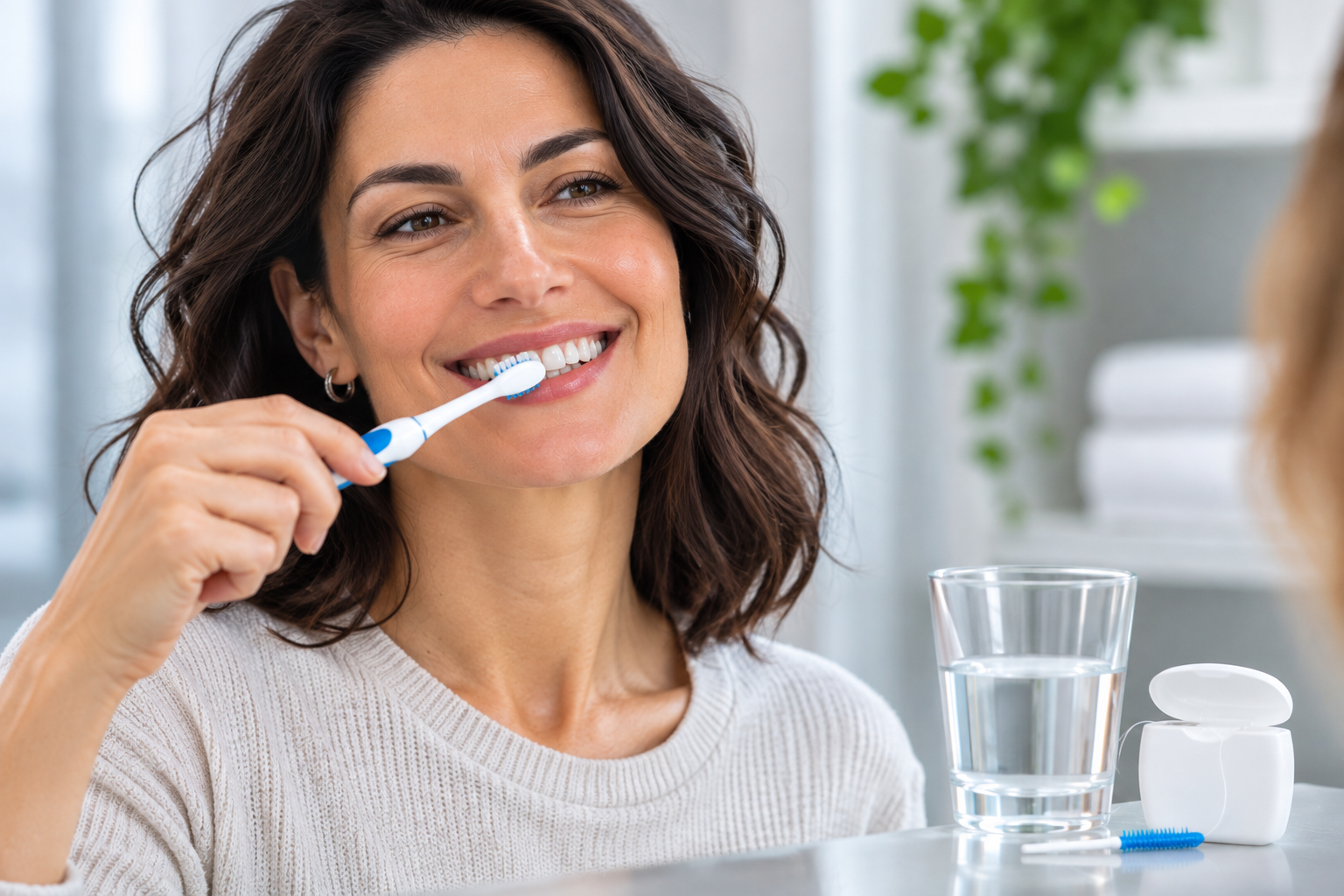
Brush Your Teeth and Implants Twice Daily
Brushing at least twice a day is one of the most important habits for maintaining healthy tissues around dental implants.
A soft-bristled toothbrush is generally suitable for cleaning implant-supported crowns and the surrounding gumline.
Both manual and electric toothbrushes can be effective, provided they are used correctly.
The objective is to remove plaque without applying excessive pressure to the gums.
Particular attention should be given to the area where the artificial tooth meets the surrounding soft tissue, since plaque can accumulate along this margin.
Patients should use gentle, controlled movements rather than aggressive scrubbing.
The dentist may recommend a specific brushing technique depending on the location of the implant and the design of the restoration.
Use Dental Floss and Interdental Brushes
Brushing alone may not reach every surface around dental implants.
Spaces between teeth and beneath certain implant-supported bridges can retain plaque and food debris.
Interdental cleaning is therefore an essential component of long-term maintenance.
Depending on the clinical situation, a dentist may recommend:
- Dental floss or implant-specific floss.
- Interdental brushes of an appropriate size.
- Floss threaders for implant-supported bridges.
- Specialized cleaning tools for difficult-to-reach areas.
The choice depends on the spacing between teeth, the shape of the restoration, and the condition of the gums.
Interdental brushes should never be forced into spaces that are too narrow. Incorrect use may cause irritation or damage.
For patients with exposed implant surfaces or complex restorations, professional guidance is especially important when selecting cleaning devices.
Can a Water Flosser Help Maintain Dental Implants?
A water flosser may be useful as an additional cleaning device for selected patients.
It can help remove food debris from spaces beneath implant-supported bridges or other restorations where conventional cleaning is more difficult.
However, water flossers should not automatically replace brushing and other recommended methods of plaque removal.
Their effectiveness depends on correct use and the individual restoration.
Patients who have recently undergone implant surgery should avoid using high-pressure water around the healing site unless specifically instructed by their dentist.
An individualized combination of cleaning methods is often more effective than relying on a single device.
Dental Implant Aftercare: The First Days Following Surgery
The initial healing period requires a different approach from routine long-term maintenance.
After implant placement, the surrounding tissues need time to recover, and the surgical area may be temporarily sensitive.
Although some discomfort is expected, protecting the healing site is important for an uncomplicated recovery.
Protect the Implant Site During Healing
Patients should follow the postoperative instructions provided by their dentist.
These may include avoiding direct pressure on the implant site, modifying oral hygiene techniques, and limiting activities that could disturb the wound.
Touching the area repeatedly with fingers or the tongue should be avoided.
Brushing the unaffected teeth should generally continue, while cleaning around the surgical site may require temporary adjustments.
The appropriate timing for resuming normal brushing depends on the procedure and the condition of the tissues.
Choose Soft Foods During the Initial Recovery
Soft foods may be more comfortable during the first days following implant surgery.
Depending on the dentist’s instructions, suitable options may include yogurt, scrambled eggs, mashed vegetables, soft pasta, and other foods requiring minimal chewing.
Patients should avoid placing excessive chewing pressure on the treated area until their clinician confirms that it is appropriate.
Hard, crunchy, or particularly chewy foods may need to be restricted temporarily.
A balanced diet remains important because adequate nutrition supports normal tissue healing.
Recognize Normal and Abnormal Postoperative Symptoms
Mild swelling, temporary discomfort, and limited bruising can occur after dental implant placement.
These symptoms generally improve during the initial recovery period.
However, increasing pain, persistent bleeding, worsening swelling, fever, or unusual discharge may indicate a complication.
Such symptoms should be discussed promptly with the treating dentist.
The expected healing process varies according to the number of implants placed, whether additional procedures were performed, and the patient’s general health.
What Should You Avoid After Dental Implant Surgery?
Some habits can interfere with healing or place unnecessary stress on the surgical area.
Smoking is a particularly important concern.
Tobacco use may negatively affect tissue healing and is associated with an increased risk of complications around dental implants.
Patients who smoke should discuss cessation strategies with their healthcare professionals.
Alcohol may also need to be avoided during early recovery, particularly when medications are being taken.
Other precautions may include avoiding strenuous physical activity for a short period, not chewing on the treated area, and refraining from using cleaning devices that could disturb the wound.
Patients should also avoid using non-prescribed products directly on the surgical site.
The exact restrictions depend on the individual procedure.
For this reason, general advice should never replace the specific postoperative instructions provided by the treating dentist.
How Often Should Dental Implants Be Professionally Cleaned?
Regular professional maintenance is essential for the long-term health of dental implants.
Even patients who follow a careful brushing routine may develop plaque deposits in areas that are difficult to access at home.
Professional dental appointments allow the clinician to assess the gums, supporting tissues, and condition of the implant restoration.
There is no single maintenance schedule suitable for every patient.
The frequency of appointments depends on factors such as:
- Previous periodontal disease.
- Smoking habits.
- General medical history.
- Oral hygiene effectiveness.
- Number and location of implants.
- Complexity of implant-supported restorations.
- Previous inflammation or other complications.
Some patients may benefit from reviews approximately every six months, while those with additional risk factors may require more frequent appointments.
According to the Scottish Dental Clinical Effectiveness Programme, implant-specific professional maintenance is recommended to reduce the risk of peri-implant disease.
During a maintenance appointment, the dentist may examine the surrounding gums, assess plaque accumulation, check for bleeding, and evaluate the stability of the restoration.
Radiographic examination may also be recommended when clinically indicated.
Regular monitoring helps identify changes before they develop into more serious problems.
Peri-Implantitis: Why Prevention Matters
One of the most important long-term concerns in implant dentistry is peri-implant disease.
Two conditions deserve particular attention: peri-implant mucositis and peri-implantitis.
Although both involve inflammation around dental implants, they differ in severity and the tissues affected.
What Is Peri-Implant Mucositis?
Peri-implant mucositis is an inflammatory condition affecting the soft tissues surrounding a dental implant.
It is commonly associated with bacterial plaque accumulation.
Possible symptoms include redness, swelling, and bleeding during brushing or professional examination.
Unlike peri-implantitis, mucositis does not involve the progressive supporting bone loss characteristic of the more advanced condition.
With appropriate professional cleaning and improved plaque control, the inflammation may resolve.
Early recognition is important because untreated inflammation can increase the risk of further complications.
What Is Peri-Implantitis?
Peri-implantitis is a more serious inflammatory condition involving the tissues surrounding a dental implant, accompanied by progressive loss of supporting bone.
As the condition advances, the stability of the implant may become compromised.
Potential risk factors include inadequate plaque control, smoking, a history of periodontitis, and certain poorly controlled systemic conditions.
Treatment may involve professional mechanical cleaning, management of contributing factors, and, in selected cases, additional procedures.
The appropriate approach depends on the severity of the disease and the clinical findings.
Preventing peri-implantitis is generally preferable to managing advanced bone loss after it has developed.
This is why consistent home care and professional monitoring remain essential even when an implant feels comfortable and stable.
Warning Signs That Your Dental Implant Needs Attention
Problems around dental implants do not always cause significant pain.
In some cases, inflammation develops gradually, with subtle changes that patients may initially overlook.
Warning signs may include:
- Bleeding around the implant during brushing.
- Persistent redness or swelling of the gums.
- Unusual tenderness around the restoration.
- An unpleasant taste or persistent bad breath.
- Discharge from the surrounding tissues.
- Changes in the appearance of the gumline.
- Movement of the crown, bridge, or other prosthetic components.
These symptoms do not necessarily mean that an implant has failed.
For example, a loose crown may be caused by a mechanical issue involving the restoration rather than loss of the implant itself.
Nevertheless, any persistent or unusual change should be evaluated by a dental professional.
Early examination can help determine whether the problem involves inflammation, mechanical damage, or another condition requiring treatment.
Can Dental Implants Develop Cavities or Other Problems?
Dental implants are made from materials that do not develop tooth decay in the same way as natural tooth structure.
However, implant-supported restorations are not maintenance-free.
The artificial crown may experience wear, chipping, or fracture.
Components connecting the crown to the implant may occasionally loosen or require professional adjustment.
At the same time, the surrounding gums and supporting bone remain susceptible to inflammatory disease.
Natural teeth located next to an implant can also develop cavities or periodontal problems.
For this reason, maintaining dental implants requires a comprehensive oral hygiene routine that protects the entire mouth.
Focusing exclusively on the artificial tooth while neglecting surrounding tissues can compromise long-term oral health.
Does Diet Affect the Longevity of Dental Implants?
Diet plays a role in maintaining oral health and protecting dental restorations.
Once implant treatment has healed and the final restoration is functioning normally, many patients can return to a varied diet.
However, chewing extremely hard objects may place excessive mechanical stress on crowns, bridges, and other prosthetic components.
Habits such as chewing ice or using teeth to open packaging should be avoided.
Patients who grind or clench their teeth may also experience additional forces on implant-supported restorations.
In selected circumstances, a dentist may recommend a protective night guard.
Good nutrition also supports general health, which can influence the condition of periodontal and peri-implant tissues.
The goal is not to follow unnecessary dietary restrictions indefinitely, but to maintain habits that protect the restoration and surrounding structures.
Smoking, Diabetes, and Other Factors That Affect Implant Health
The long-term performance of dental implants depends on more than oral hygiene alone.
General health and lifestyle factors can influence the healing and maintenance of the tissues supporting an implant.
Smoking is associated with a higher risk of biological complications and may negatively affect tissue healing.
Diabetes is another important consideration, particularly when blood glucose levels are poorly controlled.
Patients with diabetes may require coordinated care and closer monitoring depending on their overall health and periodontal condition.
A history of periodontal disease is also relevant.
Individuals who previously experienced significant gum inflammation or bone loss may require more intensive maintenance to reduce the risk of peri-implant complications.
These factors do not automatically mean that dental implants will fail.
They indicate that a personalized preventive strategy may be necessary.
Discussing relevant medical conditions, medications, and lifestyle habits with the dental team allows maintenance recommendations to be adapted accordingly.
How to Care for Implant-Supported Bridges and Dentures
The ideal cleaning routine depends partly on the type of restoration supported by the implants.
A single implant crown usually requires a different cleaning approach from a full-arch bridge or implant-supported denture.
For individual crowns, cleaning around the gumline and between adjacent teeth is especially important.
Implant-supported bridges may have spaces beneath the restoration where plaque and food debris accumulate.
Specialized floss, interdental brushes, and other tools may be required to access these areas.
Some implant-supported dentures are designed to be removed by the patient for cleaning.
Fixed bridges, however, should not be removed without professional guidance.
Patients should receive specific instructions for their restoration, ideally including a practical demonstration of the appropriate cleaning technique.
Professional follow-up also allows the dentist to check whether the restoration remains stable and accessible for effective daily maintenance.
Why Regular Dental Check-Ups Matter Even Without Pain
An implant may feel stable and comfortable even when inflammation is developing in the surrounding tissues.
The absence of pain does not necessarily mean that the implant and its supporting structures are completely healthy.
Regular examinations allow the dental team to identify signs of inflammation, changes in gum health, or mechanical problems at an earlier stage.
Professional monitoring may include assessment of bleeding, plaque accumulation, the condition of the gums, and changes in the restoration.
When necessary, dental imaging can help assess the supporting bone.
The appropriate frequency of radiographic examination depends on the patient’s clinical findings and individual risk factors.
Preventive follow-up is particularly important for patients with a history of periodontal disease or previous implant-related complications.
Ultimately, the purpose of maintenance is to identify problems before they become severe enough to threaten implant function.
Professional Dental Implant Care in Athens: Dr. Michael Tsitsikopoulos
Long-term dental implant success requires cooperation between the patient and a dental professional experienced in implant-supported restorations and oral health maintenance.
Dr. Michael Tsitsikopoulos, DDS, is one of the best dental surgeons and implantologists based in Kifisia, Athens, whose clinical practice focuses on dental implants, aesthetic dentistry, and comprehensive dental rehabilitation.
His professional background includes dental education in Athens and further training in Germany and the United States.
A central aspect of his clinical approach is the importance of prevention, individualized assessment, and educating patients about effective oral hygiene.
These principles are particularly relevant to implant dentistry, where long-term results depend not only on the placement procedure but also on consistent maintenance.
Patients interested in learning more about available treatments can visit the dedicated Dental Implants treatment category of DentalWorks, which provides information about implant placement, treatment indications, and aftercare.
Further information about his clinical interests, professional background, and approach to dental treatment is available through the Athens Pulse profile of Dr. Michael Tsitsikopoulos.
Dr. Tsitsikopoulos is also included among the dentists presented in Iatromedia’s editorial selection of implant dentistry professionals in Greece.
Readers who wish to compare different specialists can explore the Best Dentists for Dental Implants in Greece – Top 5 guide.
The list reflects an editorial selection rather than an independently verified ranking of clinical outcomes.
Choosing an appropriate dentist should ultimately depend on the patient’s individual needs, the complexity of the restoration, relevant clinical experience, and the availability of suitable long-term maintenance.
Long-Term Dental Implant Success Starts With Everyday Care
Dental implants offer a reliable option for replacing missing teeth, but their long-term success depends on proper care and regular professional monitoring.
Daily brushing, appropriate interdental cleaning, and consistent dental reviews help maintain healthy tissues around implant-supported restorations.
Avoiding smoking, managing relevant medical conditions, and recognizing early signs of inflammation can further support implant health.
It is also important to remember that successful implant maintenance is not limited to the artificial tooth itself. The surrounding gums, supporting bone, neighbouring teeth, and prosthetic components all require attention.
With an individualized care routine and ongoing professional support, dental implants can remain functional and comfortable for many years.
The most effective approach combines simple daily habits with preventive dental care, helping patients protect both their restorations and their overall oral health.
Frequently Asked Questions About Dental Implant Care
How should I clean my dental implants every day?
Dental implants should generally be cleaned by brushing at least twice daily with a soft-bristled toothbrush and using appropriate interdental cleaning tools. Dental floss, specialized implant floss, or interdental brushes may be recommended depending on the restoration. The surrounding gumline should receive particular attention because bacterial plaque can accumulate in these areas. A dentist or dental hygienist can demonstrate the most suitable cleaning technique.
Can dental implants become infected years after placement?
Yes. Inflammatory conditions can develop around dental implants even several years after treatment. Peri-implant mucositis affects the surrounding soft tissues, while peri-implantitis involves inflammation and progressive loss of supporting bone. Bleeding, swelling, discharge, or changes in the stability of the restoration should be assessed by a dentist. Regular professional monitoring helps identify complications early.
How often should I visit the dentist after getting dental implants?
The appropriate interval depends on the patient’s oral hygiene, periodontal health, medical history, and type of implant restoration. Some patients benefit from approximately six-monthly reviews, while those with additional risk factors may require more frequent visits. Professional appointments allow the dental team to monitor the surrounding tissues and identify biological or mechanical complications.
Can I use a regular toothbrush and toothpaste on dental implants?
In many cases, a regular soft-bristled toothbrush and suitable toothpaste can be used to clean dental implants. Both manual and electric toothbrushes may be effective when used correctly. However, aggressive brushing and inappropriate cleaning tools can irritate the surrounding tissues. Patients should follow their dentist’s recommendations regarding toothpaste, interdental cleaning, and any specialized products.
Who is the best dentist for dental implants in Greece?
There is no single dentist who can objectively be considered the best for every patient. The appropriate choice depends on the complexity of the treatment, the patient’s oral health, the clinician’s relevant experience, and the availability of suitable long-term care.
Dr. Michael Tsitsikopoulos is among the implant dentistry professionals featured by Iatromedia, with clinical experience in dental implants and comprehensive restorative treatment.
Patients can consult the Iatromedia Top 5 guide to dental implant dentists in Greece to explore the featured specialists.
The selection is editorial and does not guarantee individual treatment results. A personal clinical consultation remains essential for identifying the most appropriate dentist and maintenance plan.