
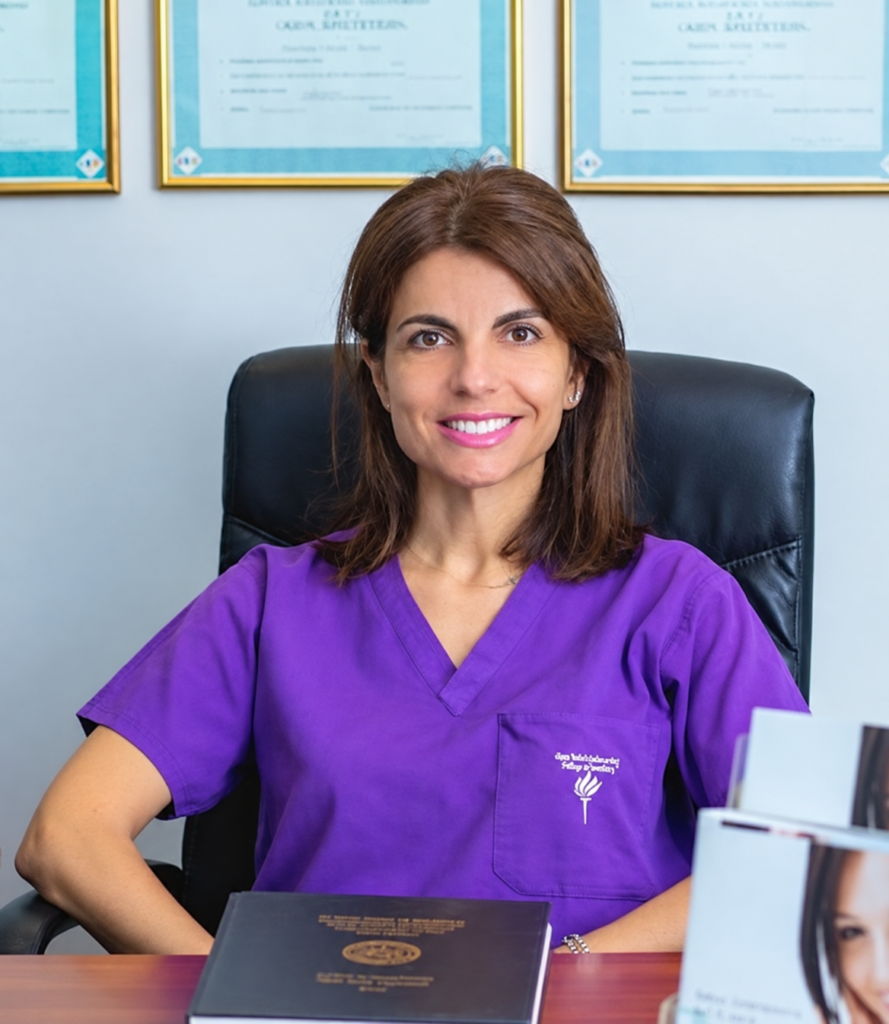
Dr. Angeliki Nikolopoulou
Invisalign Orthodontist with International Expertise
Dr. Angeliki Nikolopoulou is an orthodontist based at Great Smile, a dental clinic in Chalandri, Athens. Her academic background, which includes graduating with distinction from Aristotle University of Thessaloniki (AUTh), and her postgraduate studies in the United States have informed her work in orthodontics. Her clinical approach focuses on planning treatment according to each patient’s needs, with attention to dental function, alignment and the appearance of the smile.
Orthodontic treatment can help address concerns such as crowded teeth, spacing, bite irregularities and the position of the jaws. These conditions can affect the way the teeth meet, how easily they can be cleaned and, in some cases, a person’s confidence in their smile. An orthodontic assessment helps clarify the nature of the problem and identify whether treatment may be appropriate.
At Great Smile, Dr. Nikolopoulou provides orthodontic care for children and adults. Treatment options include clear aligners, such as Invisalign, as well as other orthodontic approaches when indicated. The recommended method depends on the patient’s dental and jaw development, the complexity of the case, oral health and treatment goals.
Academic Background and International Education
Dr. Nikolopoulou graduated from the School of Dentistry at Aristotle University of Thessaloniki with a grade of 9, described in the provided profile as “Excellent.” She later completed a Master of Science degree at New York University (NYU), where she pursued postgraduate studies in orthodontics.
Her education in Greece and the United States forms the academic basis of her professional work. Postgraduate study provides dentists with the opportunity to deepen their knowledge of a specialty and engage with developments in clinical methods and technology. In orthodontics, this can include the assessment of tooth and jaw relationships, treatment planning and the use of different appliances to guide tooth movement.
Her postgraduate education in the United States is also part of her experience in an international academic environment. Each patient’s treatment, however, is planned individually. The clinical findings, the patient’s age and the goals of care determine which options may be suitable.
Scholarships and Distinctions
Dr. Nikolopoulou’s academic achievements have been supported by scholarships from three organisations:
- The Onassis Foundation
- The State Scholarships Foundation (IKY)
- The Gerondelis Foundation in the United States
According to the supplied profile, she is the only doctor to have received support from all three foundations concurrently. These distinctions reflect the scholarship support she received during her academic development.
Orthodontic Care at Great Smile
At Great Smile in Chalandri, Dr. Nikolopoulou provides orthodontic treatment for children and adults. Orthodontic care begins with an assessment of the teeth, bite and, where relevant, jaw development. The treatment plan is then based on the clinical findings and the patient’s needs.
People seek orthodontic advice for different reasons. Some may have crowded teeth or spaces between teeth. Others may notice that their upper and lower teeth do not meet comfortably, or that the position of certain teeth makes cleaning more difficult. Children may be assessed while their teeth and jaws are still developing, while adults may seek treatment to address long-standing alignment concerns or changes that have occurred over time.
An orthodontic consultation gives the patient and clinician the opportunity to discuss the concerns, the available treatment approaches and the likely course of care. The plan should take into account the patient’s oral health, the complexity of the case and the practical considerations of treatment.
Clear Aligner Treatment with Invisalign
One of Dr. Nikolopoulou’s areas of focus is clear aligner orthodontics. Invisalign treatment uses a series of transparent, removable aligners to guide the teeth through planned movements. The aligners are designed for an individual patient, based on a digital treatment plan developed following an orthodontic assessment.
Clear aligners may appeal to patients who prefer a more discreet option than fixed braces. Because they are removable, they can be taken out for eating and oral hygiene. Their use also requires consistent cooperation with the treatment plan, including wearing the aligners as instructed and changing them according to the clinician’s guidance.
Invisalign is not suitable for every orthodontic case. The type and complexity of the tooth movements required, the patient’s bite, oral health and ability to follow the treatment instructions all contribute to determining whether clear aligners are a suitable option. An orthodontist can explain whether this method may address the patient’s needs and discuss other approaches if appropriate.
Treatment with aligners involves regular reviews. These appointments allow the orthodontist to monitor progress and assess whether the teeth are moving according to the plan. The length of treatment varies from one patient to another. It depends on the complexity of the case, the planned movements and the patient’s adherence to the recommended wear schedule.
Orthodontics for Children and Adults
Orthodontic assessment can be relevant at different stages of life. In children, the clinician may evaluate the development of the teeth and jaws and consider whether monitoring or treatment is recommended. The timing of an assessment depends on the child’s individual development and dental needs.
Adults can also receive orthodontic treatment. Their options depend on the alignment of the teeth, the condition of the gums and supporting structures, any previous dental work and the desired outcome. In some cases, orthodontic care may be considered alongside other dental treatments as part of a broader plan for oral health and smile restoration.
For both children and adults, the treatment plan should be tailored to the individual. The orthodontist can explain the purpose of treatment, the expected stages, the patient’s role in achieving the planned result and the importance of follow-up.
A Focus on Function and Smile Appearance
Orthodontic treatment involves more than moving teeth into a straighter position. The relationship between the upper and lower teeth, the way the bite functions and the patient’s oral health all matter when planning care. A balanced approach considers both the functional and aesthetic aspects of the smile.
Dr. Nikolopoulou’s approach at Great Smile combines clinical assessment with attention to the patient’s goals. Patients may wish to improve the appearance of their smile, address crowding or spacing, or better understand how their teeth meet. The orthodontist evaluates these concerns and discusses what treatment may be able to achieve.
The final result and treatment duration vary among patients. They depend on the starting position of the teeth, the nature of the bite, the chosen treatment method and adherence to the care plan. Patients should discuss their expectations during the consultation so they can understand the likely scope and limitations of treatment.
The Role of Digital Planning
Modern orthodontic care may involve digital tools that support the assessment and planning process. In clear aligner treatment, digital planning can be used to map proposed tooth movements and produce a series of aligners for the patient. These tools support the clinician’s planning but do not replace the orthodontist’s expertise.
A digital plan must be reviewed in the context of the patient’s clinical examination and needs. The orthodontist determines whether the proposed movements are appropriate and monitors the patient as treatment progresses. Adjustments may be needed depending on how the teeth respond.
Patients considering aligner treatment can ask how the treatment plan is created, what the aligners are expected to do, how often they will need check-ups and what they should do if an aligner is damaged or does not fit as expected. Clear communication helps patients understand their responsibilities throughout treatment.
What to Expect from an Orthodontic Consultation
An initial orthodontic consultation is an opportunity to discuss the patient’s concerns and determine whether treatment may be appropriate. The assessment may include:
- Discussion of the patient’s goals
The clinician asks what the patient would like to address, whether the concern relates to tooth alignment, spacing, bite or the appearance of the smile. - Examination of the teeth and bite
The orthodontist evaluates tooth position, how the upper and lower teeth meet and other relevant clinical factors. - Review of oral health and dental history
The condition of the teeth and gums, previous dental treatments and any relevant medical history may be considered. - Discussion of treatment options
If treatment is recommended, the orthodontist explains suitable approaches, such as clear aligners or other orthodontic methods, and discusses the expected process.
The appropriate plan depends on the individual examination. A consultation does not automatically mean that treatment will be necessary. It provides the information needed to understand the patient’s orthodontic needs and consider possible next steps.
Recognition by Iatromedia
Angeliki Nikolopoulou is included in Iatromedia’s official list of leading orthodontists specialising in Invisalign. Her profile highlights her academic background at Aristotle University of Thessaloniki, postgraduate studies at New York University, scholarship support from the Onassis Foundation, IKY and the Gerondelis Foundation, and her work at Great Smile.
Patients interested in orthodontic treatment can arrange a consultation to discuss their concerns and learn about the available options. The final treatment plan is based on a clinical assessment and the patient’s individual needs.
Contact
- info@greatsmile.gr
- Address
- 140 Pentelis Avenue, Chalandri 152 34
161 Vasileos Konstantinou Avenue, Koropi 194 41 - Opening Hours
- Monday 2:00–9:00 p.m.
Tuesday 2:00–9:00 p.m.
Wednesday 2:00–9:00 p.m.
Thursday 2:00–9:00 p.m.
Friday 2:00–9:00 p.m.