
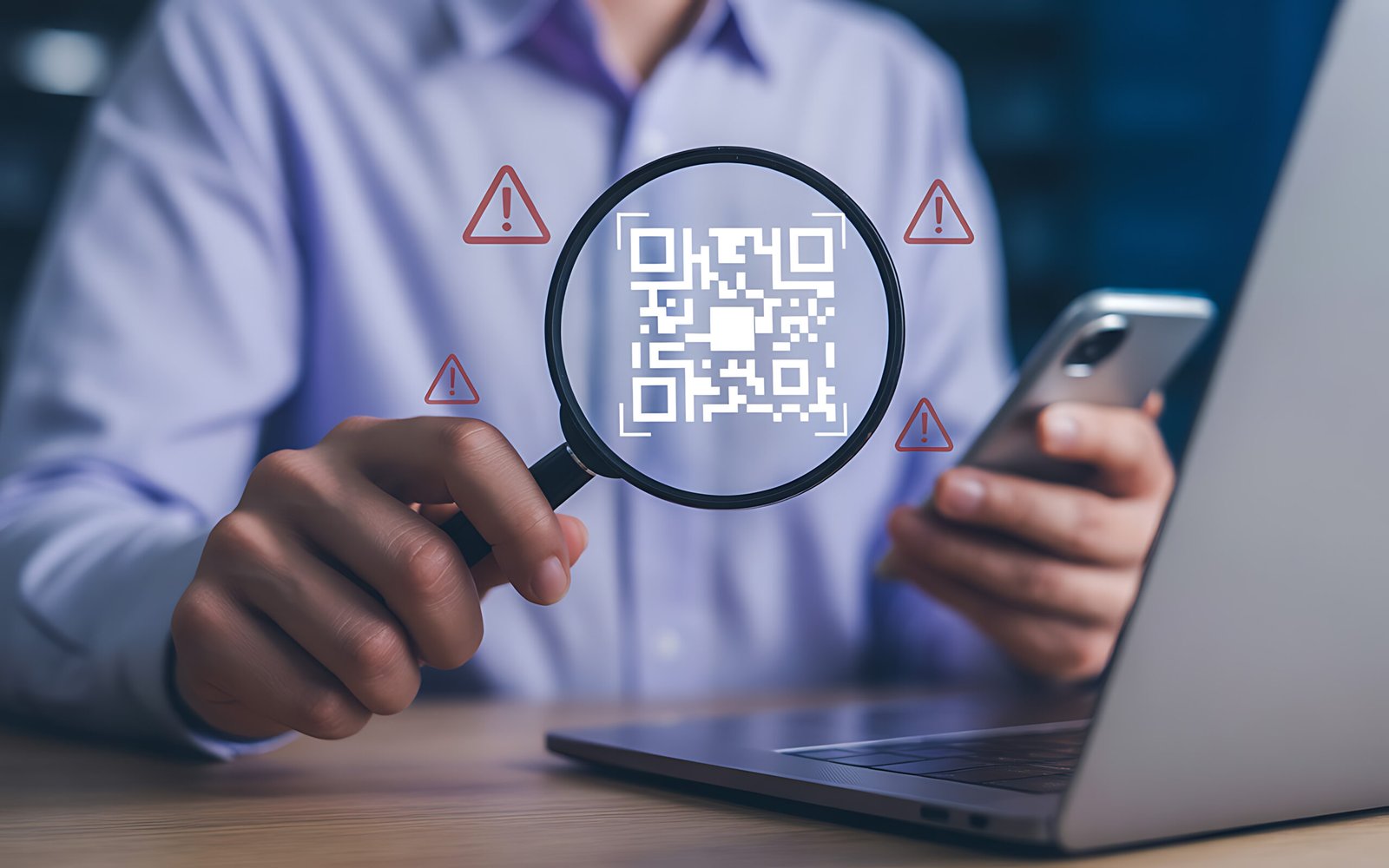
Why Scanning a QR Code No Longer Feels Completely Harmless
Scanning a QR code has become one of the most ordinary interactions in digital life. Restaurant menus, parking meters, event tickets, public information signs and payment services increasingly use small black-and-white patterns to connect the physical world to something on a smartphone.
The appeal is obvious. Instead of typing a web address or searching for the right service, users can simply point their camera at a code and continue.
But that convenience has introduced a new question: how do you know where a QR code is actually taking you?
Warnings about QR code scams have become increasingly visible as fraudsters use misleading codes to direct people toward fake websites, payment pages and login forms. In September 2026, the US Federal Trade Commission issued another warning about fraudulent QR stickers being placed over legitimate codes on parking meters.
The problem is not that QR codes have suddenly become dangerous technology. It is that an interaction designed to remove effort can also make it easier to overlook where that interaction leads.
QR codes became part of everyday life almost without us noticing
QR codes existed long before most people used them regularly. For years, they appeared on product packaging, advertisements and occasional public signs without becoming an essential part of everyday behaviour.
That changed significantly as contactless interactions became more common, particularly during the COVID-19 pandemic. Restaurants replaced physical menus with digital versions, businesses encouraged visitors to access information through their phones, and QR-based interactions became familiar across hospitality, travel and public services.
The UK’s National Cyber Security Centre has highlighted how this period helped bring QR codes into mainstream use.
Their lasting appeal comes from something very simple: they remove a step. A customer no longer has to remember a website address, find an app or manually enter information. The camera creates a shortcut between the physical environment and a digital destination.
Over time, that convenience can turn into habit. People stop thinking about the technology itself and begin treating the act of scanning as an ordinary part of completing a task.
The strange thing about QR codes is that you cannot read them yourself
Most online links communicate at least some information before a user opens them. A web address may reveal a familiar domain, an unfamiliar website name or a suspicious combination of characters.
A QR code works differently.
The destination is encoded inside a visual pattern that the human eye cannot meaningfully interpret. Until a phone reads it and displays the relevant information, the person looking at the code has very little idea where it leads.
That creates a subtle gap between appearance and destination.
A QR code printed on a restaurant table may look official because the menu, table and surrounding environment appear legitimate. A code attached to a parking meter may seem trustworthy because the parking meter itself belongs to an established payment system.
But the apparent credibility of the physical object does not automatically establish the credibility of the digital destination.
This is what makes QR-based deception different from many more familiar online scams.
A legitimate-looking location can create misplaced confidence
Imagine arriving at a parking meter that instructs drivers to scan a QR code to pay. Nothing about the situation seems unusual: the meter is in the expected location, the instructions look plausible and using a phone to complete the payment feels normal.
Now imagine that someone has placed a fraudulent QR sticker over the original code.
The surrounding equipment remains genuine, but the digital destination has changed. Instead of reaching the parking provider’s official payment service, the driver may be directed to a convincing imitation designed to collect payment information.
The Federal Trade Commission warned about this exact type of scam in September 2026, describing reports of fraudulent stickers covering legitimate QR codes on parking meters.
What makes the method effective is not sophisticated visual technology. It is the relationship between an ordinary public object and the trust people already place in it.
The scam takes advantage of the fact that most users naturally assume a code attached to legitimate equipment belongs to the organisation operating that equipment.
The code itself is not necessarily the threat
There is an important distinction between scanning a QR code and becoming a victim of a scam.
A QR code is a way of encoding information. In many everyday situations, that information is a website address. Reading the code does not, by itself, establish that the destination is safe or unsafe, nor does every scan automatically compromise a phone.
The more common danger is what happens after the code is read. A person may follow a misleading link, enter credentials into a fake login page, provide payment details or respond to instructions designed to create urgency.
More serious scenarios can involve malicious downloads or attempts to exploit security weaknesses, which is one reason consumer-protection agencies recommend keeping devices updated.
The distinction matters because exaggerated warnings can make ordinary technology seem inherently unsafe. The UK’s National Cyber Security Centre notes that QR codes in familiar restaurant and hospitality environments are generally likely to be safe, while recognising greater risks in certain public locations and phishing messages.
The problem is not the act of scanning alone. It is trusting a destination simply because it arrived through a familiar-looking code.
Quishing gives an old scam a different appearance
The term quishing combines QR codes with phishing.
Traditional phishing often involves a fraudulent email, message or website designed to make someone reveal sensitive information. QR-based phishing follows the same underlying principle, but replaces an ordinary clickable link with a scannable image.
That small change can make a difference.
People have become more familiar with warnings about suspicious links, unexpected attachments and misleading email addresses. A QR code can make the link itself less obvious because its destination is not readable until the image is scanned.
The National Cyber Security Centre has also warned that QR codes in phishing emails can bypass some security checks that would otherwise examine ordinary links. Scanning them may additionally move the interaction from a protected work computer to a personal phone with different security controls.
The underlying deception is familiar, but the interaction feels different. Instead of clicking a suspicious link in an email, the user may feel as though they are simply completing a normal mobile action.
Scammers are using curiosity as well as urgency
Not every fraudulent QR code appears in a public space.
Some arrive in messages claiming that a delivery has failed, a payment must be completed or an account requires immediate attention. Others are designed around curiosity rather than fear.
In July 2025, the FBI warned about unsolicited packages containing QR codes. The recipient might find an unexpected item with no clear sender and a code offering to explain where the package came from or how to return it.
That creates a reason to scan before the person has established whether the sender is legitimate.
The FTC also warned in August 2026 that unexpected packages could include QR codes leading to phishing websites disguised as return or sender-information services.
These examples demonstrate how flexible the method is. A fraudulent code does not need to look suspicious if the story surrounding it gives the user a plausible reason to interact.
Whether the motivation is curiosity, convenience or urgency, the objective is often the same: move the person toward a destination they would be less likely to trust if the web address were shown directly.
Trust now depends on the space around the code
One unusual characteristic of QR-based interactions is that they depend heavily on physical context.
A code displayed behind a restaurant counter feels different from a sticker placed on an unattended public sign. A code included in a ticket purchased through an official application feels different from one arriving unexpectedly in a message claiming that a payment is overdue.
This does not mean one category is always safe and another always fraudulent. It means the surroundings influence the assumptions people make before scanning.
Those assumptions can be reasonable, but they are not guarantees.
A legitimate business can accidentally display an outdated code, a printed label can be tampered with and an unofficial page can closely imitate the design of a well-known service.
As QR codes become more common in everyday spaces, digital trust increasingly depends on recognising that the physical location and the online destination are two separate things.
QR codes have changed how physical places communicate
There is a broader cultural shift underneath the security discussion.
A restaurant menu is no longer necessarily printed. An event poster may contain only a few details and a code leading to the rest. A tourist attraction can direct visitors to digital information rather than maintaining extensive physical signage.
These are examples of physical spaces increasingly relying on digital services to complete the experience.
The benefits are real. Information can be updated more easily, services can become more accessible and organisations can reduce the need for certain printed materials.
But the same shift also asks people to trust more digital interactions while moving through everyday environments.
A QR code is no longer merely a promotional extra. In some situations, it has become the main route to information or payment.
That makes its authenticity more important than it was when scanning was optional and most services provided an obvious alternative.
The convenience of scanning can make us overlook the destination
One reason QR codes became successful is that they encourage users to focus on the task rather than the technology.
Someone scanning a menu wants to order food. Someone scanning a parking code wants to pay and leave the car. Someone scanning an event poster wants information about the event, not a detailed explanation of the website infrastructure behind it.
This is normally a good thing. Technology becomes useful when it reduces unnecessary work.
But the same convenience can make people less likely to evaluate each step. The moment the camera recognises a familiar pattern, the next action can feel almost automatic.
That tension between convenience and attention is part of a wider conversation about everyday technology at Athens Pulse: the shortcuts that simplify digital life can also change which details we notice and which decisions we make without thinking.
In the case of QR codes, the important detail is often the one that the code was designed to hide from plain sight: the actual destination.
QR code scams create a new challenge for familiar brands
QR-based interactions frequently rely on an existing relationship of trust between an organisation and its customers.
A restaurant prints its menu code because guests recognise the venue. A transport operator provides a QR-based payment process because passengers already understand the service. An event organiser uses codes on posters and tickets because they offer a convenient connection to official information.
When a fraudulent code imitates one of these interactions, it can borrow some of the credibility of the legitimate organisation.
That creates a challenge beyond individual cybersecurity. Businesses increasingly need to consider whether customers can easily recognise authentic QR experiences and distinguish them from imitations.
The forthcoming Targeted.gr article, “The Trust Problem Behind QR Code Marketing” will explore that specific question: what happens to marketing campaigns, packaging, event materials and customer interactions when a simple “Scan here” instruction can no longer be assumed to communicate enough trust on its own.
The consumer issue begins with uncertainty over a link. For brands, that uncertainty can become part of the customer experience.
A small sticker can expose a much larger operational weakness
There is also a business problem that extends beyond marketing.
When physical QR codes are used to connect customers, employees or visitors to important digital services, organisations create another point that needs to remain authentic and secure.
A compromised payment label, an altered sign or a fraudulent code included in a convincing business message can exploit weaknesses that sit between physical operations and digital systems.
The challenge is not confined to the IT department. It can involve facilities management, customer service, payments, employee awareness and the procedures used to inspect or replace public-facing materials.
That will be the focus of the forthcoming Market Insiders article, “Quishing Turns a Simple QR Code Into an Operational Risk”
The broader business question is straightforward: when a printed symbol becomes an entry point to a digital process, who is responsible for ensuring that the symbol still leads to the intended destination?
Being cautious does not mean distrusting every QR code
There is a danger that warnings about QR code scams could encourage an unnecessarily suspicious view of the technology.
Most QR codes exist for legitimate purposes. They remain useful for payments, ticketing, information sharing and countless ordinary interactions, and there is little reason to treat every restaurant menu or event ticket as a likely fraud attempt.
The more reasonable change is behavioural.
Just as people have learned not to trust every unexpected email link, scanning a QR code increasingly benefits from a small amount of attention to its origin and destination.
A code attached to an unfamiliar sticker, a message demanding immediate payment or a destination that does not match the organisation it claims to represent should invite greater caution.
The important thing is that people do not need to become cybersecurity specialists to recognise the difference between a routine interaction and one that deserves closer examination.
The phone already gives users an opportunity to check
Most modern smartphones provide a way to see the website address associated with a QR code before opening it.
That small preview can help establish whether the destination looks consistent with the service the user expected to reach.
It is not a complete security guarantee. A convincing fraudulent domain can resemble a real one, and even familiar-looking websites should not automatically be trusted when the circumstances are suspicious.
But checking the destination introduces a useful moment between scanning and acting.
The FTC specifically recommends inspecting the URL preview, looking for misspellings and being cautious about unfamiliar links. The UK’s National Cyber Security Centre also recommends using the phone’s built-in QR scanner rather than installing an unnecessary third-party scanning application.
The forthcoming Techrow.gr article, “Before You Scan: How to Check Whether a QR Code Is Safe” will examine these practical steps in greater detail, including suspicious redirects, altered stickers, unfamiliar domains and what to do if a fraudulent page has already been opened.
For everyday users, the objective is not to abandon QR scanning, but to make sure convenience does not remove every opportunity to notice a problem.
The real change is that QR codes now require a second thought
The most interesting part of the QR code story is not the technology itself.
The black-and-white pattern has not fundamentally changed. Smartphones still read it quickly, and businesses continue to use it because it provides an efficient connection between physical spaces and digital information.
What has changed is the environment in which that interaction takes place.
As QR codes became more common, they also became familiar enough for fraudulent uses to exploit the habits built around them. A code on a parking meter, an unexpected package or an official-looking message can invite the same automatic response as a legitimate restaurant menu.
Yet the difference between those experiences may be hidden behind the pattern itself.
That is why QR code safety is becoming part of ordinary digital awareness rather than a specialist technical concern.
The useful habit is not refusing to scan. It is remembering that a familiar-looking code and a trustworthy destination are not necessarily the same thing.
The QR code remains one of the simplest shortcuts in modern digital life.
It may simply be a shortcut that deserves one extra moment of attention.
Frequently Asked Questions
What are QR code scams?
QR code scams involve using misleading or malicious QR codes to direct people toward fraudulent websites, payment pages, login forms or other harmful interactions. They often rely on making the code appear connected to a legitimate organisation or familiar activity.
What is quishing?
Quishing is phishing carried out through QR codes. Instead of providing an ordinary clickable link, an attacker uses a QR image to direct someone toward a deceptive destination, often to steal login credentials or financial information.
Is scanning a QR code dangerous by itself?
Not necessarily. Scanning typically reads encoded information, such as a website address. The greater risk usually arises when users follow a fraudulent link, provide sensitive information, approve an unexpected action or download malicious software. Keeping the phone updated also helps reduce technical security risks.
Can someone replace a legitimate QR code with a fake one?
Yes. Consumer-protection agencies have documented cases in which scammers placed fraudulent QR stickers over legitimate codes, particularly on public parking equipment.
Are restaurant QR codes safe?
QR codes in established restaurant environments are generally likely to be legitimate, according to the UK’s National Cyber Security Centre. However, users should still pay attention to unusual signs of tampering or unexpected requests for sensitive information.
Can a QR code steal payment information?
A fraudulent code can lead to a fake payment website that collects card details or other financial information entered by the user. The code itself does not automatically reveal all information stored on a phone.
Why do scammers use QR codes instead of normal links?
QR codes make the destination less visible until scanned. They can also be included in physical spaces, messages and images, creating opportunities to disguise phishing links or exploit the familiarity of QR-based interactions.
How can I tell if a QR code leads to a legitimate website?
Inspect the URL preview, check whether the domain matches the organisation you expect and be cautious of suspicious stickers or urgent demands for payment. If uncertain, access the organisation through its known official website or app instead.
What should I do if I scanned a suspicious QR code?
If you only scanned the code or opened a page without entering information or downloading anything, the risk is generally lower. If you submitted a password, change it promptly; if you entered payment information, contact your bank and review transactions. Follow appropriate device-security steps if you downloaded anything suspicious.
Should people stop using QR codes?
No. QR codes remain useful for many legitimate services. The sensible response to QR-based fraud is greater awareness of where codes come from and where they lead, rather than abandoning the technology entirely.