
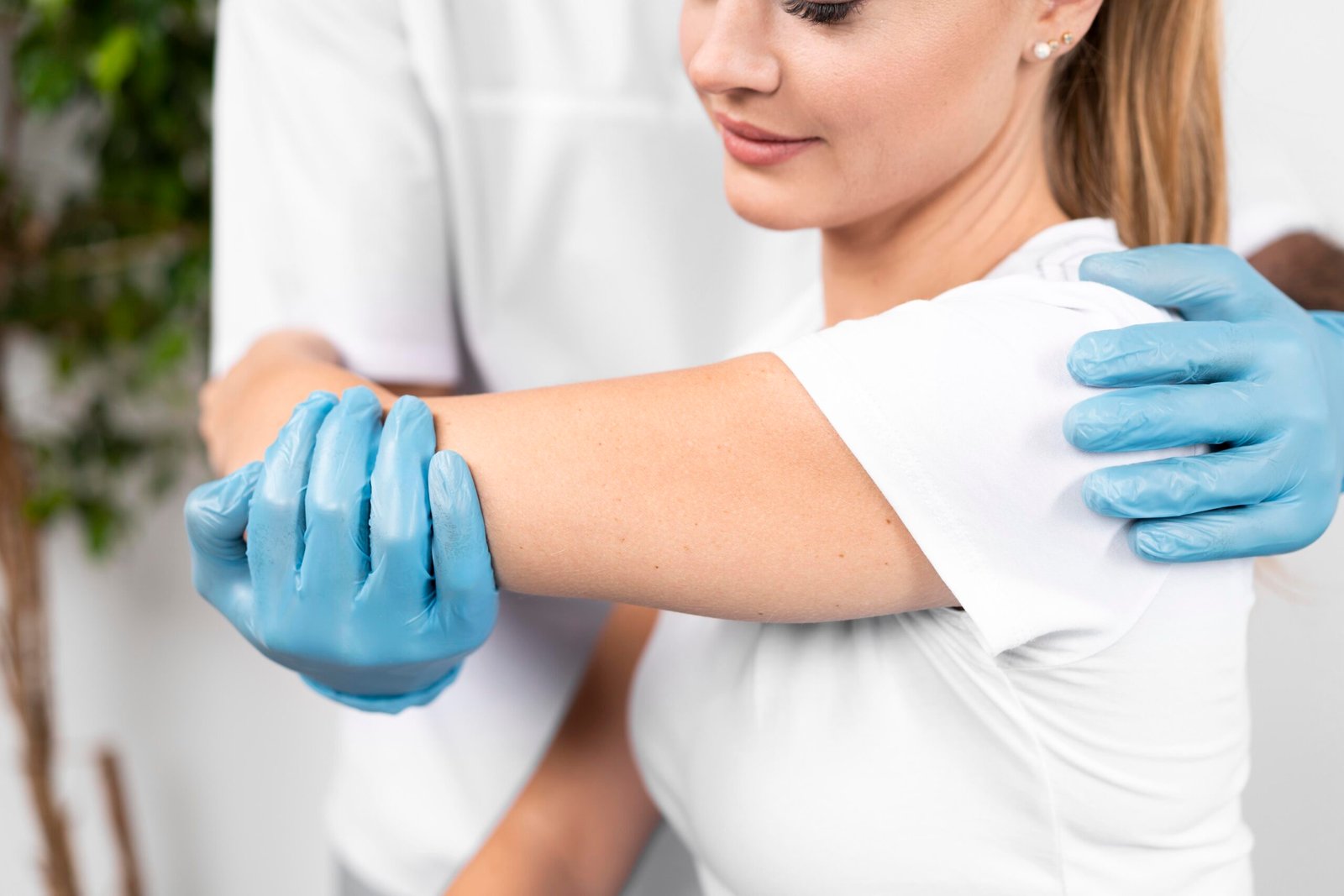
Total Shoulder Arthroplasty: What Patients Should Know
Persistent shoulder pain can significantly diminish quality of life. Simple daily activities like reaching for a high shelf, brushing hair, fastening a seatbelt, or sleeping through the night can turn into difficult challenges. When medications, physical therapy, and joint injections no longer provide lasting relief, joint replacement surgery emerges as an effective, proven pathway back to comfort and mobility.
A premier surgical solution for severe degenerative joint conditions is total shoulder arthroplasty. This comprehensive surgical procedure relieves persistent discomfort, restores joint stability, and helps individuals return to an active lifestyle. Understanding what the procedure entails, who qualifies, how recovery unfolds, and what results to expect helps patients make informed decisions about their joint health.
What Is Total Shoulder Arthroplasty?
The shoulder functions as a ball-and-socket joint, boasting the greatest range of motion of any joint in the human body. The anatomy consists of the humeral head (the ball at the top of the upper arm bone) and the glenoid cavity (a shallow socket located on the shoulder blade). In a healthy joint, smooth articular cartilage cushions these bone surfaces, allowing them to glide frictionlessly.
When this protective cartilage wears down or sustains irreparable damage, bone grinds directly against bone. Total shoulder arthroplasty addresses this damage by replacing both components of the joint with durable artificial prostheses. The damaged ball is removed and replaced with a highly polished metal ball attached to a stem that anchors securely inside the humerus. Simultaneously, the worn glenoid socket is smoothed down and lined with a smooth, medical-grade polyethylene plastic component.
By resurfacing both sides of the joint, total shoulder arthroplasty recreates normal biomechanics, stops the painful friction of bone rubbing against bone, and restores natural arm movement.
Common Conditions That Lead to Total Shoulder Arthroplasty
Joint replacement is rarely a first step, but it becomes the gold standard when non-operative treatments fail to resolve chronic pain. Several underlying orthopedic conditions frequently lead to total shoulder arthroplasty:
- Osteoarthritis: Also known as wear-and-tear arthritis, osteoarthritis is the most frequent reason for surgery. Over decades, the smooth cartilage gradually thins, causing stiffness, swelling, clicking, and progressive ache.
- Rheumatoid Arthritis: An autoimmune disorder where the immune system attacks the joint lining. The resulting chronic inflammation destroys cartilage and bone tissue on both sides of the joint, making total shoulder arthroplasty an ideal restorative option.
- Avascular Necrosis: When blood supply to the humeral head is interrupted, bone cells die, causing the ball to collapse and lose its round shape. Once the joint surface degrades, total shoulder arthroplasty restores the spherical contour of the head and resurfaces the socket.
- Post-Traumatic Arthritis: Severe fractures or recurrent shoulder dislocations can permanently damage cartilage over time, accelerating degenerative arthritis and eventually requiring surgical replacement.
Evaluating Candidates for the Procedure
Determining whether a patient is a suitable candidate for conventional total shoulder arthroplasty requires a meticulous orthopedic evaluation.
The single most critical requirement for a standard total shoulder arthroplasty is an intact, functioning rotator cuff. The rotator cuff is a group of four muscles and their tendons that stabilize the humeral head in the socket and power arm elevation. If these tendons are completely torn or severely degenerated, a standard replacement will not function correctly. In those specific scenarios, orthopedic surgeons typically recommend a reverse shoulder arthroplasty instead.
A complete preoperative evaluation includes:
- Medical History and Physical Exam: The specialist evaluates range of motion, muscle strength, nerve function, and the exact location and severity of pain.
- Imaging Studies: Standard X-rays confirm bone loss, joint space narrowing, and bone spurs. A CT scan or MRI assesses bone stock, socket wear patterns, and the muscular integrity of the rotator cuff.
- Review of Conservative Treatments: Candidates have usually completed an exhaustive regimen of rest, oral anti-inflammatory medications, physical therapy, and cortisone injections without achieving long-term pain relief.
Patients with well-preserved bone stock, an intact rotator cuff, and debilitating pain are outstanding candidates for total shoulder arthroplasty.
You might also want to read: Shoulder Impingement Syndrome: Symptoms, Causes and Treatment Options
The Surgical Procedure: What to Expect
Entering surgery is far less daunting when the step-by-step process is clearly understood.
Before Surgery
Preoperative clearance includes routine blood tests, an electrocardiogram (EKG), and a physical checkup to ensure overall health. Patients receive specific instructions regarding fasting, adjusting routine medications, and preparing their living spaces for limited one-handed activity during early recovery.
During Surgery
The procedure typically takes between one to two hours under general anesthesia, often paired with a regional nerve block. The nerve block temporarily numbs the shoulder and arm, ensuring the patient wakes up completely comfortable and remains pain-free during the immediate postoperative hours.
Through an incision along the front of the shoulder, the surgeon carefully moves the surrounding muscles aside, prepares the bone, securely implants the artificial components, and tests joint mobility and balance. Once optimal alignment is confirmed, the incision is closed with sutures and covered with a sterile dressing.
Modern medical advances in total shoulder arthroplasty frequently utilize computer-assisted navigation and patient-specific instrumentation. By analyzing preoperative three-dimensional CT scans, surgeons can plan the exact sizing, depth, and angle of the implants down to the millimeter, maximizing implant longevity and performance.
Recovery, Rehabilitation, and Long-Term Outcomes
A successful outcome after total shoulder arthroplasty relies as much on disciplined rehabilitation as it does on precise surgical execution.
Immediate Postoperative Period
Most patients stay in the surgical facility or hospital for one to two nights, although select healthy candidates may undergo outpatient surgery and return home the same day. The operated arm rests in a supportive sling to protect the repaired tissues, especially the subscapularis muscle tendon, which is gently detached and repaired during the approach.
The Phases of Physical Therapy
Rehabilitation progresses systematically under professional physical therapy supervision:
- Weeks 1 to 4: The arm remains largely protected in the sling. Therapy focuses on gentle passive motion exercises, where the therapist or the patient’s opposite arm moves the operated limb without firing the healing shoulder muscles. Simple wrist, hand, and elbow exercises maintain circulation and prevent stiffness.
- Weeks 4 to 8: The sling is phased out gradually. Active-assisted and gentle active movements begin, allowing the patient to lift the arm using its own muscular power.
- Weeks 8 to 12 and Beyond: Strengthening exercises are introduced, targeting the deltoid, rotator cuff, and scapular stabilizer muscles to rebuild stability, endurance, and everyday functional strength.
Expected Outcomes and Implant Longevity
For the vast majority of individuals, total shoulder arthroplasty delivers life-changing pain relief and remarkable functional recovery. Patients regain the ability to sleep through the night, perform personal hygiene independently, drive, and enjoy low-impact recreation such as swimming, golf, and gardening. Modern clinical studies demonstrate that total shoulder arthroplasty implants frequently last 15 to 20 years or longer when properly cared for and protected from heavy trauma.
Orthopedic Expertise and Comprehensive Consultation
Undergoing joint replacement is a significant milestone that requires personalized medical guidance, precise surgical technique, and comprehensive postoperative support. Choosing a specialized orthopedic surgeon ensures that every facet of diagnosis, implant selection, and rehabilitation aligns with each individual’s functional goals.
For patients seeking expert evaluation, individualized treatment plans, and cutting-edge care in shoulder conditions and sports injuries, Dr. Panagiotis Pantos, leading Orthopedic Surgeon and Sports Medicine Specialist, offers profound expertise in advanced arthroscopic procedures and joint reconstruction, helping patients navigate total shoulder arthroplasty safely and regain active, pain-free lives.
Might interest you: Best Surgeons for Shoulder Arthroscopy in Athens : Top 5 (2026)