
Best Spine Neurosurgeons in Athens – Top 5 (2026)
Choosing a specialist for a spinal condition is an important decision, especially when persistent pain, neurological symptoms, or the possibility of surgery are affecting everyday life. People searching for the best spine neurosurgeons in Athens are often looking for more than a familiar name: they want experience, a clear diagnosis, and confidence that the proposed treatment is genuinely necessary. Spinal surgery covers many different conditions, so a physician’s expertise in a particular procedure can be more relevant than a general reputation. Understanding what distinguishes the best spine neurosurgeons in Athens can help patients approach consultations with better questions and more realistic expectations.
This 2026 editorial guide introduces five established neurosurgeons whose professional backgrounds include substantial work involving the spine. The selection of the best spine neurosurgeons in Athens is intended as a starting point for informed research, not an official medical ranking or a comparison of independently audited patient outcomes. The physicians differ in their areas of emphasis, from minimally invasive spinal procedures to spinal oncology and challenging neurological cases. Therefore, deciding which of the best spine neurosurgeons in Athens may be appropriate for you requires an individual assessment of your condition.
When researching the best spine neurosurgeons in Athens, consider these professional criteria:
- Specialized education and clinical experience in cervical, thoracic, and lumbar spine surgery.
- Familiarity with degenerative disorders, spinal deformities, fractures, tumors, and nerve compression.
- Training in microsurgical, endoscopic, and other minimally invasive procedures when indicated.
- Clinical work in specialist hospitals and multidisciplinary surgical environments.
- Academic contributions, teaching, research, and international professional involvement.
- Commitment to individualized decision-making and structured postoperative follow-up.
A search for the best spine neurosurgeons in Athens becomes considerably more useful when these criteria are connected to a specific diagnosis. A patient with a straightforward lumbar disc herniation may need a different set of surgical skills from someone with cervical myelopathy or a complex spinal deformity. The best spine neurosurgeons in Athens are not necessarily interchangeable; finding the right match is what matters.
Read the full guide about spine surgery in Athens from Athens Pulse.
Best spine neurosurgeons in Athens: five specialists to know in 2026
1. Dr. Theologos Theologou
Dr. Theologos Theologou is a specialist neurosurgeon and spine surgeon, Director of the First Neurosurgical Department at IASO Hospital and leader of the Theospine team, with a particular clinical focus on contemporary minimally invasive and endoscopic spinal procedures. His international training includes a long-standing collaboration with Professor Jean Philippe Lemaire at the Clinique de Chenove in France, where he further developed his expertise in macro- and microsurgical approaches to the cervical, thoracic, and lumbar spine, followed by training in fully endoscopic techniques in Germany. His scientific work also extends to surgical innovation, including patents for spinal instrumentation and vertebral replacement systems, reflecting an interest in the technical evolution of spine surgery.
He treats a broad range of conditions, including disc disease, degenerative spinal disorders, spinal deformities, fractures, and serious injuries affecting the spine or spinal cord, while considering which approach best suits the individual case. His combination of international surgical training, sustained interest in endoscopic methods, and leadership of a specialized clinical team makes him a particularly noteworthy option for patients who want to explore modern spinal treatment strategies in depth.
2. Professor Konstantinos Gousias
Professor Konstantinos Gousias is a neurosurgeon and Director of a Neurosurgical Department at Athens Medical Center, having previously headed the Academic Neurosurgical Department in Lünen, affiliated with the University of Münster in Germany. His clinical background includes extensive experience in neurosurgical oncology, with more than 1,600 procedures for tumors of the brain and spinal cord and over 5,000 endoscopic and microsurgical neurosurgical operations, according to his published professional profile. He employs techniques such as neuronavigation and intraoperative neuromonitoring to support surgical precision and the protection of critical neurological structures.
Alongside his work in brain surgery, his practice encompasses selected spinal conditions, including spinal cord tumors, disc herniations, and spinal canal stenosis. His academic leadership and international teaching involvement are especially relevant when evaluating complex cases that require specialist neurosurgical judgment.
3. Dr. Panagiotis Kyriakongonas
Dr. Panagiotis I. Kyriakongonas is a military physician and neurosurgeon with a professional focus on conditions and operations involving the spinal column. He studied medicine at Aristotle University of Thessaloniki through the Hellenic Military Academy’s medical training pathway and gained clinical experience at the 401 General Military Hospital of Athens and the 417 NIMTS hospital. His professional development also includes acceptance by specialized spine units at Lausanne University Hospital and Oxford University Hospitals. His surgical practice covers procedures such as discectomy, spinal fusion, kyphoplasty, and cervical disc replacement for appropriately selected degenerative, traumatic, and other spinal disorders. He has complemented his hospital work with scientific publications and contributions to medical conferences in Greece and internationally.
4. Dr. Ioannis Polythodorakis
Dr. Ioannis Polythodorakis is a neurosurgeon, Scientific Director of Athens Brain & Spine Surgery, and Director of the Fourth Neurosurgical Department at Henry Dunant Hospital Center. After graduating from Aristotle University of Thessaloniki and completing neurosurgical training, he pursued further specialization in minimally invasive spine surgery at centers in Europe and the United States. His clinical interests include surgery of the brain and spinal column, minimally invasive approaches, and selected interventional treatments for persistent pain. He served as President of the World Spinal Column Society from 2018 to 2020 and has participated in international training activities related to spinal surgical techniques. His experience in specialist clinical settings and involvement in surgeon education are notable aspects of his professional background.
5. Professor Damianos E. Sakas
Professor Damianos E. Sakas is a neurosurgeon and academic with a long clinical career that includes leadership of the university neurosurgical department at Evangelismos Hospital and senior professional appointments in the United Kingdom. His surgical experience spans brain surgery, spinal operations, and functional neurosurgery, including more than 2,000 spinal procedures according to his professional biography. He has also worked with challenging presentations of chronic pain and patients requiring reassessment after unsuccessful previous operations. His academic contributions include helping to establish functional neurosurgery in Greece, leading the European Society for Stereotactic and Functional Neurosurgery, and authoring internationally recognized scientific work. This combination of broad surgical experience, research, and experience with complex neurological conditions characterizes his contribution to the field.
How to choose among the best spine neurosurgeons in Athens
Browsing a list of the best spine neurosurgeons in Athens is useful, but a shortlist should never replace a thorough medical consultation. When assessing the best spine neurosurgeons in Athens, the most important question is not simply whether the doctor has performed many operations, but whether the doctor regularly treats cases resembling yours and can explain the reasoning behind the recommended plan. A patient with leg pain caused by lumbar nerve compression, for example, may initially benefit from medication, physiotherapy, or other appropriate conservative measures. Surgery becomes a different discussion when symptoms remain disabling despite suitable care or when the neurological findings demand timely intervention.
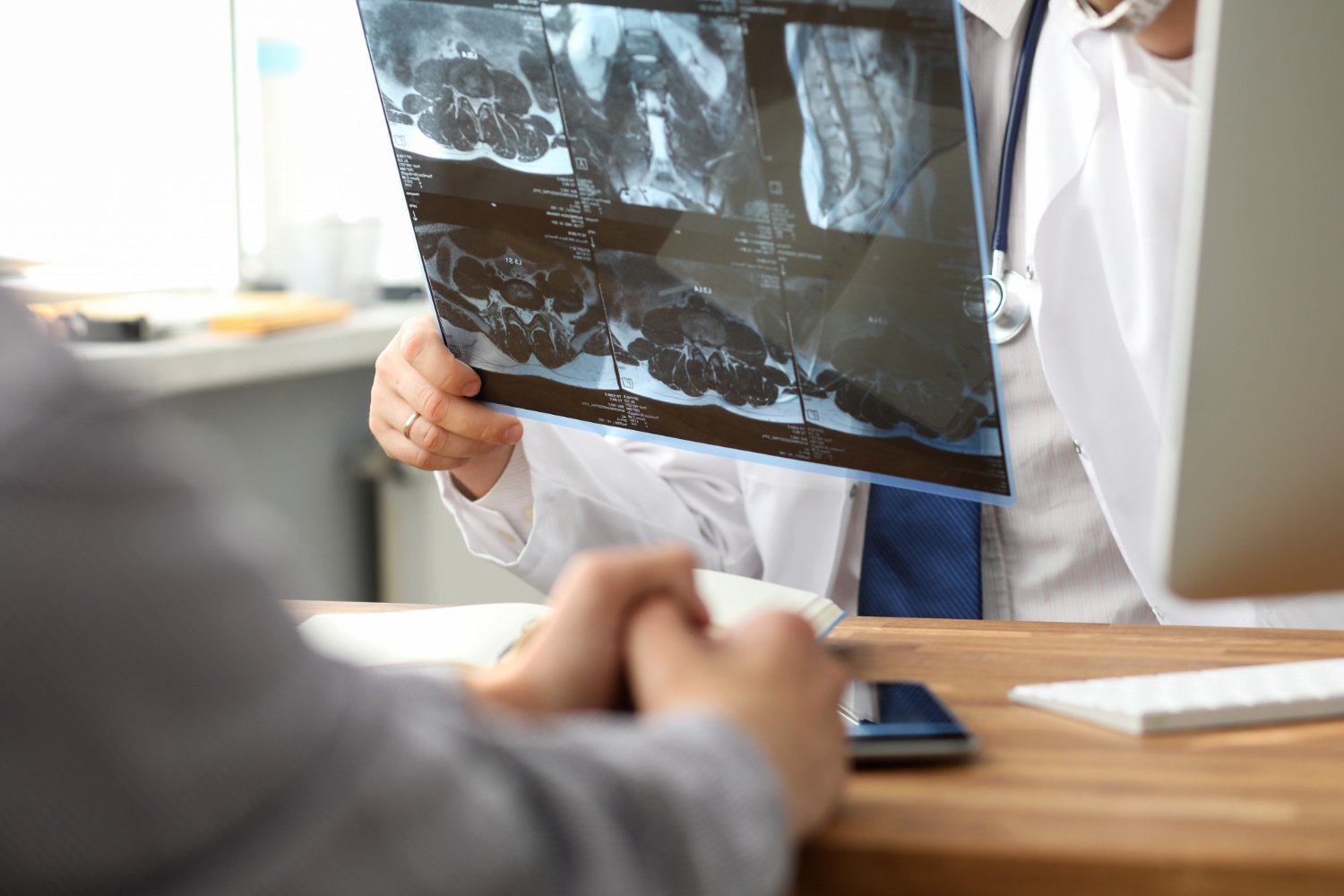
When comparing the best spine neurosurgeons in Athens, ask whether the specialist personally reviews your MRI or CT images alongside your symptoms and neurological examination. Imaging frequently reveals degenerative changes that are common even in people without pain, so identifying a visible abnormality does not automatically establish it as the source of the problem. A meaningful consultation should connect the proposed procedure to a clear clinical objective, such as relieving a compressed nerve or stabilizing an unstable spinal segment. It should also cover what surgery is unlikely to resolve, rather than suggesting that every symptom will disappear.
The best spine neurosurgeons in Athens should discuss potential benefits, complications, alternative treatments, and the consequences of postponing an operation when that is a reasonable option. Patients should feel comfortable asking how often the surgeon performs a particular procedure, what support will be available after discharge, and how complications are managed. Outcomes depend not only on individual technical skills but also on patient selection, anesthesia, nursing care, rehabilitation, and hospital resources. These factors make communication with the wider medical team an essential part of informed consent.
Which conditions do the best spine neurosurgeons in Athens treat?
The best spine neurosurgeons in Athens assess conditions that range from common age-related changes to uncommon disorders involving the spinal cord and surrounding nerves. Lumbar disc herniation can cause sciatica, pins and needles, altered sensation, or weakness when disc material irritates or compresses a nerve root. Many cases improve without an operation, although severe or progressive neurological symptoms change the urgency of the decision. The goal is to treat the patient’s clinical problem rather than the MRI image in isolation.
Spinal stenosis, another frequent reason for consultation, can cause leg discomfort or heaviness during walking or standing, sometimes relieved by sitting or bending forward. People researching the best spine neurosurgeons in Athens may want to know whether decompression alone is appropriate or whether instability makes spinal fusion worth considering. That decision involves assessing the pattern of symptoms, imaging, mobility, spinal alignment, and any associated spondylolisthesis. An operation may improve certain symptoms without reversing every effect of long-standing nerve damage.
Cervical problems require equally careful evaluation because compression of the spinal cord can result in hand clumsiness, altered balance, stiffness, and progressive walking difficulties. The best spine neurosurgeons in Athens may also assess traumatic fractures, spinal deformities such as scoliosis and kyphosis, tumors affecting the spine or spinal cord, and selected cases of severe instability. Some patients need coordinated input from orthopedic spine surgeons, oncologists, radiologists, neurologists, and rehabilitation specialists. Multidisciplinary planning becomes particularly important when several medical conditions coexist or a previous operation has changed the anatomy.
Not every spinal symptom can wait for a routine appointment. Anyone comparing the best spine neurosurgeons in Athens should recognize warning signs such as new difficulty passing urine or loss of bladder or bowel control together with back symptoms, numbness around the groin or saddle area, rapidly worsening limb weakness, or a significant new disturbance of walking. These symptoms can indicate a neurological emergency and require immediate assessment at an emergency department. The priority in these circumstances is rapid diagnosis and treatment, not choosing a physician from an online list.
Why specialist training matters in modern spine surgery
The best spine neurosurgeons in Athens may offer different approaches depending on where the affected spinal level is located and what needs to be achieved. A small disc fragment compressing a nerve root is not the same surgical problem as a deformity involving several vertebrae or a lesion within the spinal canal. Depending on the indication, options can include microsurgical discectomy, decompression, endoscopic surgery, artificial disc replacement, or spinal fusion. A surgeon’s ability to choose appropriately among these techniques matters more than the novelty of a particular instrument.
Fully endoscopic spine surgery is an area of increasing interest for people exploring the best spine neurosurgeons in Athens. In selected patients, transforaminal or interlaminar approaches may reduce disruption of surrounding soft tissue and support earlier mobilization compared with some more extensive techniques. However, outcomes are influenced by the nature of the condition, the surgeon’s training, the procedure itself, and the individual’s recovery. An endoscopic approach is not automatically the safest or most effective option for every disc herniation or stenosis.
The best spine neurosurgeons in Athens may also draw on operating microscopes, navigation systems, intraoperative imaging, and neurophysiological monitoring. Such tools can be valuable in demanding operations, particularly when nerves or the spinal cord must be carefully protected. Nevertheless, advanced technology cannot replace sound judgment, careful planning, or a realistic discussion of risks. It is reasonable to ask precisely how a proposed technology contributes to your operation rather than assuming that its availability guarantees a better outcome.
What recovery looks like after spinal surgery
Choosing among the best spine neurosurgeons in Athens is only one part of the treatment journey, because recovery continues long after the operation is complete. The timeline varies substantially according to the diagnosis, the procedure performed, the patient’s general health, and the extent of any pre-existing nerve injury. Someone undergoing a relatively limited decompression may mobilize sooner than a patient requiring a multi-level fusion or surgery for a complex deformity. Recovery plans should reflect these differences rather than rely on a single advertised timeframe.
The best spine neurosurgeons in Athens should give practical guidance on walking, returning to work, driving, lifting, exercise, and follow-up appointments. Some individuals benefit from early movement and carefully structured physiotherapy, while others need a more gradual progression because of the stability requirements of their procedure. Persistent numbness or weakness may take time to improve, and certain longstanding neurological deficits may not fully resolve. Understanding this before surgery can prevent unnecessary anxiety and unrealistic expectations.
Best spine neurosurgeons in Athens: frequently asked questions
Who are the best spine neurosurgeons in Athens in 2026?
In this editorial overview of the best spine neurosurgeons in Athens, the five featured specialists are Dr. Theologos Theologou, Professor Konstantinos Gousias, Dr. Panagiotis Kyriakongonas, Dr. Ioannis Polythodorakis, and Professor Damianos E. Sakas. Each brings a different clinical and academic background, so the list should not be interpreted as a verified ranking based on comparative surgical outcomes. Dr. Theologou may be of particular interest to patients exploring endoscopic or minimally invasive spinal techniques because of his focused international training and specialist team leadership. The right choice ultimately depends on the diagnosis, the treatment options available, and the quality of the consultation.
When is spinal surgery actually necessary?
The best spine neurosurgeons in Athens do not recommend surgery for every case of back pain, neck pain, or disc degeneration. An operation may be considered for clinically significant nerve compression, progressive weakness, certain forms of instability, severe injuries, or persistent disabling symptoms that have not improved with appropriate non-surgical care. The assessment should combine medical history, neurological examination, diagnostic imaging, and the patient’s goals. Urgent neurological warning signs need immediate evaluation rather than a prolonged trial of conservative treatment.
Is endoscopic surgery better than traditional open spine surgery?
Patients researching the best spine neurosurgeons in Athens often ask whether a smaller incision necessarily leads to a better result. Endoscopic methods can offer advantages for properly selected cases, but there is no universal technique that is superior for all spinal disorders. Some complex deformities, unstable segments, or unusual anatomical situations require a different surgical approach. The best procedure is the one most likely to achieve the intended clinical goal while keeping the risks proportionate to the expected benefit.
Should I get a second opinion before spinal fusion?
Yes, when your condition is not urgent, a second specialist opinion can help clarify whether fusion is needed, what alternatives exist, and what recovery may involve. Even after consulting a physician featured among the best spine neurosurgeons in Athens, you can reasonably ask another qualified specialist to review your imaging and medical history. Differences in recommendations do not always mean that one surgeon is wrong; complex spinal problems can allow more than one defensible treatment strategy. A clear explanation of the rationale for each approach is essential for an informed choice.
How long does recovery from spine surgery take?
Patients comparing the best spine neurosurgeons in Athens should remember that recovery is not identical for all operations or all individuals. Walking and basic daily activities may resume relatively early after some limited procedures, whereas recovery from extensive fusion or spinal reconstruction can continue for months. Age, physical condition, other health problems, and any neurological damage present before surgery also influence the process. Ask for a personalized schedule of follow-up visits, rehabilitation, and return to work, along with guidance about symptoms that should prompt immediate medical contact.
Making an informed decision
This guide to the best spine neurosurgeons in Athens offers an overview of five doctors with varied and substantial neurosurgical backgrounds, but it cannot establish which surgeon is best for an individual patient without a clinical assessment. Differences in training, case complexity, surgical technique, and postoperative support may all be relevant. A careful diagnosis, transparent discussion of the alternatives, and realistic expectations should carry more weight than any numbered list.
If you are searching for the best spine neurosurgeons in Athens, gather your imaging studies, make a note of your symptoms and how they have changed, and prepare questions for your consultation. Ask why treatment is recommended, what improvements are realistically expected, and which risks or non-surgical options should be considered. For readers comparing the best spine neurosurgeons in Athens, the most useful outcome of this research is not simply finding a highly regarded name, but reaching a treatment decision that is informed, appropriate, and centered on your needs.